How Many Bank Accounts Should You Have for Budgeting?
When you’re trying to get a handle on your finances, one of the simplest yet most powerful things you can do is organise your money into separate bank accounts. It sounds small, but the difference it can make to your budgeting, saving, and peace of mind is huge.
In this guide, we’ll break down exactly how many bank accounts you should consider having, why it matters, and how to set them up to make your money management effortless.
Why Separate Bank Accounts Are So Effective
Many people in the UK run all of their income and spending through a single current account. It’s convenient—but it also makes it hard to see what’s really going on. When your bills, spending money, and savings are all in one pot, it’s easy to overspend without realising it.
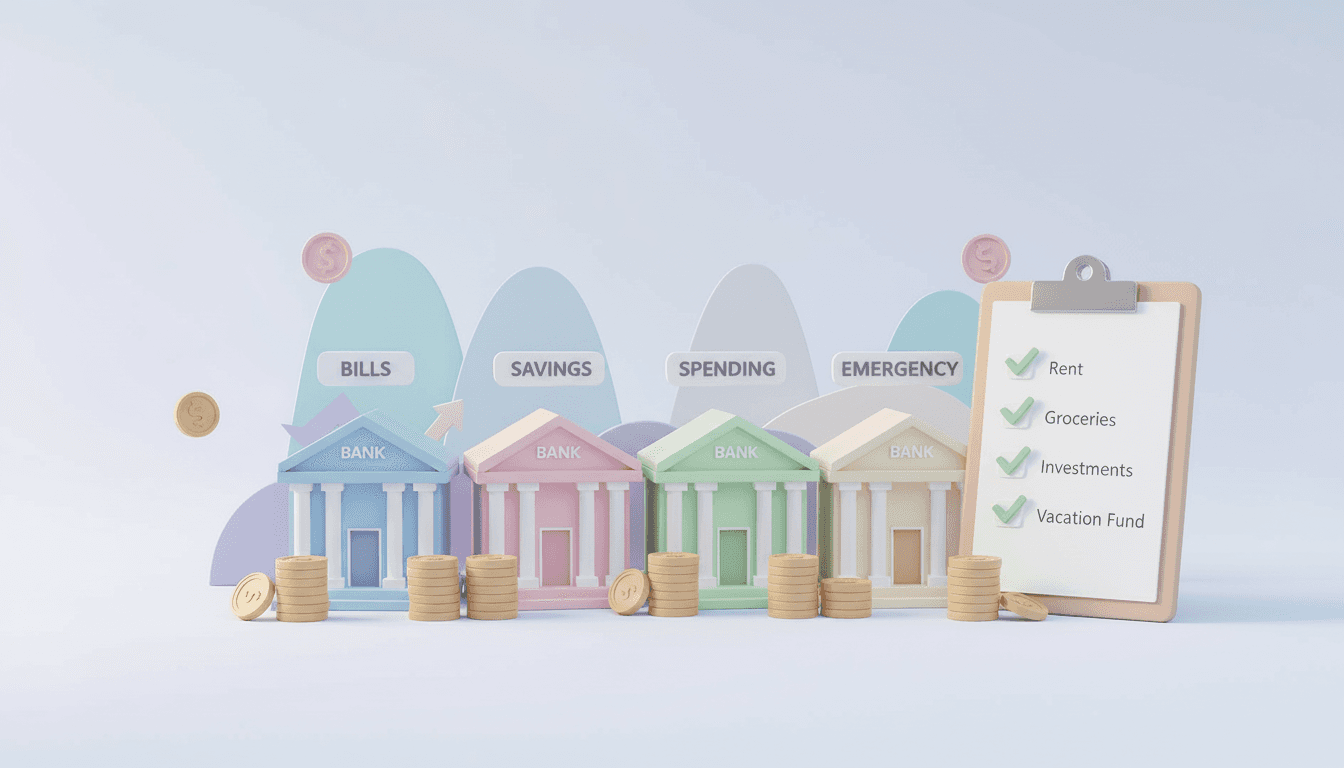
Having multiple bank accounts creates clear boundaries for your money. Each account has a purpose, and you can see instantly what’s available for bills, spending, or saving. It’s like using envelopes for budgeting—only digital.
This approach helps you:
Avoid overspending: You instantly know how much is safe to spend.
Stay organised: Each bill or goal has its place.
Feel in control: You make conscious choices, not confused guesses.
If you’re just starting out with budgeting, check out our budgeting guide for the basics and to download our budget template—it works perfectly with the multiple-account method explained below.
The Ideal Number of Bank Accounts for Budgeting
There’s no one-size-fits-all answer, but most UK budgeting experts agree that three to five accounts is the sweet spot. That’s enough to stay organised without adding unnecessary complexity.
Let’s look at a practical setup that works for most people.
1. Your Main Current Account (Income and Bills)
Purpose: The hub for your income and essential outgoings.
How to use it:
Have your salary or main income paid into this account.
Set up all your direct debits and standing orders for essential bills (e.g., rent or mortgage, utilities, council tax, insurance).
Leave only what’s needed to cover those payments each month.
Tip: Choose a current account with good online banking and alerts so you can easily monitor balances and payments. Banks such as Starling, Monzo, or Nationwide offer intuitive tools that can help you manage bills automatically.
2. A Spending Account (Day-to-Day Expenses)
Purpose: To control your variable spending—things like food, petrol, nights out, and online shopping.
How to use it:
Transfer your monthly “spending allowance” from your main account after bills are paid.
Use this card and only this card for everyday purchases.
Once the money’s gone, it’s gone—so it’s a simple but effective way to prevent overspending. You’ll start to make better decisions automatically, knowing that your essentials are already covered.
Top tip:
If you are comfortable with using credit cards for spending, American Express offers excellent options for cashback or earning points. My favourite is the Amex Gold Preferred Rewards Card. Using a credit card that earns you Cashback or Rewards is a good way to cash in on your everyday spending.
Example: Suppose you’ve worked out through our budget template that you can spend £400 a month on all non-essential items. On payday, transfer that amount to this account and don’t top it up early.
3. A Short-Term Savings Account (Emergency or Buffer Fund)
Purpose: To protect you from the unexpected.
Every household should have an emergency fund—a safety net of at least three to six months’ worth of essential expenses. This account is separate from your main account, so you’re not tempted to dip into it for non-essentials.
How to use it:
Start by building a £1,000 buffer if you don’t have one already.
Add to it monthly until you reach your target.
Keep it instant-access so you can use it if your car breaks down or your boiler fails.
For competitive savings rates, consider comparing instant-access accounts using MoneySavingExpert or Compare the Market.
4. A Long-Term Savings or Investment Account
Purpose: To grow your money for future goals—house deposit, retirement, or education.
Once your short-term savings are secure, start diverting spare funds into longer-term goals. Depending on your priorities, this could be:
A Lifetime ISA (LISA) for first-time homebuyers or retirement.
A Stocks and Shares ISA for long-term growth.
A high-interest savings account earmarked for specific objectives.
Tip: Automate regular transfers on payday so saving feels effortless. Treat these savings like another bill—you pay your future self first.
5. Optional: Sinking Fund Account
Purpose: To save gradually for predictable irregular expenses.
These are the costs that appear to “surprise” you each year—Christmas, holidays, birthdays, car MOT, or insurance renewals.
How to use it:
List all annual or irregular costs.
Divide the total by 12.
Transfer that amount to your sinking fund each month.
When those expenses arrive, you’ll have the money waiting—no scrambling, no credit card debt.
How to Manage Multiple Bank Accounts
Having several accounts doesn’t need to be complicated. Here’s how to keep things simple:
Automate everything. Set up standing orders on payday to move money into each account automatically.
Use nicknames. Most banks let you rename accounts (e.g., “Bills”, “Spending”, “Savings”) to stay clear. You can also add notes to transactions to help you keep track of transfers between accounts.
Track balances. Use a budgeting app or spreadsheet to review once a month.
Review quarterly. Life changes—so adjust account amounts and goals over time.
If you’d rather manage everything in one place, open accounts within the same banking app (e.g., Monzo or Starling allow multiple “spaces” or “pots”), so you can separate funds without juggling multiple logins.
Common Questions
1. Isn’t this too much hassle?
Not really—most people spend less than an hour setting it up and then save hours of money stress each month. Automation does most of the work for you.
2. Will having multiple accounts affect my credit score?
No, not directly. Opening current or savings accounts doesn’t harm your credit score, as long as you manage them responsibly.
3. Should couples share accounts or keep them separate?
Many couples use a joint account for shared bills and individual accounts for personal spending. That keeps household finances transparent but still gives each person freedom.
Bringing It All Together
So, how many bank accounts should you have for budgeting? For most UK households, four key accounts—for income and bills, spending, short-term savings, and long-term goals—strike the perfect balance between simplicity and control. Add a sinking fund if you’d like to go one step further.
This structure turns budgeting into an automatic system that supports your goals rather than restricting you.
Ready to take the next step? Build your own multi-account setup using our budget template—it’ll help you calculate exactly how much to allocate to each account so your money works for you, not the other way around.
Key takeaway:
Multiple accounts make your budgeting clearer, simpler, and more disciplined. Start with just two—bills and spending—and build up from there. The goal isn’t more accounts; it’s more control over your money.