Fixed savings rates have climbed for seven months in a row. Moneyfacts reported on 14 October that the best one- to five-year bonds now all pay over 5%. With inflation at 3.5%, a Budget on 28 October and a Bank of England decision on 5 November, many savers are asking the same question: lock in now, or wait?
Here's what the numbers say, who fixing suits, and who should hold off.
Key takeaways
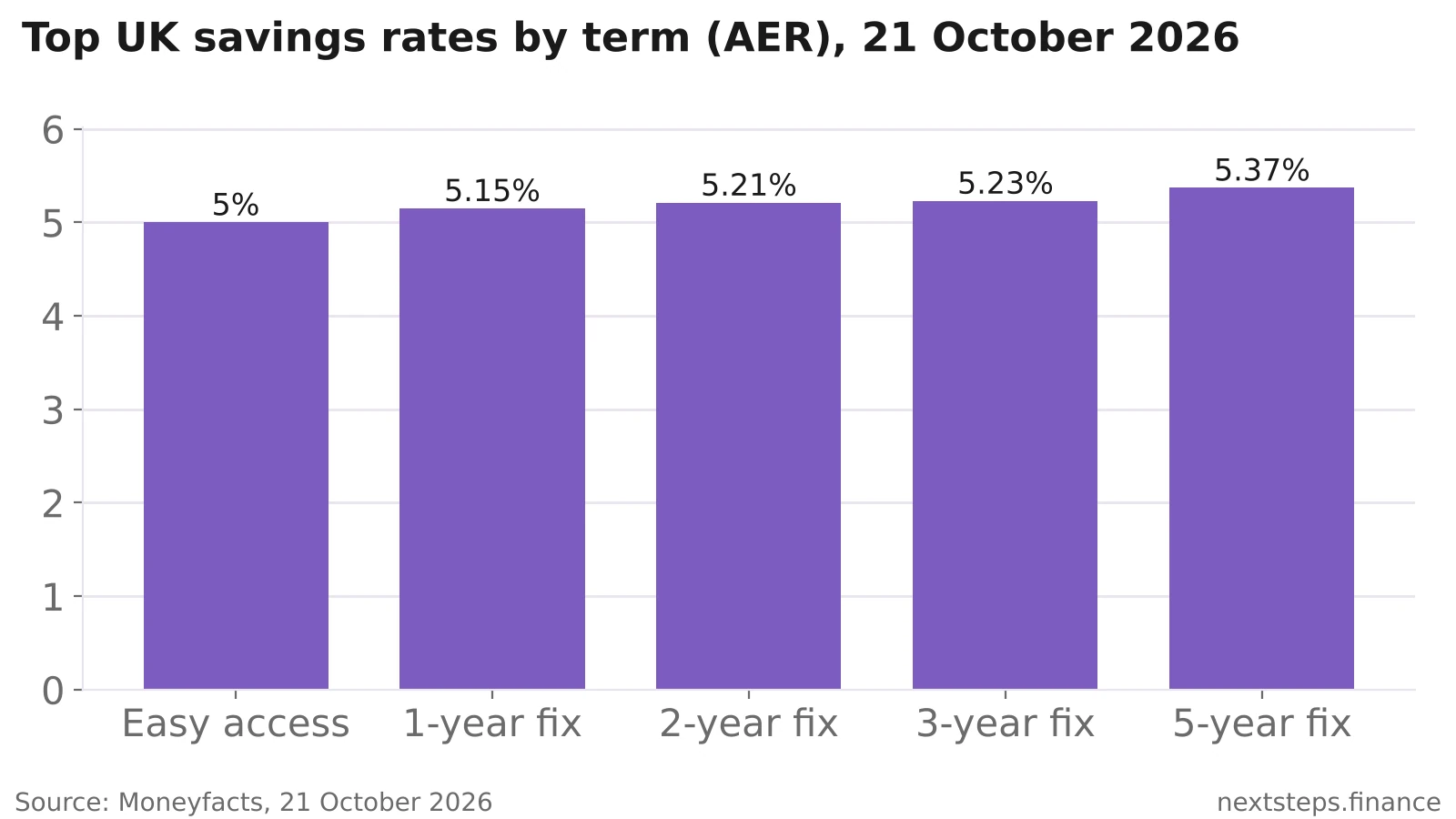
- The top fixed rates on 21 October 2026 were 5.15% for one year, 5.21% for two years, 5.23% for three years and 5.37% for five years (Moneyfacts).
- The average one-year fix is 4.41%, its highest since September 2024 and up for the seventh month running.
- CPI inflation is 3.5% (ONS), so any rate above that gives you a real return before tax.
- Bank Rate is 3.75%, with the next decisions on 5 November and 17 December 2026 (Bank of England).
- From 6 April 2027, under-65s can only put £12,000 a year into cash ISAs, down from £20,000.
What are the best fixed savings rates right now?
The best fixed savings rates in October 2026 run from about 5.1% to just under 5.4%, depending on the term. Longer terms pay a little more, but the gap between one and five years is only about a fifth of a percentage point.
These are the market leaders according to Moneyfacts' best buys and MoneySavingExpert (updated 22 October 2026):
| Term | Account | Rate (AER) | Minimum deposit |
|---|---|---|---|
| 1 year | AlRayan Bank 12 Month Fixed Term Deposit | 5.15% (expected profit rate) | £10,000 |
| 1 year | OakNorth Bank | 5.12% | £1 |
| 2 years | OakNorth Bank / Oxbury Bank | 5.21% | £1 / £1,000 |
| 3 years | Chetwood Bank | 5.23% | £1,000 |
| 5 years | GB Bank 5 Year Fixed Rate Bond | 5.37% | £1,000 |
| 3 years | NS&I Green Savings Bonds Issue 10 | 4.73% | £100 |
NS&I relaunched its Green Savings Bond at 4.73% on 20 October. It's 100% backed by HM Treasury, but it pays half a point less than the best three-year bond. Moneyfacts' Rachel Springall said there are "higher rates available elsewhere" if you only want the best return.
Rates move fast in a rising market, and some of these deals may be pulled within days. Check the provider's own site before you apply.
Is it worth fixing your savings now?
Fixing makes sense for money you're sure you won't need for the whole term. You can't usually withdraw from a fixed bond early, so it's the wrong home for your emergency fund.
The case for fixing now:
- Rates are already high in real terms. At 5.2%, you earn about 1.7 percentage points above 3.5% inflation, before tax.
- You protect yourself if rates fall. If inflation eases in 2027 and the Bank of England cuts, easy access rates will drop. A fixed rate won't.
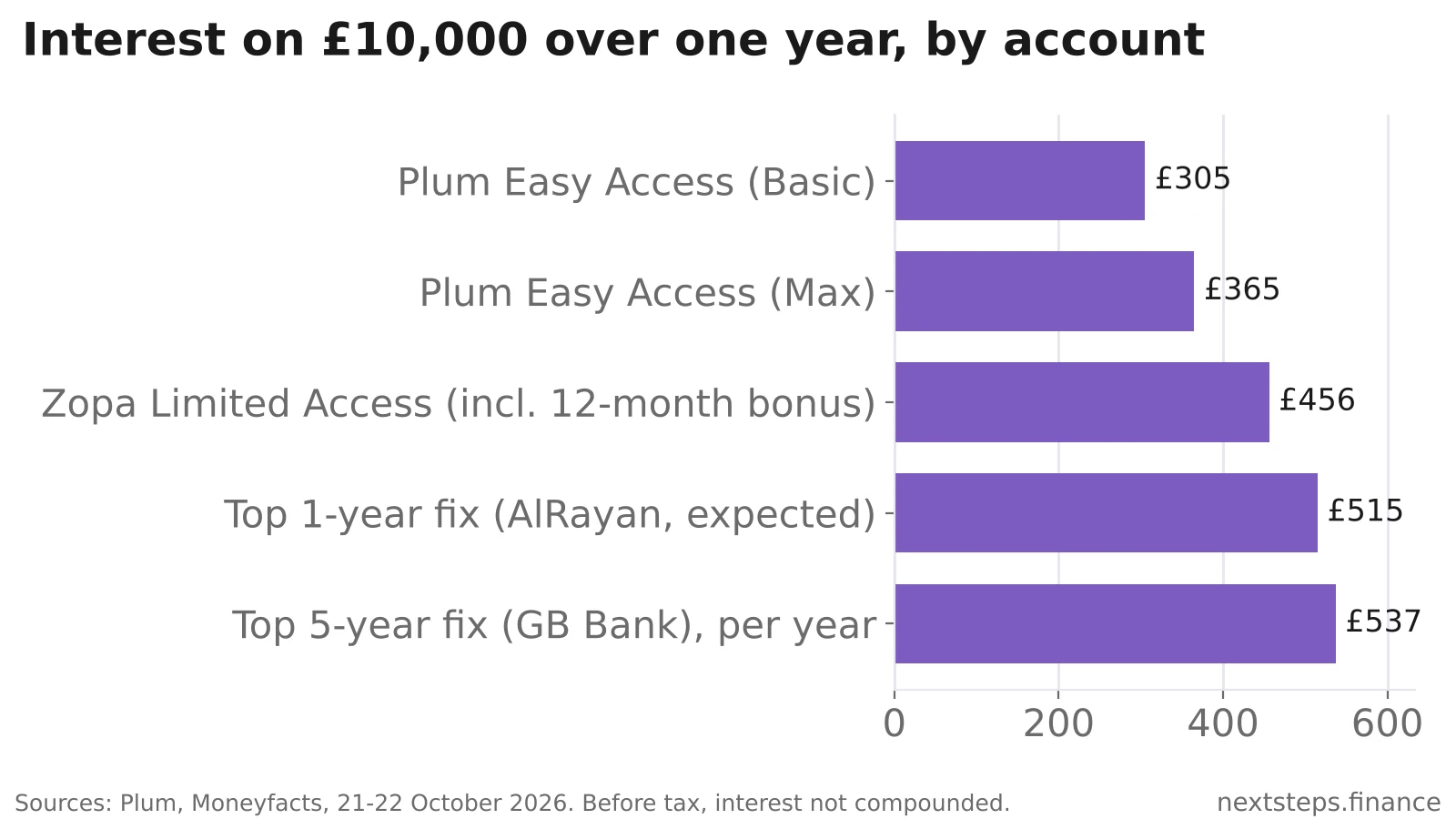
- The extra over easy access is small, but it's guaranteed. A top one-year fix pays about £515 on £10,000. The best easy access deals advertise similar headline rates, but most rely on a temporary bonus (see below).
The case for waiting:
- The Bank of England may raise rates. Bank Rate is 3.75%, and inflation has risen from 3.1% to 3.5% since the Bank held rates in September. If it rises on 5 November, fixed rates could climb further. We covered the details in what 3.5% inflation means for your money.
- You can split the difference. Fix part now and keep part in easy access. If rates rise further, you can fix the rest later.
Take Action: Work out how much you genuinely won't touch for a year or more. Only that amount belongs in a fix. Our UK Budget Planner can help you see what's spare.
Will savings rates go up if the Bank of England raises rates?
Usually, yes. Easy access rates tend to follow Bank Rate, while fixed rates follow what markets expect rates to do over the term. Fixed rates have already risen for months because markets expect higher rates. So a rise on 5 November that markets already expect may not push fixed rates up much more.
That's why trying to time the very top is risky. Moneyfacts' Rachel Springall points to "expectations surrounding future interest rate decisions" as a driver of fixed rates. When a rise is fully priced in, the best fixes can be withdrawn rather than improved.
Fixed rate or easy access: which pays more?
Over a full year, a top fixed rate usually pays more because its rate is guaranteed. Many headline easy access rates include a short-term bonus that drops off.
For example, the top easy access rate on Moneyfacts, LemFi at 5.00%, includes a 1.89% bonus that lasts six months. Zopa's Limited Access pot pays 4.56% including a 12-month bonus, but drops to 2.00% after three withdrawals a year. MSE's top pick, Cahoot's Sunny Day Saver, pays 5% but only on up to £3,000.
Where does an app like Plum fit in?
Plum is useful for building savings, not for getting the top rate. Its Easy Access Savings Account, provided by Lloyds Bank, pays between 3.05% AER (Basic, free) and 3.65% AER (Max plan) variable. That's well below the best buys above. Eligible deposits are protected by the FSCS up to £120,000.
Plum's strength is automation. It moves small amounts into savings for you based on your spending, so money builds up without you thinking about it. That may suit you if you struggle to save regularly. Once you have a lump sum, you can move it into a fixed bond.
One honest point: don't pay for a higher Plum plan just for the rate. On £10,000, Max earns about £60 a year more than Basic but costs £14.99 a month (about £180 a year), according to Plum's site. The paid plans only make sense if you'll use their other features.
Take Action: If saving regularly is the hard part, you can try Plum free on its Basic plan and let it build your pot, then move larger sums into a fix.
How much tax will I pay on savings interest?
Most basic-rate taxpayers pay no tax on the first £1,000 of interest a year, thanks to the Personal Savings Allowance. Higher-rate taxpayers get £500 and additional-rate taxpayers get nothing, HMRC guidance confirms.
At 5.2%, interest uses up the allowance quickly:
| Tax band | Personal Savings Allowance | Savings that use it up at 5.2% |
|---|---|---|
| Basic rate | £1,000 | about £19,200 |
| Higher rate | £500 | about £9,600 |
| Additional rate | £0 | any amount |
If your other taxable income is below £17,570, you may also get the starting rate for savings, worth up to £5,000 of extra tax-free interest. Above your allowance, interest is taxed at your normal rate. Interest from a fixed bond that pays at maturity is usually taxed in the year it's paid, so a two-year bond can push a big chunk into one tax year. Choosing annual interest avoids that.
Should I use a cash ISA instead?
A cash ISA keeps all the interest tax-free. Fixed-rate cash ISAs now pay up to 5.25%, and Moneyfacts reports a record 762 cash ISAs on sale. The ISA allowance for 2026/27 is £20,000.
That limit changes next spring. From 6 April 2027, under-65s can only pay £12,000 a year into cash ISAs. The other £8,000 has to go into stocks and shares ISAs, Innovative Finance ISAs or a Lifetime ISA. Over-65s keep the full £20,000 for cash, and money already in cash ISAs stays tax-free (Atom Bank's summary of the Autumn Budget 2025 changes). Atom also notes that the government plans to raise the tax rate on savings interest outside ISAs by two percentage points.
So if you pay tax on your interest, or soon will, filling this year's £20,000 cash ISA allowance before April 2027 is worth considering. If you want to use the £8,000 that can't go into cash from April 2027, our guide to the best stocks and shares ISAs compares the main platforms.
Is my money safe in a fixed rate bond?
Yes, if the bank is UK-authorised. The Financial Services Compensation Scheme protects up to £120,000 per person, per authorised firm. That limit rose from £85,000 on 1 December 2025.
Two things to watch. First, some banks share a banking licence, so money in both counts towards one £120,000 limit. Second, check that the bank is on the FCA register before you apply, especially if you haven't heard of it. NS&I is different: it's backed by HM Treasury with no upper limit.
Frequently asked questions
Is it a good time to fix savings in the UK?
Fixed rates are the highest since late 2023, with one- to five-year deals paying over 5% in October 2026. That's well above 3.5% inflation. Fixing may suit money you won't need for the whole term. If a Bank of England rate rise on 5 November is likely, consider fixing part now and part later.
Will fixed savings rates go up in November 2026?
They might rise a little if the Bank of England raises Bank Rate from 3.75% on 5 November 2026. But fixed rates price in expected rate changes early, and they've already risen for seven months in a row. A widely expected rise may push fixed rates up only slightly, or not at all.
Can I withdraw money from a fixed rate bond early?
Usually not. Most fixed rate bonds lock your money in until the end of the term. A few let you withdraw early with a penalty, often several months of interest. Only fix money you won't need. Keep three to six months of spending in easy access savings as an emergency fund.
How much interest will I get on £10,000 in a fixed rate account?
At the top one-year rate of 5.15% AER on 21 October 2026, £10,000 earns about £515 before tax. At the top five-year rate of 5.37%, it earns about £537 a year, or over £2,900 across five years if interest compounds annually. Basic-rate taxpayers pay no tax on the first £1,000 of interest.
What is the cash ISA limit from April 2027?
From 6 April 2027, savers under 65 can pay up to £12,000 a year into cash ISAs. The overall ISA allowance stays at £20,000, so the other £8,000 must go into stocks and shares, Innovative Finance or Lifetime ISAs. People aged 65 or over keep the full £20,000 for cash.
The bottom line
The top fixed savings rates are above 5% for every term from one to five years, the best since December 2023. For money you won't need, fixing at 5.1% to 5.4% locks in a real return above inflation. Keep your emergency fund in easy access. If a rate rise next month worries you, fix part now and part later.
Rates and tax rules are only part of the picture. If you're deciding between paying off a mortgage, saving or investing, a personal finance review can help you weigh the options for your situation. If you're still building your savings habit, start with our emergency fund guide.