The Budget 2026 tripled the tax-free allowance for side hustles. If you sell crafts on Etsy, babysit, do odd jobs or freelance on the side, you'll be able to earn up to £3,000 a year from April 2027 without declaring it to HMRC. That could save a basic-rate taxpayer up to £400 a year, and save many people from filing a tax return at all.
Below I explain exactly what changes, who benefits, what stays the same and what you need to do this tax year. Every figure comes from HMRC's Budget 2026 overview of tax legislation and rates and GOV.UK guidance, checked on 29 October 2026.
Key takeaways
- The trading allowance rises from £1,000 to £3,000 from 6 April 2027, covering self-employment and miscellaneous income before expenses.
- The Self Assessment reporting threshold for trading income also rises to £3,000, so many side hustlers won't need to file a return from 2027/28.
- Nothing changes until then: for 2026/27 (to 5 April 2027), trading income over £1,000 still means registering for Self Assessment by 5 October 2027.
- A basic-rate taxpayer earning £3,000 from a side hustle saves £400 a year in income tax (a higher-rate taxpayer saves £800), if they have no big expenses.
- The £1,000 property allowance is not changing, and selling your own unwanted belongings is still generally tax-free.
What is the trading allowance and how is it changing?
The trading allowance is a tax exemption on small amounts of self-employed income. It's rising from £1,000 to £3,000 a year from 6 April 2027.
GOV.UK's guidance on tax-free allowances says the allowance covers income from self-employment, casual services such as babysitting or gardening, and hiring out personal equipment such as power tools. HMRC's Budget document says the government will "increase the Trading Allowance from £1,000 to £3,000", and that people who use it "will no longer have to declare or pay tax on this income."
The key details:
| 2026/27 (now) | 2027/28 onwards | |
|---|---|---|
| Trading allowance | £1,000 | £3,000 |
| Self Assessment trading income reporting threshold | £1,000 | £3,000 |
| Property allowance | £1,000 | £1,000 (no change announced) |
| Applies to | Gross income before expenses | Gross income before expenses |
| Starts | Already in force | 6 April 2027 |
The allowance applies to your gross income, not your profit. If you earn £2,500 from selling handmade candles and spend £600 on wax and jars, it's the £2,500 that counts against the limit.
Take Action: add up your gross side hustle income since 6 April 2026, so you know whether you're over £1,000 for this tax year.
How much tax will you save?
A basic-rate taxpayer could save up to £400 a year, and a higher-rate taxpayer up to £800. That's the tax on the extra £2,000 of income now covered by the allowance.
Here's what a basic-rate taxpayer with no significant expenses pays on side hustle income, assuming their salary already uses up their Personal Allowance:
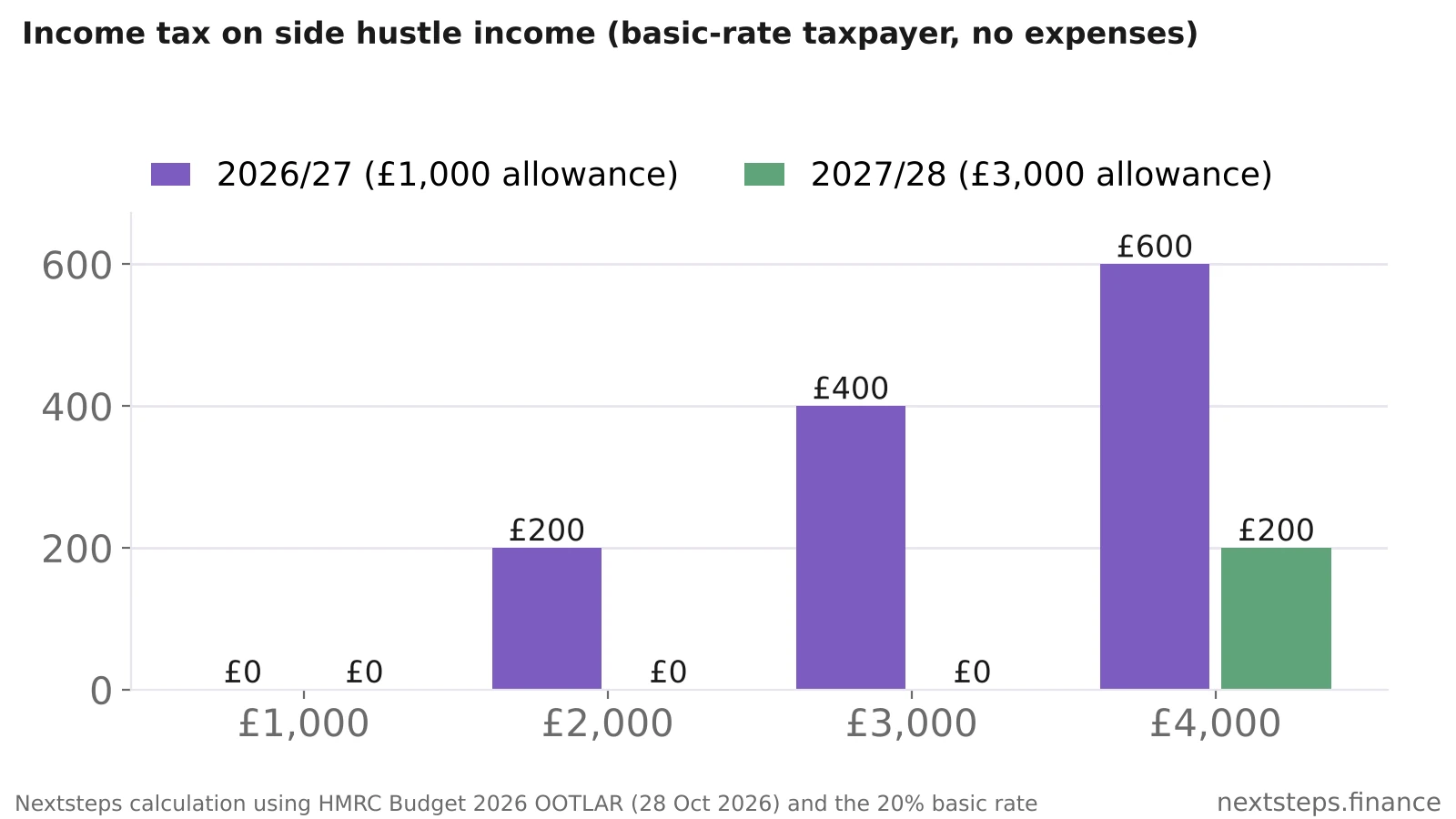
If you earn more than £3,000, you can still deduct the £3,000 allowance instead of your actual expenses. HMRC calls this "partial relief". So on £4,000 of income, you'd pay tax on £1,000. Income tax rates on trading income stay at 20%, 40% and 45% in 2027/28. The rate rises in the Budget apply to savings and property income, not trading income (see our Budget 2026 overview).
Take Action: if your expenses are higher than £3,000, claim those instead. GOV.UK notes that if your expenses are more than your income, claiming expenses may be better because it can create a loss.
Do I need to tell HMRC about side hustle income under £1,000?
No. In 2026/27 you don't need to tell HMRC about trading income of £1,000 or less, but you should keep a record of what you earned. From 2027/28 the same applies up to £3,000.
GOV.UK's current rules for this tax year are:
- Trading income of £1,000 or less: no need to tell HMRC, but keep records.
- Trading income over £1,000: register for Self Assessment.
- Deadline: if your gross income is over £1,000, you must register "by 5 October in the following tax year". For 2026/27 income, that's 5 October 2027.
The new £3,000 threshold doesn't apply to income you earn before 6 April 2027. If you made £2,000 from a side hustle this tax year, you still need to register and file a 2026/27 return.
Who can't use the trading allowance?
GOV.UK lists some important exclusions. You can't use the allowances in a tax year if you have trading or property income from:
- a company you, or someone connected to you, owns or controls
- a partnership where you or someone connected to you is a partner
- your employer, or your spouse's or civil partner's employer.
The trading allowance also doesn't apply to income from a partnership. If you claim the allowance, you can't deduct any other expenses.
Do I pay tax on selling clothes on Vinted or eBay?
Usually not, if you're selling your own unwanted items. HMRC says that "if you're selling personal possessions you probably do not have to pay Income Tax on these", no matter how many you sell. Capital Gains Tax can apply if a single item, or a set, sells for more than £6,000.
It's different if you're trading. GOV.UK says you're probably trading if you sell goods you bought intending to sell for a profit, or items you made, including for a hobby. That income counts towards the trading allowance.
Since January 2024, platforms such as eBay, Vinted and Airbnb have reported seller data to HMRC. According to HMRC's information for online sellers, this kicks in if you sell at least 30 items or earn roughly £1,700 (€2,000) in a calendar year. HMRC stresses that "there is no new tax for online selling". Being reported doesn't mean you owe tax. It just means HMRC can see the activity. See GOV.UK's online platforms checker for your situation.
Take Action: if you buy to resell or make things to sell, keep a simple log of sales and costs. It'll show whether you're under the £1,000 limit now and the £3,000 limit from April 2027.
What about Making Tax Digital for side hustles?
Making Tax Digital (MTD) for Income Tax only affects sole traders and landlords whose qualifying income is above a threshold, which falls from £50,000 to £20,000 by April 2028, so most small side hustles won't be caught. GOV.UK's MTD sign-up guidance sets out the timetable:
| Qualifying income | In tax year | Must use MTD from |
|---|---|---|
| Over £50,000 | 2024/25 | 6 April 2026 |
| Over £30,000 | 2025/26 | 6 April 2027 |
| Over £20,000 | 2026/27 | 6 April 2028 |
Qualifying income comes from self-employment and property, not from your salary. A side hustle turning over £3,000 is far below these levels.
Is matched betting taxed as side hustle income?
Generally no. Matched betting profits are gambling winnings rather than trading income, so they don't count towards the trading allowance. The Gambling Commission confirms that "winnings from gambling for customers are tax-free, regardless of the amount won", because tax is charged on operators instead. HMRC's Business Income Manual says "betting and gambling, as such, do not constitute trading".
That's why matched betting is a popular extra-income idea. You use bookmakers' free bet offers and cover each bet with an opposite "lay" bet on an exchange, so the result of the event doesn't matter. Tools such as OddsMonkey find suitable offers and do the calculations. According to OddsMonkey's FAQ, its free trial includes guides to make £29+ profit, and paid membership costs from £39.99 a month or £249.99 a year, with a 14-day money-back guarantee.
The downsides are real: it takes time, mistakes can lose money, and bookmakers often restrict accounts that only take offers. It needs a calm, methodical approach, and it isn't for anyone who finds gambling hard to control. 18+ only. Please gamble responsibly. For free support, visit BeGambleAware.org.
How to keep side hustle money separate
A separate account for side hustle income makes it easy to see whether you're under the allowance and saves hours if you ever need to file a return. It doesn't need to be a business account if you're a small sole trader.
If you're paid by overseas clients or platforms, or sell abroad, a Wise account may suit you. According to Wise's UK pricing page, you can get account details to receive money in 22 currencies for free, and conversions use the mid-market rate with a fee from 0.24%. The Wise card costs a one-off £7, and you can withdraw up to £250 a month from ATMs free, then pay 2.69% on the excess (Wise card page).
Points to weigh up:
- Protection: Wise says its account is an e-money account, so your money isn't covered by the FSCS. It's safeguarded instead. Its separate Interest feature (3.29% variable on GBP after fees, last updated by Wise on 23 September 2026) is an investment: capital at risk.
- Invite reward: Wise's invite programme gives new customers a sign-up reward on their first transfers. Check the exact offer on the invite page before you sign up.
- Alternatives: a free second current account from a high street or app bank works fine for purely UK income. Compare options in our Revolut vs Wise comparison and best bank accounts guide.
Take Action: whichever account you use, log each payment with a short note. That record is all HMRC asks for if you use the allowance.
Frequently asked questions
What is the trading allowance for 2026/27?
The trading allowance for the 2026/27 tax year, running from 6 April 2026 to 5 April 2027, is £1,000. If your gross trading income is more than £1,000, you must register for Self Assessment by 5 October 2027. The allowance rises to £3,000 from 6 April 2027, for the 2027/28 tax year.
Is the trading allowance going up to £3,000?
Yes. HMRC confirmed in the Budget on 28 October 2026 that the trading allowance will rise from £1,000 to £3,000 from 6 April 2027. The Self Assessment reporting threshold for trading income will also rise to £3,000, so side hustle income up to that level won't need to be declared or taxed.
Can I claim the trading allowance and expenses?
No, you can claim one or the other. If you use the trading allowance, you can't deduct any other expenses. If your expenses are higher than the allowance, claiming actual expenses is usually better. From April 2027, the allowance is worth more than expenses for anyone whose costs are under £3,000.
Do I need to declare side hustle income under £1,000?
No. In 2026/27, trading income of £1,000 or less before expenses doesn't need to be reported to HMRC, though you should keep records. From 6 April 2027, the limit rises to £3,000. Different rules apply if the income comes from your employer or a company you control.
Is matched betting taxable in the UK?
Generally no. Matched betting profits are gambling winnings, and the Gambling Commission confirms gambling winnings for customers in the UK are tax-free, regardless of the amount. HMRC says betting and gambling, as such, are not trading. So matched betting profits don't count towards the £1,000 or £3,000 trading allowance.
Does the property allowance also rise to £3,000?
No. The Budget 2026 only increased the trading allowance. The property allowance, which covers small amounts of income from land or property such as renting out a driveway, stays at £1,000. Separately, rental profits will be taxed at new property rates of 24%, 44% and 49% from 6 April 2027.
What should you do now?
The £3,000 trading allowance is a genuine win for side hustlers, but it doesn't start until 6 April 2027. Until then, the £1,000 rules apply.
- Total your side hustle income for 2026/27. Over £1,000 means registering for Self Assessment by 5 October 2027.
- Keep simple records from today. You'll need them whether you use the allowance or claim expenses.
- Separate your side hustle money, with a second current account or a Wise account if you're paid in other currencies.
- Look for more ideas in our best side hustles guide and ways to increase your income.
- Plan where the extra money goes with the UK Budget Planner.
The Budget measure still needs legislation, so the details could change. I'll update this guide when HMRC publishes the draft law. If your side income is complex, for example mixed with a company or partnership, a personal finance review or a regulated adviser can help.