
The Budget 2026 is better news for savers than many expected. The biggest change for most households is the U-turn on cash ISAs: last year's plan to cap cash ISA saving at £12,000 for under-65s has been dropped. There's also a new home-buying ISA on the way, a cheaper exit from the Lifetime ISA for some buyers, and a few tax rises that land in April 2027.
I've gone through HMRC's overview of tax legislation and rates and its rates and allowances annex, published on Budget day, so every figure below comes from the official documents unless I say otherwise.
Key takeaways
- Cash ISA limit stays at £20,000 for all savers aged 18 and over from April 2027. The planned cut to £12,000 for under-65s is scrapped.
- The Lifetime ISA will close to new savers and be replaced by a First Time Buyer ISA from April 2029, paying a 25% bonus on homes worth up to £450,000. Existing LISA holders keep their accounts.
- The LISA penalty falls from 25% to 20% from 29 October 2026 if you buy a home costing more than the £450,000 cap.
- Savings tax rises from 6 April 2027: interest outside an ISA will be taxed at 24%, 44% or 49%, up from 20%, 40% and 45%.
- The trading allowance triples from £1,000 to £3,000 from 6 April 2027, which helps anyone with a small side hustle.
What was announced in the Budget 2026?
The headline measures for households are about savings, ISAs and a handful of small tax changes. Income tax, National Insurance and VAT rates were left alone, and the 25% tax-free pension lump sum is untouched (Freetrade's Budget summary).
Here are the changes most likely to affect you, with the dates they start:
| Measure | What changes | When |
|---|---|---|
| Cash ISA limit | Stays at £20,000 for all adults (cut to £12,000 cancelled) | From April 2027 |
| Lifetime ISA | Penalty on over-£450,000 home purchases cut from 25% to 20% | From 29 October 2026 |
| First Time Buyer ISA | Replaces the LISA for new savers, 25% bonus | April 2029 |
| Starter ISA | New incentive for first-time stocks and shares investors | Details to come |
| Savings interest tax | 24% / 44% / 49% outside ISAs | 6 April 2027 |
| Property income tax | 24% / 44% / 49% on rental profits (England and NI) | 6 April 2027 |
| Trading allowance | Rises from £1,000 to £3,000 | 6 April 2027 |
| Mileage rate above 10,000 miles | Rises from 25p to 35p a mile | 6 April 2027 |
| Fuel duty | 5p cut extended, then rises with RPI | Cut to 30 June 2027 |
| VAT on home electricity | 0% rate extended | To 30 June 2027 |
| Council tax surcharge | New charge on homes worth £2m or more | April 2028 |
Take Action: use the table to spot the two or three lines that apply to you, then read those sections below.
Is the cash ISA allowance being cut?
No. The cash ISA cut has been scrapped. HMRC's Budget document says "the government will retain the cash ISA limit at £20,000 for all savers over 18 years old from April 2027".
This reverses last year's Budget, when the then-Chancellor Rachel Reeves announced that under-65s could only put £12,000 a year into cash ISAs from April 2027 (MoneySavingExpert). Martin Lewis summed it up: "The limit will stay at £20,000 tax-free for people of all ages."
What this means for you:
- You don't need to rush to fill your cash ISA before 5 April 2027 out of fear of the cut. You'll have the full £20,000 again in 2027/28.
- The overall ISA allowance stays £20,000, and the Junior ISA limit stays £9,000, according to HMRC's rates annex.
- A cash ISA matters more from April 2027, because tax on interest outside an ISA is going up (see below). We compare current cash ISA rates in our guide to the cash ISA limit staying at £20,000.
If you've already planned around the £12,000 limit, our ISA allowance guide explains how the allowance works across cash, stocks and shares, and Lifetime ISAs.
Take Action: if you hold savings in an ordinary account and pay tax on the interest, compare cash ISA rates with our fixed savings rates guide.
Is the Lifetime ISA being scrapped?
Yes, eventually, for new savers. The Lifetime ISA will be replaced by a new First Time Buyer ISA, which the government plans to launch in April 2029. If you already have a LISA, you can keep paying in and using it under the current rules. Our guide to the Lifetime ISA penalty cut and the First Time Buyer ISA also covers the new Your First Home equity loan scheme.
According to HMRC's Budget overview, the new account will:
- pay a 25% government bonus on the final account balance, up to a maximum of £20,000, paid when you withdraw
- be used towards a first home worth up to £450,000
- need new legislation before it launches, so the detail may still change.
That's different from today's LISA, where the 25% bonus is added to what you pay in (up to £1,000 a year on £4,000 of savings, per GOV.UK). Paying the bonus on the final balance would include investment growth.
The LISA penalty is cut for pricier homes
From 29 October 2026, if you use a LISA to buy a home that costs more than the £450,000 cap, the withdrawal charge falls from 25% to 20%. That's roughly the bonus you got, so you'd get your own money back. The charge for other unauthorised withdrawals stays at 25%, which can still cost you more than the bonus was worth.
Take Action: if you're under 40 and saving for a first home, you can still open a LISA now and keep it when the new ISA arrives. Check the rules on GOV.UK first.
Will income tax go up in 2027?
Not the main rates. HMRC's rates annex shows the Personal Allowance stays at £12,570 in 2027/28, with the basic rate of 20% up to £37,700 of taxable income, 40% up to £125,140 and 45% above. Because the thresholds aren't rising with inflation, more of any pay rise will be taxed.
The tax that does go up is on savings interest. From 6 April 2027, interest above your Personal Savings Allowance will be taxed at:
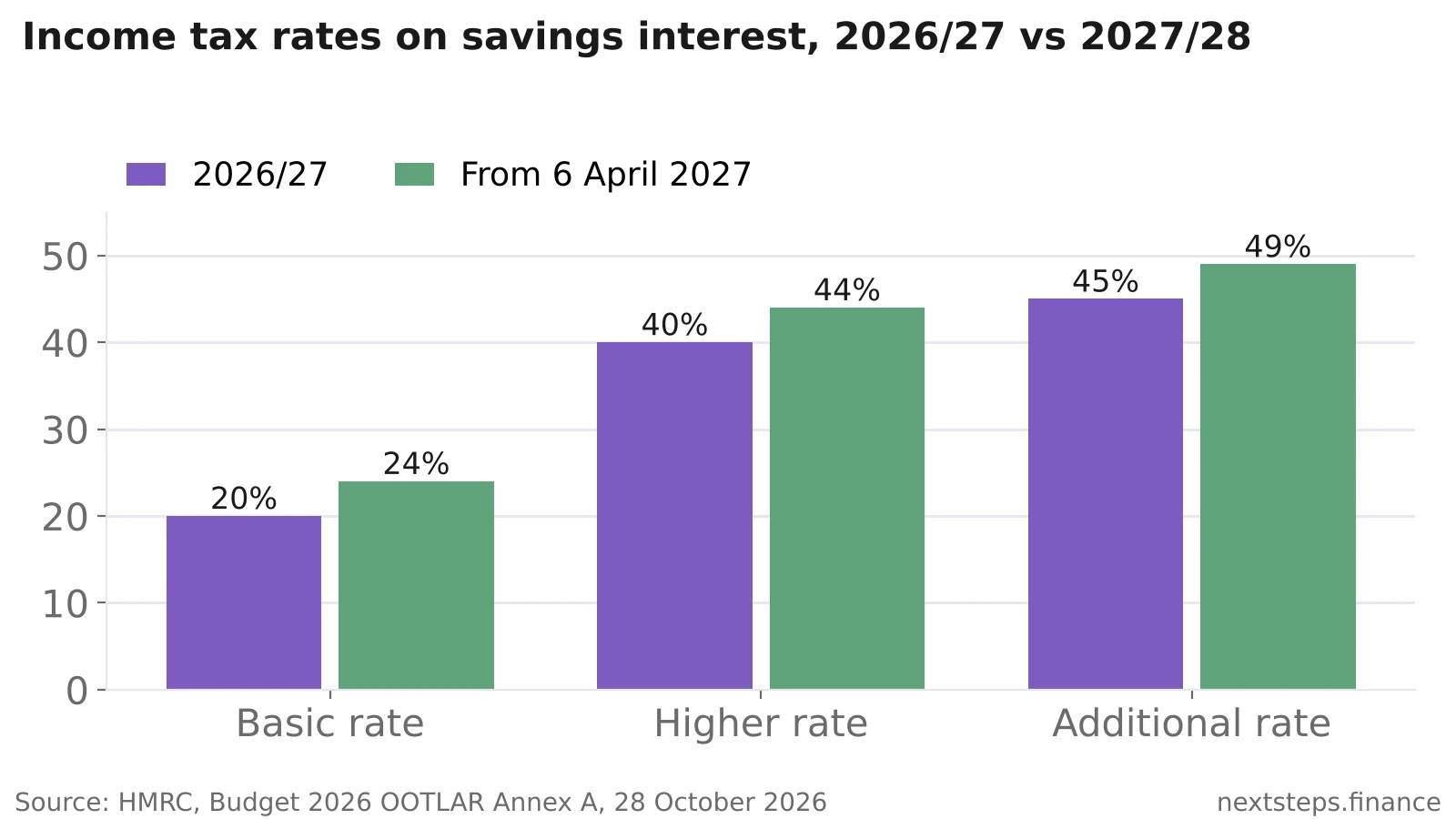
The Personal Savings Allowance itself is unchanged at £1,000 for basic-rate taxpayers and £500 for higher-rate taxpayers. The same 24%, 44% and 49% rates will apply to property income such as rental profits in England and Northern Ireland, while Scotland and Wales can set their own. See who pays the savings tax rise and how much, with worked examples for every tax band.
Dividend tax doesn't change: the rates stay at 10.75%, 35.75% and 39.35%, with a £500 dividend allowance. Capital gains tax stays at 18% and 24%, with a £3,000 annual exempt amount.
What the savings tax rise costs you
Here's what £5,000 of interest earned outside an ISA would cost a taxpayer whose salary already uses up their Personal Allowance:
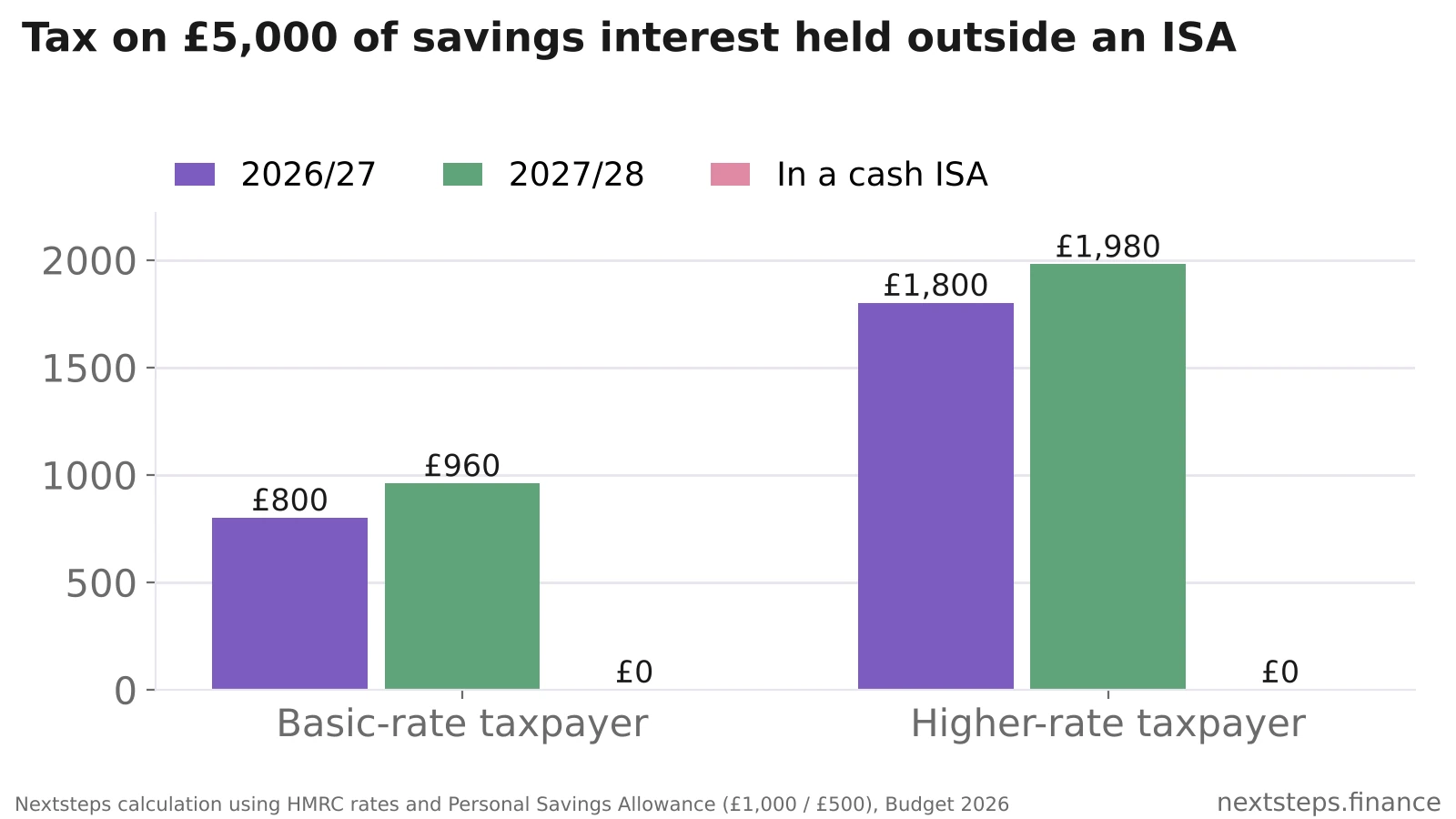
Holding the same savings in a cash ISA means £0 tax, which is why keeping the £20,000 cash ISA limit matters.
Take Action: move taxable savings into an ISA where you can, starting with this tax year's £20,000 allowance before 5 April 2027.
What does the Budget mean for investors and the new Starter ISA?
For investors, the Budget mostly leaves things alone. The ISA allowance, dividend rates and capital gains tax rates are unchanged. The new idea is a Starter ISA for people investing in a stocks and shares ISA for the first time.
HMRC's document says the government "will work with industry to explore a new ISA incentive" for first-time investors. No bonus, limit or start date has been confirmed yet.
You don't need to wait for it to start investing. Low-cost platforms already let you open a stocks and shares ISA with small amounts:
| Platform | Who it may suit | Key point | Link |
|---|---|---|---|
| InvestEngine | Hands-off ETF investors | No platform fee on DIY portfolios; ETF costs apply. Refer-a-friend bonus of £20-£200 when you invest £100+ | Sign up to InvestEngine |
| Trading 212 | People who want to pick shares and ETFs | Commission-free investing; other fees may apply | Trading 212 (commission-free) |
| A Lifetime ISA provider | First-time buyers under 40 | 25% bonus on up to £4,000 a year | See GOV.UK |
InvestEngine's refer-a-friend terms say the bonus is randomly set between £20 and £200, is for new customers who invest at least £100, and must stay invested for 12 months before you can withdraw it. Capital at risk - the value of investments can go down as well as up.
If you're comparing platforms in more depth, see our best stocks and shares ISA guide. Investing suits money you won't need for at least five years. Keep your emergency savings in cash.
Will pensioners pay tax on the State Pension?
Most won't pay small amounts of tax on it. The full new State Pension is expected to rise to about £250.70 a week (£13,036 a year) in April 2027 under the triple lock (Which?). That's above the frozen £12,570 Personal Allowance.
To stop pensioners on the full State Pension being chased for small tax bills, the Budget creates a Pensions Tax Allowance for 2027/28 to 2029/30. HMRC's annex sets the eligibility threshold at £13,037 of income. Above that, the allowance is withdrawn at £1 for every £3 of income and disappears fully at £13,319.
Other pension changes in the Budget:
- The 25% tax-free lump sum is unchanged, as is the £60,000 annual allowance.
- Unused pension pots will count for inheritance tax from 6 April 2027. This was already law; the Budget makes only minor technical changes.
- The two-year rule for pension death benefits is removed for payments on or after 28 October 2026.
Our guide to the State Pension rise in April 2027 has the full rates. Pension decisions depend on your circumstances, so regulated advice or a personal finance review may help.
What else changes for households?
Several smaller measures could still save or cost you money:
- Side hustles: the trading allowance rises from £1,000 to £3,000 from 6 April 2027, and the Self Assessment reporting threshold rises with it. See our side hustle ideas.
- Driving for work: the tax-free mileage rate stays at 55p for the first 10,000 miles and rises from 25p to 35p above that, from April 2027 (MoneySavingExpert).
- Fuel: the 5p-a-litre fuel duty cut is extended to 30 June 2027. On 1 July 2027 rates return to pre-March 2022 levels, increased by RPI.
- Energy: households in England in council tax bands A to D get a £100 Household Energy Payment from January 2027 (see who gets the £100 energy payment), and the 0% VAT rate on household electricity is extended to 30 June 2027. MoneySavingExpert reports that gas standing charges will be scrapped "by 2027 at the earliest".
- Carers: the Carer's Allowance earnings "cliff edge" is set to be replaced from the 2030/31 financial year.
- Child Benefit rises in April 2027 to £28.00 a week for the eldest child and £18.55 for each other child.
- Alcohol duty rises with RPI from 1 February 2027.
- Expensive homes: a High Value Council Tax Surcharge applies to homes worth £2m or more from April 2028.
Take Action: update your monthly numbers in the UK Budget Planner once you know which changes affect you.
Frequently asked questions
What was announced in the Budget 2026?
The Budget on 28 October 2026 kept the cash ISA limit at £20,000 for all adults, announced a First Time Buyer ISA to replace the Lifetime ISA from April 2029, and cut the LISA penalty for over-£450,000 homes to 20%. It also confirmed higher savings and property income tax rates from April 2027 and tripled the trading allowance to £3,000.
Is the cash ISA allowance still £20,000?
Yes. The cash ISA allowance stays at £20,000 a year for everyone aged 18 and over, including under-65s, from April 2027. Last year's plan to cut it to £12,000 for under-65s was scrapped in the Budget on 28 October 2026. The overall £20,000 ISA allowance is also unchanged.
Is the Lifetime ISA being scrapped?
The Lifetime ISA will close to new savers when a First Time Buyer ISA launches, planned for April 2029. The new ISA pays a 25% bonus on the final balance towards a first home worth up to £450,000. If you already have a Lifetime ISA, you can keep paying in and using it under the current rules.
When do the Budget 2026 changes come into effect?
Most tax changes start on 6 April 2027, including higher savings and property income tax rates, the £3,000 trading allowance and the higher mileage rate. The Lifetime ISA penalty cut applies from 29 October 2026. The First Time Buyer ISA is planned for April 2029, and the council tax surcharge on £2m+ homes for April 2028.
Will I pay more tax on my savings in 2027?
Only on interest above your Personal Savings Allowance held outside an ISA. From 6 April 2027, that interest is taxed at 24% for basic-rate taxpayers, 44% for higher-rate and 49% for additional-rate, up 4 points each. The allowance stays £1,000 for basic-rate and £500 for higher-rate taxpayers. ISA interest stays tax-free.
Has the Personal Allowance changed in the Budget 2026?
No. HMRC's Budget rates annex shows the Personal Allowance stays at £12,570 in 2027/28, and the basic-rate band stays at £37,700. The higher-rate threshold is therefore still £50,270, and the additional rate still starts at £125,140. Because these thresholds aren't rising, pay rises push more income into tax.
What should you do now?
For most people, the Budget 2026 calls for small tweaks, not big changes. Use your ISA allowance, especially if you pay tax on savings interest. If you're a first-time buyer, a Lifetime ISA still works and you can keep it. And if you're new to investing, you don't need to wait for the Starter ISA.
- Check whether you pay tax on savings interest and move what you can into a cash ISA before 5 April 2027.
- First-time buyer under 40? Weigh up opening a Lifetime ISA now, since existing accounts carry on.
- Side hustle income under £3,000? From 2027/28 you may not need to report it.
- Investing for five years or more? Compare low-cost ISAs such as InvestEngine. Capital at risk - the value of investments can go down as well as up.
Some of these measures still need legislation, and details such as the Starter ISA haven't been published. I'll update this guide as HMRC and the Treasury release more.