Cashback apps pay you a share of the commission retailers give them, on purchases you'd make anyway. They fall into three types: shopping portals you click through, gift card apps that give instant cashback when you buy a retailer's gift card, and card-linked apps that track your card spending automatically. Here are the apps worth using, how each one pays, and how to combine them without losing cashback.
Key takeaways
- Online shopping: TopCashback and Quidco usually pay the highest rates, but cashback can take weeks or months to confirm.
- Supermarkets and high street: gift card apps like JamDoughnut and Cheddar pay cashback instantly. Buy the gift card in the app at the till, then pay with it.
- Zero effort: Airtime Rewards tracks your linked card in participating shops and knocks the cashback off your mobile bill.
- One portal per purchase. Don't let coupon browser extensions override your cashback tracking.
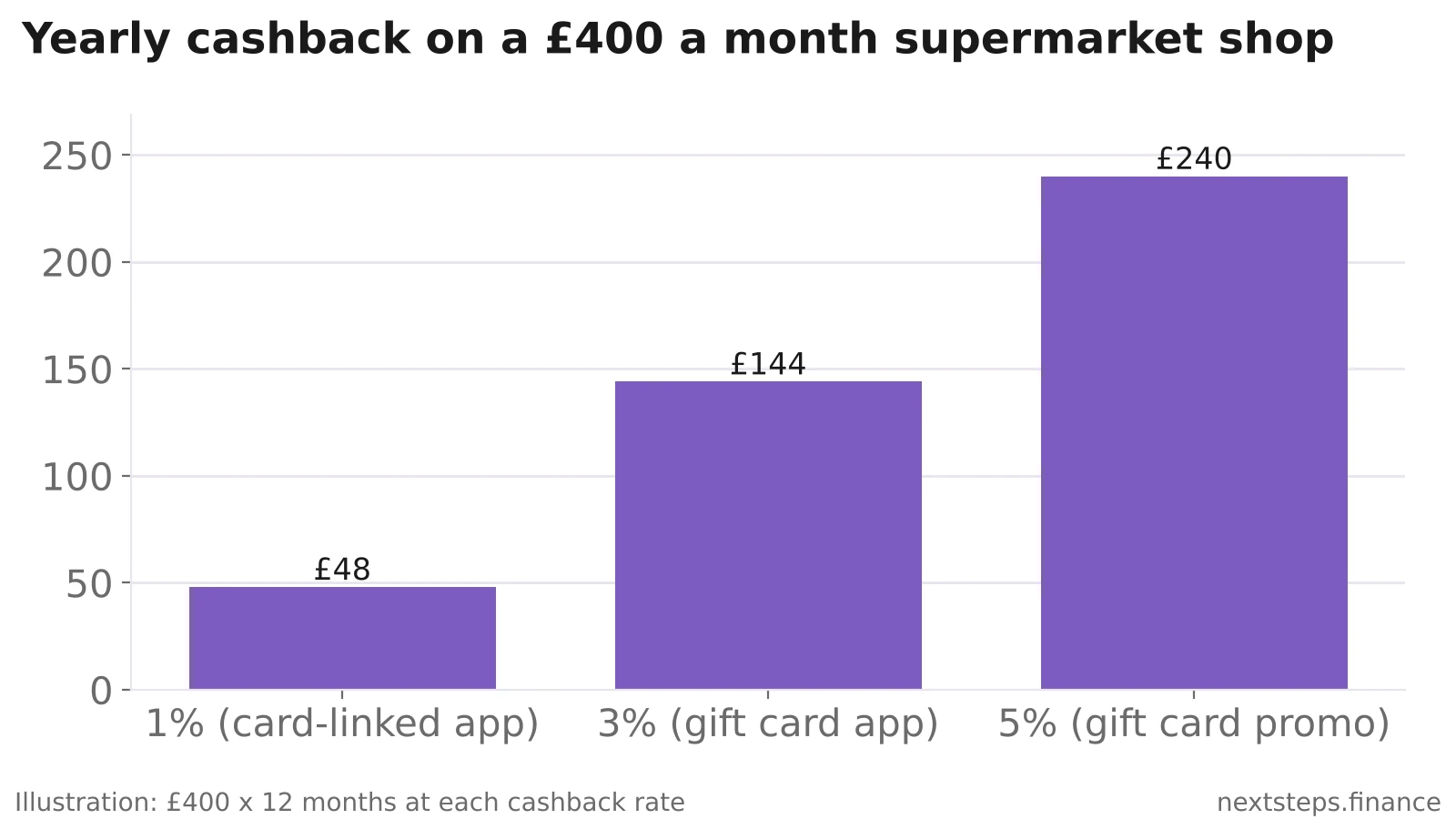
- At 3% on a £400-a-month food shop, a gift card app earns about £144 a year.
What are the best cashback apps in the UK?
| App | Type | Best for | Typical rate | How you're paid |
|---|---|---|---|---|
| TopCashback | Shopping portal | Online shopping, insurance, broadband, switching | Around 1-15% | Bank, PayPal or boosted gift cards |
| Quidco | Shopping portal | Online shopping, exclusive offers | Around 1-12% | Bank or PayPal |
| JamDoughnut | Gift card app | Supermarkets, high street, eating out | Around 2-10% | Instant cashback, withdraw from £10 |
| Cheddar | Gift card app | Everyday in-store and online spending | Varies by retailer | Instant cashback, withdraw from £5 |
| Airtime Rewards | Card-linked | Automatic cashback in-store | Around 1-5% (higher on offers) | Credit off your mobile phone bill |
| Rakuten | Shopping portal | Online fashion and department stores | Varies | Payouts from £5.01 |
| Swagbucks | Surveys and shopping | Earning a little extra in spare time | Points | Gift cards or PayPal |
Rates change daily and depend on the retailer, so always check the rate on the day. Sign-up bonuses also come and go. TopCashback and Quidco often pay new members a bonus once they've earned a minimum amount of cashback.
How do cashback apps actually work?
Retailers pay a commission to sites that send them customers. Cashback apps pass part of that commission to you. How you earn depends on the type:
- Shopping portals (TopCashback, Quidco, Rakuten). Start your shopping on the portal, click through to the retailer, and buy as normal. The cashback shows as pending, then confirmed once the retailer pays the portal. That can take weeks for shopping and months for things like insurance or broadband.
- Gift card apps (JamDoughnut, Cheddar). At the till or checkout, buy a gift card for that retailer in the app for the exact amount, then pay with it. The cashback lands instantly. This is the best way to earn on supermarket shopping, where portals rarely pay.
- Card-linked apps (Airtime Rewards). Link your debit or credit card once, and the app spots qualifying purchases at partner shops automatically.
Take Action: Set up one app of each type. A portal for online shopping, a gift card app for the weekly shop, and Airtime Rewards for automatic extras.
Which cashback app pays the most?
For online shopping, TopCashback and Quidco usually pay the most. They compete on the same retailers, so it's worth checking both. Our TopCashback vs Quidco comparison goes into detail.
For in-store and supermarket spending, gift card apps usually win. Portals rarely pay on in-store groceries, while gift card apps often pay a few percent at major supermarkets and high-street chains.
For the least effort, Airtime Rewards earns automatically, but rates are generally lower and it only pays as a phone bill credit.
The biggest single wins are usually high-value switches through a portal: broadband, energy, insurance, and bank or credit card sign-ups. Some of these pay £20-£100+ in cashback.
Can you stack cashback apps?
Yes, if you stack different types:
- Card-linked + portal: a card-linked app tracks your card payment, separately from a portal's click tracking, so both can sometimes pay on the same purchase. Check each app's terms, because some retailers exclude it.
- Cashback + rewards credit card: pay with a rewards or cashback credit card on top of portal cashback. Only do this if you clear the balance in full each month.
- Cashback + discounts: voucher codes and student discounts usually work alongside portal cashback, but codes not listed on the portal can sometimes void it.
What doesn't stack: two shopping portals on one purchase. The last click wins, and you may get nothing. Coupon browser extensions can also override your cashback tracking at checkout, so turn them off when you've clicked through a portal. Our guide to stacking cashback apps shows step-by-step combinations, and our Black Friday cashback guide applies them to the November sales.
What are the downsides of cashback apps?
- Spending more to "earn" more. 5% back on something you didn't need is still 95% spent.
- Slow and missing payments. Portal cashback can take months, and tracking sometimes fails. Keep order confirmations and claim if it doesn't appear.
- Payout minimums of £5-£20 on some apps.
- Data sharing. Card-linked apps see your transactions at partner retailers. Check the privacy policy if that bothers you.
- Gift card risk. Only buy what you'll spend soon, because gift cards aren't protected like bank money if a retailer goes bust.
How to earn £200+ a year from cashback
- Route your big purchases through a portal: insurance renewals, broadband, energy, holidays and electronics.
- Use a gift card app for the weekly shop and fuel where available.
- Link a card to Airtime Rewards and forget about it.
- Track what you earn in a budgeting app like Emma or the UK Budget Planner, so you can see which apps are worth keeping. Our budgeting apps comparison covers Emma, Snoop and Plum side by side.
- Withdraw regularly rather than leaving balances sitting in apps.
Related guides
FAQ
What is the best cashback app in the UK?
There isn't one best app for everything. TopCashback and Quidco usually pay the most for online shopping, gift card apps like JamDoughnut and Cheddar pay instant cashback at supermarkets and high-street shops, and Airtime Rewards earns automatically through your linked card. Most people do best using one of each type.
Which cashback app pays out fastest?
Gift card apps such as JamDoughnut and Cheddar pay cashback instantly when you buy the gift card. Shopping portals like TopCashback and Quidco are slowest, because cashback stays pending until the retailer confirms the sale, which can take weeks or months.
Do cashback apps work for supermarket shopping?
Yes, but mostly through gift card apps rather than portals. Buy a gift card for the supermarket in an app like JamDoughnut or Cheddar at the checkout, pay with it, and the cashback is credited instantly. Shopping portals rarely pay cashback on in-store grocery shopping.
Is cashback taxable in the UK?
Cashback on your own personal shopping is generally treated as a discount on what you bought, not as income, so it isn't normally taxable. If you earn significant amounts from referring others or run it like a business, tax rules may apply, and it's worth checking with HMRC or an accountant.
Can you use two cashback sites on the same purchase?
No. Retailers credit the last site you clicked through from, so using two portals usually means one gets nothing and you may lose the cashback entirely. Use one portal per purchase, and switch off coupon extensions that can override tracking.
The information in this article is for educational purposes only and does not constitute financial advice. Rates and bonuses were checked on 21 October 2026 and change frequently; check each app's terms before relying on a rate.
Sources: Household Money Saving: best cashback apps, Scrimpr: best cashback sites and apps, TopCashback, Quidco.