
Banking hubs UK has become a bigger search as high-street branches disappear. On 16 November 2026, HM Treasury announced that it had accepted the central recommendation of an independent review and will legislate to protect access to in-person banking. The detailed framework is still to be designed.
A hub can help with cash, basic account tasks and some face-to-face support, but it is not a full replacement for every branch. The difference between rules already in force and new protections still being designed matters.
Key takeaways
- 250 banking hubs were open across the UK as of September 2026, according to the independent Access to Banking Services Review.
- A hub combines a shared counter run by the Post Office with community bankers from participating banks on different days.
- Existing FCA rules protect local cash access when branches or ATMs close; they don't guarantee a full branch or every face-to-face service.
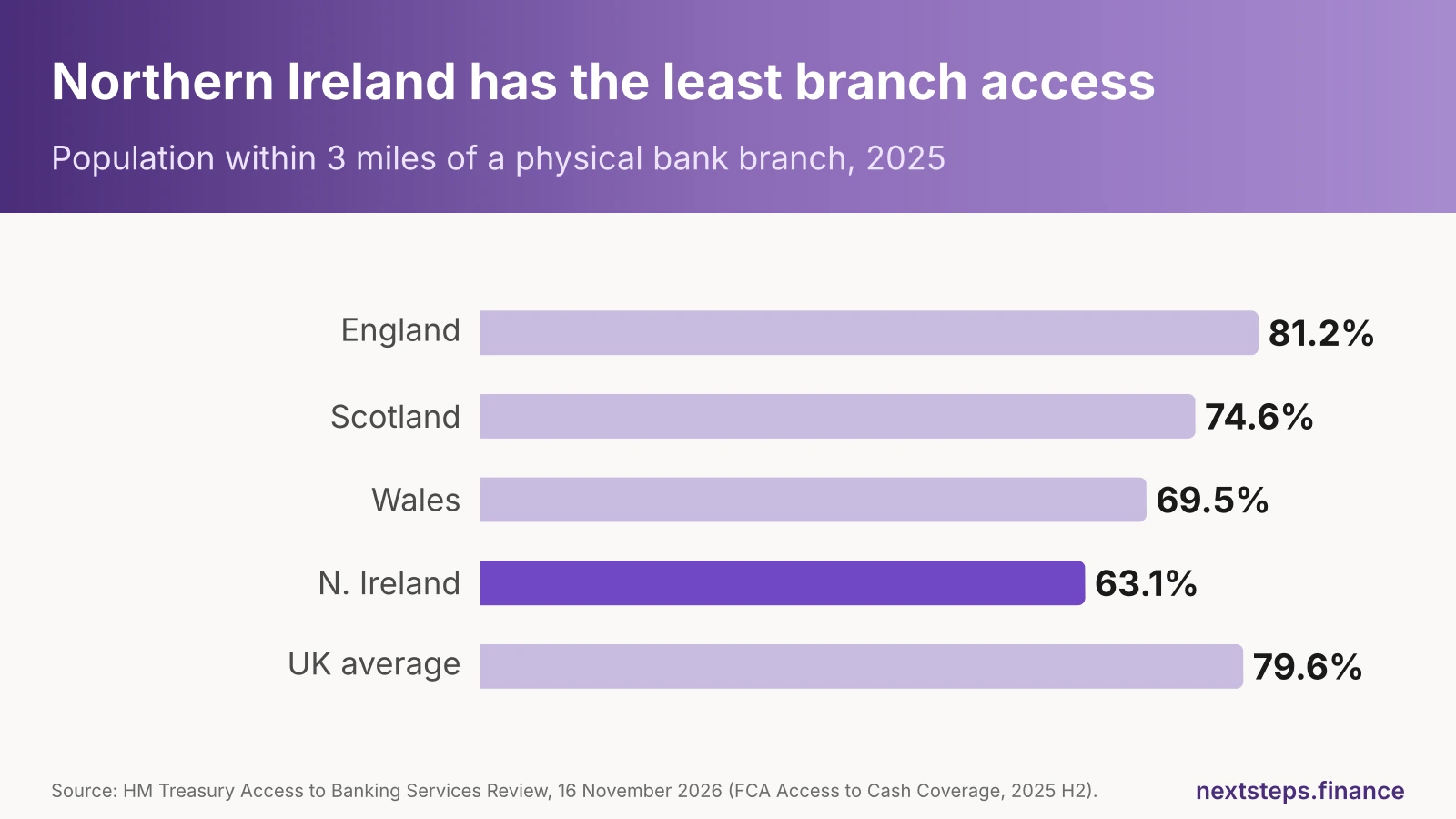
- In 2025, 79.6% of the UK population lived within three miles of a larger bank's branch, down from 87% in 2022. Northern Ireland was lowest at 63.1%.
- The Government will legislate for a wider framework, but which providers are covered, the service standards and a start date have not been confirmed.
What is a banking hub in the UK?
A banking hub is a shared high-street location where customers of participating banks can use a common counter and, on scheduled days, speak to a community banker from their own bank. It keeps some local access after branch closures, rather than recreating a full branch for every provider.
The Post Office explains that hubs are owned by Cash Access UK and run by the Post Office in partnership with the banks. Community bankers work on different days, so the bank represented can change through the week. Its hub page lists community bankers from 13 banks, including Barclays, HSBC, Lloyds, Halifax, NatWest, Santander, TSB and Virgin Money.
The independent review report says 250 banking hubs were open across the UK as of September 2026. Hubs handled more than 9 million transactions worth £1.58 billion in 2025, and 95% of customers surveyed said the hub met their needs. Access is limited to customers of banks that are members of, or subscribe to, Cash Access UK.
What can you do at a banking hub?
A hub can handle routine cash transactions and some account queries, but the service depends on your bank and the location. Check before travelling, especially for cheque deposits or more complex help.
| Service | Where it is handled | What to check |
|---|---|---|
| Withdraw or pay in cash | Shared counter | Your account limits |
| Check your available balance | Shared counter | Whether your bank participates |
| Pay in a cheque | Shared counter | Whether your bank participates |
| Pay utility bills or top up gas and electricity | Shared counter | Current counter services |
| Get change for a business | Shared counter | Business banking with a participating bank |
| More complex account help | Your bank's community banker | Which weekday your bank attends |
The shared counter is available to customers of participating banks whenever the hub is open. A community banker is bank-specific and attends only on certain days, so check with your local hub for details.
A hub is not a Post Office branch. The Post Office says posting letters and parcels, insurance, travel money and identity services such as passports aren't available at hubs. Check with your own bank whether it applies any charges or limits to counter transactions.
Can you use a banking hub if your bank has no branch?
Usually, yes, if your bank or building society participates in the shared hub arrangements. You don't need to be a customer of the bank whose community banker is on duty to use the counter.
There are two limits. Not every provider participates, and seeing a community banker from your own bank depends on that bank offering the service at that hub. If you bank with a provider that isn't listed, check its own guidance on how to pay in and withdraw cash.
If branch access matters when choosing an account, compare the best bank accounts in the UK. If you decide to move, our bank switching guide explains the Current Account Switch Service and what moves automatically.
How do you find a banking hub near you?
Use the official Cash Access UK hub directory for locations, opening times and community banker days. The Post Office's banking hubs page also lists open hubs by region. Hubs are usually open 9am to 5pm, Monday to Friday, but hours vary by location.
Before visiting, check the opening hours, the day your bank's community banker attends and whether the hub can handle your specific transaction. The counter may be open when your own bank's representative is not.
Take Action: Look up your nearest hub and note which day your bank's community banker is in, before you need it.
What happens when a bank branch closes?
A branch can still close, but designated banks and building societies must follow the FCA's access-to-cash rules. These protect cash withdrawal and deposit services, not the whole branch network.
The FCA says designated firms must:
- Assess cash access when changes are made to local services, such as a branch or ATM closing, to see whether additional services are needed.
- Respond to local requests: residents, community organisations and representative groups can ask for an assessment of gaps in local cash access.
- Keep facilities open (including branches and ATMs) until any additional cash services identified are available.
Possible outcomes include a new ATM, a banking hub or another cash service. The FCA's powers cover cash withdrawals and deposits, not every service previously available in a branch. A replacement cash point doesn't give you help with fraud, bereavement, account access or Power of Attorney.
What do the new face-to-face banking rules mean?
The 16 November 2026 announcement goes beyond cash. The Government accepted the central recommendation of the independent Access to Banking Services Review and said it will legislate to protect access to essential in-person banking.
The review received 18,197 responses to its call for evidence. The Government says more than three million adults regularly rely on banking in person, rising to more than four million when less frequent users are included. In 2025, 79.6% of the UK population lived within three miles of a physical branch of one of the larger banks or building societies, down from 87% in 2022.
The chart shows the 2025 figure by nation, from 81.2% in England to 74.6% in Scotland, 69.5% in Wales and 63.1% in Northern Ireland. It measures distance to a bank branch, not to a cash machine or Post Office, which is why it is lower than figures for access to any form of cash service.
The review says people need in-person access to two types of essential service:
- Day-to-day banking: opening, closing and managing current accounts, payments and transfers, cheque and card services, and help getting set up with online banking.
- More complex services: linked to unplanned life events, such as fraud and scams, complaints, bereavement, Power of Attorney, debt management and other complex queries.
The review recommends an obligation on designated larger providers of personal current accounts to ensure reasonable access to these services. It suggests industry action in 2027 so new approaches can be piloted, ahead of a regulatory implementation period in 2028. Those are the review's proposed timings, not a confirmed legal start date.
Important details are undecided: which providers will be designated, what counts as reasonable access and how the framework will work. The Government says it will develop it with the FCA, industry and consumer groups.
This is not a promise that every closed branch will be replaced by a full branch or that every town will get a hub. The aim is reasonable access to essential services, which could be delivered through shared hubs or other arrangements.
How can your community ask for better banking access?
You don't need to wait for the new framework if the immediate problem is access to cash. Under the FCA's rules, local residents, community organisations and representative groups can ask for an assessment when cash withdrawal or deposit services are inadequate.
- Check what's already nearby using the hub directory and your bank's branch and ATM finder.
- Identify the gap: for example, no suitable place to pay in cash, an inaccessible ATM, limited hours or a long journey.
- Ask a designated bank or building society for an assessment, or ask a community organisation or representative group to request one.
- Explain who is affected and what is needed. Evidence about public transport, travel times, local businesses and opening hours helps.
- Read the outcome, and raise it again with the firm if the gap isn't addressed.
If the issue is wider than cash, such as a scam, bereavement or Power of Attorney, explain the specific need to your bank and ask whether a community banker or assisted channel can help. The current cash rules can't require a bank to provide those wider services. Our UK scam reimbursement guide explains the separate process for bank-transfer scam claims.
The wider UK banking basics guide covers account protection, digital banks and switching, while the Foundations pillar brings together practical steps for managing everyday money.
Frequently asked questions
Do banking hubs replace bank branches?
No. A banking hub provides a shared cash counter and access to community bankers from participating banks on set days. It can replace some everyday services lost when a branch closes, but it is not a full branch for every provider and doesn't offer every specialist service.
Can I use a banking hub if my bank is not based in that town?
Yes, if your bank or building society participates in the hub's shared services. You can usually use the counter for cash and cheque transactions even when your own bank's community banker isn't there. Check the hub directory and your provider's information first.
What can't you do at a banking hub?
The Post Office says hubs don't offer postal services, insurance, travel money or identity services such as passports. Community bankers attend only on certain days, so more complex account help depends on your bank's schedule at that hub. Use a Post Office branch for postal and travel money services.
Will the new rules stop banks closing branches?
No blanket ban has been announced. Existing FCA rules require designated firms to assess and address gaps in cash access. The Government's planned framework aims to protect reasonable access to wider essential in-person banking, but its detailed requirements are still being developed.
When will the new face-to-face banking rules start?
No start date has been confirmed. The Government has committed to legislate, and the independent review suggested industry pilots in 2027 ahead of a regulatory implementation period in 2028. Until then, only the FCA's existing access-to-cash rules apply when a branch closes.
The bottom line: banking hubs can keep useful local services, but check exactly what your bank offers at each location. Current rules protect cash access; the wider face-to-face banking framework is a separate Government commitment that still needs legislation and detailed rules.