
Had your car finance claim rejected in a letter this week? You're not alone. The Financial Conduct Authority (FCA) told lenders to write by 18 November 2026 to people who complained about a post-April 2014 agreement by 30 June 2026 and who, in the lender's view, aren't owed compensation. A second wave of letters, for older agreements, is due by 18 January 2027. Here's what a rejection means, why it might be wrong, and what you can do about it without paying a claims firm.
Key takeaways
- Lenders had to tell people with post-April 2014 agreements who complained by 30 June 2026 if they're not due a payout by 18 November 2026, according to the FCA.
- People with pre-April 2014 agreements who complained by 31 August 2026 should hear by 18 January 2027. Later complaints get an answer within 5 months.
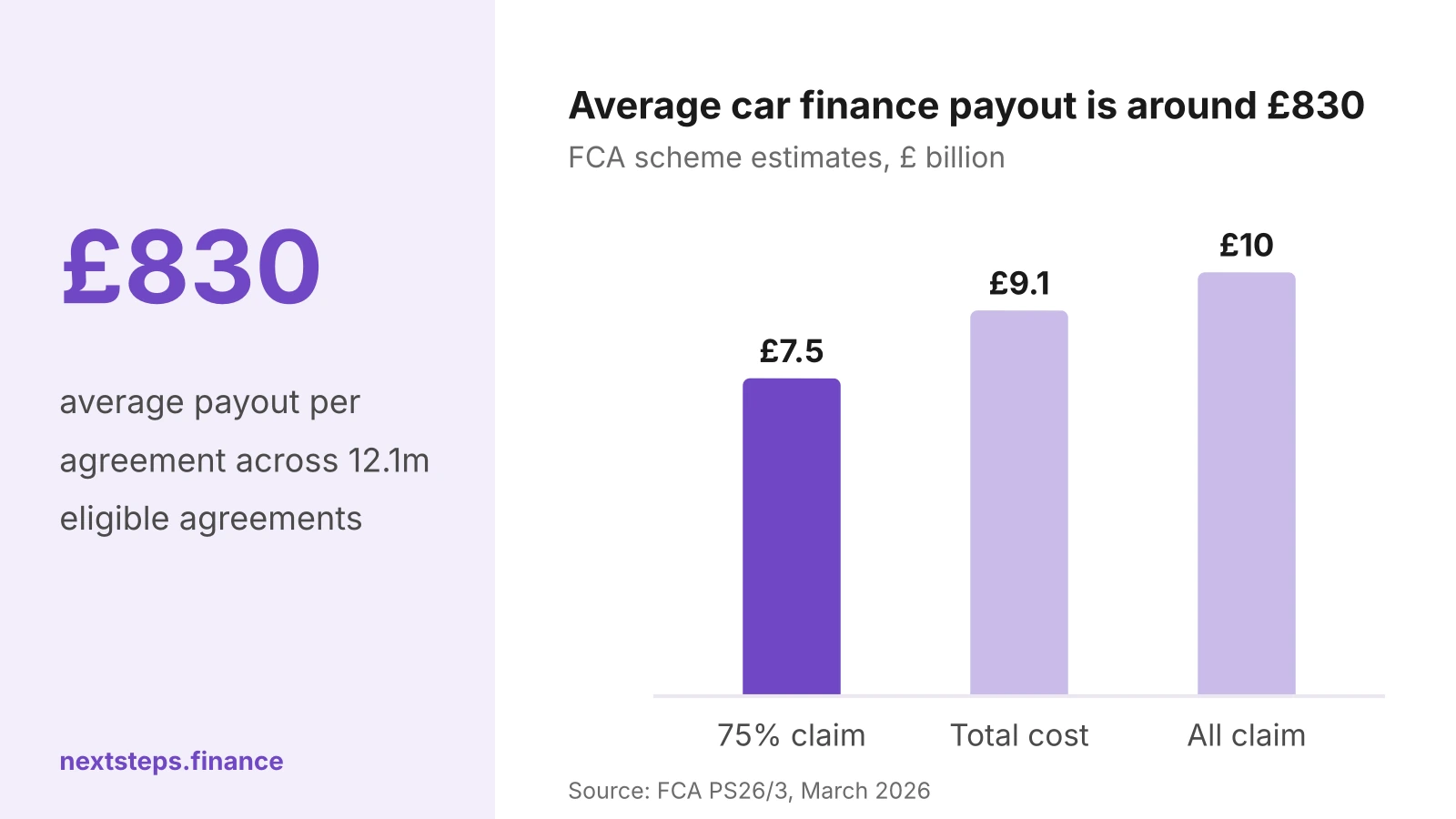
- The FCA estimates an average payout of around £830 per agreement, across 12.1 million eligible agreements.
- Payouts for eligible people are on hold until a legal challenge is heard between 16 February and 3 March 2027. The FCA expects payments to start in 2027 if the scheme is upheld.
- Challenging a rejection is free: ask the lender to review, then go to the Financial Ombudsman. Claims firms can take up to 36% of any compensation, including VAT.
Why was my car finance claim rejected?
A car finance claim is usually rejected because the lender believes your agreement falls outside the FCA's redress scheme, or that the commission arrangement was fair. The most common reasons are a small commission, an agreement outside the scheme's dates, or a complaint the lender thinks was made too late.
The scheme, set out in the FCA's policy statement PS26/3 in March 2026, covers cars, motorbikes, vans and campervans bought on PCP or hire purchase between 6 April 2007 and 1 November 2024, where the broker's commission wasn't properly disclosed. To qualify, the agreement needed one of three arrangements:
- A discretionary commission arrangement (DCA), where the dealer could set your interest rate and earn more commission by charging you more.
- A high commission arrangement, where the commission was at least 39% of the total cost of credit and 10% of the loan.
- A contractual tie giving a lender exclusivity or a right of first refusal, unless the lender can show the link was visible to you (for example, shared or similar names).
Under PS26/3, the lender can treat your case as outside the scheme or fair if:
- the commission was £120 or less (agreements before 1 April 2014) or £150 or less (from 1 April 2014)
- you were charged no interest
- the DCA wasn't actually used to push up your rate and earn extra commission
- the Financial Ombudsman or a court has already decided your case, or you've already accepted compensation
- the claim is out of time (the FCA says you generally have 6 years from the end of the agreement to bring a legal claim, often longer where commission was deliberately concealed).
Take Action: Read the reason in your letter and check it against the list above. A rejection based on the wrong agreement date, the wrong commission figure or the wrong lender is worth challenging.
When should my car finance letter arrive?
Your letter's deadline depends on when your agreement started and when you complained. The FCA's consumer page, last updated on 3 November 2026, gives these dates for lenders telling people they are not owed compensation:
| Your agreement started | You complained | Lender must tell you if you're not due a payout by |
|---|---|---|
| On or after 1 April 2014 | By 30 June 2026 | 18 November 2026 |
| Before 1 April 2014 | By 31 August 2026 | 18 January 2027 |
| Any date | After those dates | Within 5 months of your complaint |
There are two exceptions where these deadlines don't apply: if the lender thinks your complaint was made too late, or if your case is a contractual tie where the lender says the link between it and the dealer was visible. In its July statement, the FCA also gave firms a 7-week grace period past each deadline before it would take enforcement action, so a letter arriving a little late isn't unusual.
Does no letter mean I'm owed money?
No letter by 18 November is a hopeful sign, but it isn't proof you're owed money. The FCA says the timing of letters to people who are eligible is uncertain while the legal challenge runs, and lenders don't yet have to work out or pay compensation.
That's because in July 2026 the Upper Tribunal suspended parts of the scheme while it hears a legal challenge. The case was brought by three lenders (Volkswagen Financial Services, Mercedes-Benz Financial Services and Crédit Agricole Auto Finance) and by Consumer Voice, represented by Courmacs Legal. The FCA confirmed on 26 October 2026 that the hearing will run from 16 February to 3 March 2027, with a judgment in the months after.
If the scheme is upheld and not appealed, the FCA expects payments to start in 2027. MoneySavingExpert reports that if it's overturned in whole or in part, compensation could be pushed back to 2028 or beyond.
Take Action: Keep your complaint reference and any letters somewhere safe, and make sure your lender has your current address and email.
How do I challenge a car finance claim rejection?
You can challenge a rejection for free in two steps: ask your lender to review its decision, then refer it to the Financial Ombudsman Service if you're still unhappy. You don't need a claims firm or a solicitor for either step.
- Check the facts in the letter. Compare the agreement dates, lender name and commission amount with your own paperwork. If you don't have the paperwork, ask the lender for a copy of your agreement.
- Ask the lender to review. Reply in writing, say which part of the decision you think is wrong and why, and quote your complaint reference. The FCA says you have 1 month to accept or challenge a lender's response under the scheme.
- Go to the Financial Ombudsman. If the lender sticks with its decision, you can refer your complaint to the free Financial Ombudsman Service. The FCA says to contact the Ombudsman by the date given in your lender's letter, so note that date now.
- Consider court as a last resort. The FCA says you can still go to court, but that comes with costs and risk.
One limit to know: under PS26/3, if your lender has properly decided that your arrangement was fair, the Ombudsman can review the case but will only change the outcome if the lender didn't follow the scheme rules.
If you've been through a complaint before, the steps will feel familiar. Our guide to claiming a bank transfer scam refund walks through a similar lender-then-Ombudsman route.
Should I use a claims firm for car finance?
You don't need a claims firm to complain about car finance, and using one can be expensive. The FCA warns that a claims management company or law firm can take up to 36% of your compensation, including VAT, for a complaint you could make yourself for free.
On an average payout of around £830, a 36% fee would cost you about £299. If you've already signed up with a claims firm and want to cancel, the FCA says any cancellation fee must be reasonable and reflect the work done.
| Route | Cost to you | Who handles it |
|---|---|---|
| Complain to the lender yourself | Free | You |
| Financial Ombudsman Service | Free | Independent Ombudsman |
| Claims firm or law firm | Up to 36% of compensation, including VAT | The firm |
Take Action: If you haven't complained yet and think you might be owed money, complain to your lender directly. The FCA's list of lenders shows who to contact.
How much is the average car finance payout?
The FCA estimates the average payout at around £830 per agreement, up from £695 when it consulted. Your own figure could be much higher or lower, depending on the commission, the loan and the interest you paid.
According to PS26/3, the FCA expects 12.1 million agreements to be eligible. At 75% take-up it estimates £7.5 billion in compensation and a total cost to firms, including running the scheme, of £9.1 billion. If everyone eligible claimed, compensation would reach about £10 billion.
Payouts include interest: the FCA says simple interest is added at the average Bank of England base rate plus 1%, with a minimum of 3% for any year. In about 1 in 3 cases the amount is capped, for example at 90% of the commission plus interest.
If a payout does arrive in 2027, it's a chance to rebuild your savings. Our emergency fund guide shows how much to aim for, our guide to getting out of debt covers clearing expensive borrowing first, and the UK Budget Planner can help you decide where the money goes.
Should I accept an early car finance settlement offer?
An early settlement offer may suit you if you'd rather have money now than wait for the scheme, but you don't have to accept it. The FCA said on 3 November 2026 that lenders can make "full and final" offers, as long as they're no less than you'd get through the scheme.
Some lenders, starting with Barclays Partner Finance, have begun making offers. Weigh these points before you reply:
- You can't claim more later. Accepting settles the claim, even if the legal outcome would have paid more.
- You keep the money even if the legal challenge would have paid you less or nothing.
- The Ombudsman can't review it. Settlement offers can't be referred to the Financial Ombudsman.
- Saying no is allowed. You can reject the offer and leave your claim in the scheme.
If the decision depends on your wider circumstances, a personal finance review or free help from MoneyHelper can help you think it through.
FAQ
Can I appeal a car finance claim rejection?
Yes. Ask your lender to review its decision in writing, explaining what you think it got wrong. If it doesn't change its mind, you can refer your complaint to the free Financial Ombudsman Service. The FCA says to contact the Ombudsman by the date given in your lender's letter, so check that date as soon as the letter arrives.
What does it mean if I haven't heard from my car finance lender?
If your agreement started after April 2014 and you complained by 30 June 2026, no letter by 18 November 2026 suggests your lender hasn't ruled you out. It isn't proof you're owed money. Lenders don't have to calculate or pay compensation until the legal challenge, due to be heard from 16 February 2027, is resolved.
When will car finance payouts start?
The FCA expects car finance payouts to begin in 2027, if the redress scheme is upheld after the legal challenge heard between 16 February and 3 March 2027. If the challenge succeeds in whole or part, the FCA would have to decide next steps, which could delay compensation to 2028 or beyond.
Is it too late to make a car finance claim?
No. You can still complain to your lender directly and for free. Complaints made after 30 June 2026 for post-2014 agreements, or after 31 August 2026 for older ones, should get an answer within 5 months. The FCA's list of lenders on its car finance complaints page shows who to contact.
How much is the average car finance compensation?
The FCA estimates average compensation of around £830 per agreement, with simple interest added at the average Bank of England base rate plus 1% (minimum 3% a year). Some people will get much more or much less depending on the commission paid, the size of the loan and how much interest they were charged.
The bottom line
A rejection letter isn't necessarily the end. Check the reason against the scheme rules, challenge anything that looks wrong with your lender, and use the free Financial Ombudsman Service if you need to, keeping the deadline in your letter in mind. If you're still waiting, there's nothing to do now except keep your paperwork safe. And whatever happens, you don't need to give a claims firm up to 36% of your payout to do something you can do yourself.