
This monthly budget example UK guide shows three real-looking budgets, line by line, built from 2026/27 tax rules and the latest official rent, energy and food figures. Each one starts from take-home pay, not salary, and shows what's left to save. Copy the one closest to your life and swap in your own numbers.
Foundations
Monthly Budget Example UK: 3 Households
Monthly budget example UK guide with three worked 2026/27 budgets for a single renter, a couple and a family of four, using real tax, rent and bill figures.
In this article
- 01Key takeaways
- 02What does a monthly budget look like in the UK?
- 03Where do the figures in these budgets come from?
- 04Monthly budget example 1: single renter on £30,000
- 05Monthly budget example 2: couple earning £70,000 together
- 06Monthly budget example 3: family of four on £63,000
- 07How do I make my own monthly budget?
- 08How much should I save each month in the UK?
- 09What's the best app to track a monthly budget?
- 10FAQ
- 11The bottom line
Key takeaways
- Average UK rent is £1,411 a month in the year to October 2026, up 3.8%, according to the ONS figures published on 18 November 2026. Rent is the line that decides how much you can save.
- A £30,000 salary gives about £2,014 a month after Income Tax, National Insurance and a 5% workplace pension in England, Wales and Northern Ireland.
- A typical energy bill is £1,723 a year (about £144 a month) under the Ofgem price cap for October to December 2026. The January cap is announced on 25 November.
- Food at home averages £33.63 per person per week, about £146 a month each, in DEFRA's latest Family Food survey.
- Child Benefit is £27.05 a week for the eldest child and £17.90 for each other child, about £195 a month for two children.
If you'd like to build your own version with the maths done for you, the UK Budget Planner starts from your take-home pay and tracks every month of the year.
What does a monthly budget look like in the UK?
A monthly budget is a plan for one month's take-home pay, split into three groups: essentials (housing, bills, food, travel), spending (everything you choose to buy) and savings (emergency fund, goals, extra debt payments). Every pound gets a line before the month starts.
For a sense of scale, the ONS Family Spending survey found UK households spent an average of £676.60 a week in the year to March 2025, about £2,930 a month. Housing, fuel and power took 18% of that, and transport was the second biggest share at 14%.
A good monthly budget has four parts:
- Income: your net pay after tax, National Insurance, pension and any student loan, plus regular benefits such as Child Benefit.
- Fixed essentials: rent or mortgage, council tax, energy, water, phone, broadband and insurance.
- Flexible essentials: food shopping and travel, which change month to month.
- What's left: split between savings and spending money.
The popular 50/30/20 rule suggests 50% on needs, 30% on wants and 20% on savings. As the examples below show, rent often pushes needs well above 50%, so treat it as a target, not a pass mark.
Take Action: Find your real monthly take-home pay on your last payslip. Every example below starts from that figure.
Where do the figures in these budgets come from?
The tax, rent, energy, food and Child Benefit lines use official figures checked on 21 November 2026. Lines such as travel, phone and insurance vary too much to average, so they're marked as examples.
| Budget line | Figure used | Source |
|---|---|---|
| Income Tax | 20% above the £12,570 Personal Allowance, up to £50,270 | GOV.UK rates and allowances 2026 to 2027 |
| National Insurance | 8% between £12,570 and £50,270 a year | Same GOV.UK table |
| Workplace pension | You pay 5% of earnings between £6,240 and £50,270 (4% after tax relief); employer adds 3% | GOV.UK workplace pensions |
| Rent | £1,411 UK average, £1,472 England, £849 Wales, £1,015 Scotland, £2,350 London | ONS, 18 November 2026 |
| Energy | £1,723 a year typical dual fuel bill, about £144 a month | Ofgem |
| Food at home | £33.63 per person per week, about £146 a month | DEFRA Family Food FYE 2025 |
| Child Benefit | £27.05 a week eldest child, £17.90 each other child | GOV.UK Child Benefit |
Council tax depends on your council and band. The MHCLG says the average Band D bill in England rose by 4.9% for 2026-27, so the council tax lines below are examples. Check your own on your bill, and remember the 25% single person discount if you live alone. Our guide to average household bills in the UK covers each bill in more depth.
The energy line will change: Ofgem announces the cap for 1 January to 31 March 2027 on 25 November. See our January 2027 price cap forecast for what's expected.
Monthly budget example 1: single renter on £30,000
On £30,000, take-home pay is about £2,014 a month in 2026/27 after £3,486 of Income Tax, £1,394 of National Insurance and a 5% pension. Renting alone at £850 a month, close to the Wales average, leaves room to save about £250.
| Category | Monthly | Share of £2,014 |
|---|---|---|
| Rent (one-bed flat) | £850 | 42% |
| Council tax with single person discount (example) | £110 | 5% |
| Energy (Ofgem typical bill) | £144 | 7% |
| Food shopping (DEFRA average, 1 person) | £146 | 7% |
| Travel (example) | £100 | 5% |
| Phone, broadband, water, insurance (example) | £90 | 4% |
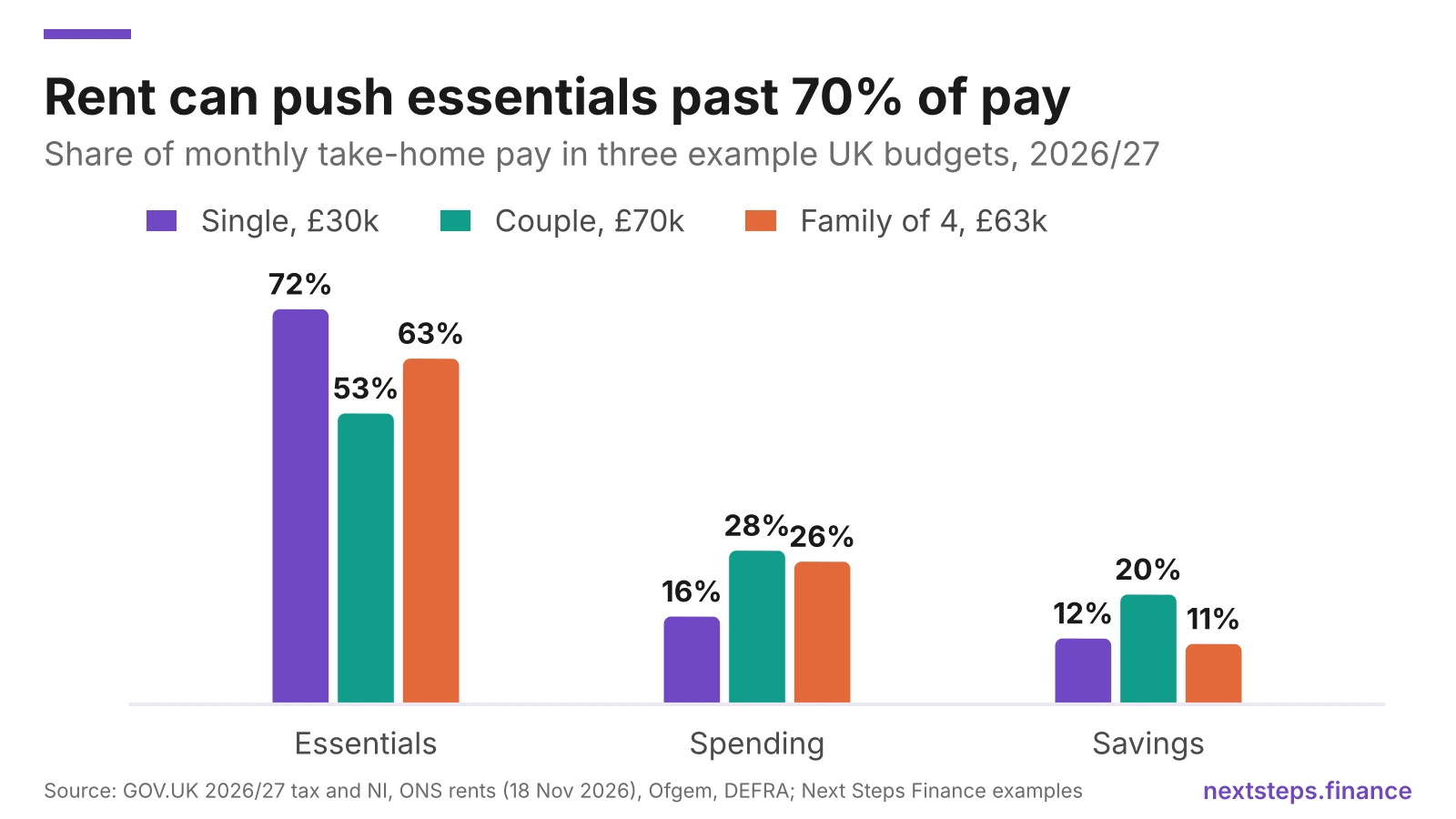
| Essentials total | £1,440 | 72% |
| Savings | £250 | 12% |
| Spending money (eating out, clothes, gifts, subscriptions) | £324 | 16% |
| Total | £2,014 | 100% |
This budget is tight but works. The weak spot is rent: at the England average of £1,472 the essentials alone would cost £2,062, more than the whole pay packet. Sharing a home or living somewhere cheaper is usually the only fix at this salary. Our full £30k salary budget and £25k salary budget go into more detail.
Take Action: If your rent is above 40% of take-home pay, start with housing before cutting smaller costs.
Monthly budget example 2: couple earning £70,000 together
A couple earning £40,000 and £30,000 takes home about £4,595 a month between them after tax, NI and 5% pensions. Splitting the UK average rent of £1,411, they can cover everything and still save about £900 a month.
| Category | Monthly | Share of £4,595 |
|---|---|---|
| Rent (two-bed, UK average) | £1,411 | 31% |
| Council tax (example) | £180 | 4% |
| Energy (Ofgem typical bill) | £144 | 3% |
| Food shopping (DEFRA average, 2 people) | £291 | 6% |
| Travel, including one car (example) | £250 | 5% |
| Phone x2, broadband, water, insurance (example) | £150 | 3% |
| Essentials total | £2,426 | 53% |
| Savings | £900 | 20% |
| Spending money (both) | £1,269 | 28% |
| Total | £4,595 | 100% |
This one lands close to 50/30/20. Two incomes with one rent is the single biggest budget advantage most people get. The main question is how to split the bills fairly: 50/50 or in proportion to pay (here roughly 56/44). Our guide to budgeting for couples compares joint, separate and hybrid accounts.
Take Action: Agree a shared bills figure first, then each keep your own spending money so nobody has to justify a coffee.
Monthly budget example 3: family of four on £63,000
A family with one parent on £45,000 and one on £18,000 part-time takes home about £4,198 a month, plus about £195 of Child Benefit for two children. That's £4,393 to cover a mortgage, childcare and food for four, with about £500 left to save.
| Category | Monthly | Share of £4,393 |
|---|---|---|
| Mortgage (example) | £1,100 | 25% |
| Council tax (example) | £190 | 4% |
| Energy (Ofgem typical bill, larger homes pay more) | £144 | 3% |
| Food shopping (DEFRA average, 4 people) | £583 | 13% |
| Childcare and after-school clubs (example) | £250 | 6% |
| Car and travel (example) | £300 | 7% |
| Phones, broadband, water, insurance (example) | £180 | 4% |
| Essentials total | £2,747 | 63% |
| Savings | £500 | 11% |
| Spending: kids' clothes, activities, family days out, gifts | £1,146 | 26% |
| Total | £4,393 | 100% |
Neither parent earns over £60,000 here, so the High Income Child Benefit Charge doesn't apply. The real pressure in family budgets is the yearly costs that don't fit a month: school uniforms, birthdays, Christmas and car repairs. Put a slice of that £1,146 into sinking funds so those don't end up on a credit card. Food is the other big lever; see what the average UK food shop costs and how to cut it.
How do I make my own monthly budget?
Start with your net pay, list every fixed bill from your bank statements, estimate food and travel from the last three months, then give every pound left a job before payday. It takes about an hour the first time.
- Write down your take-home pay. Use the net figure on your payslip. If you're paid every four weeks, read our guide to budgeting on 4-weekly pay, because you get 13 paydays a year, not 12.
- List your fixed bills. Rent or mortgage, council tax, energy, water, phone, broadband, insurance and subscriptions.
- Average your flexible costs. Add up food and travel over three months and divide by three.
- Add yearly costs as monthly amounts. £600 of Christmas spending is £50 a month.
- Set a savings figure and pay it first. Move it on payday, before you spend.
- Whatever's left is spending money. If it's negative, cut the biggest flexible line first.
Our free UK budget calculator works through these steps and shows your split against 50/30/20. If you prefer a spreadsheet, the free budget template or our guide on how to make a budget spreadsheet will get you started. For a method where every pound is allocated, try zero-based budgeting.
If you'd rather not build it from scratch:
How much should I save each month in the UK?
A common target is 20% of take-home pay, but anything you can save consistently is a good start. In the examples above, savings range from 11% to 20%, which is realistic for most UK households once rent or a mortgage is paid.
Save in this order:
- Emergency fund: three months of essentials. For the single renter that's about £4,300, or roughly 17 months at £250. Our emergency fund guide covers where to keep it.
- Expensive debt: clearing a credit card or overdraft usually beats any savings rate.
- Yearly costs and goals: holidays, a car, a house deposit.
- Long-term investing and pensions, once the cash buffer is in place.
Where you keep the money matters. Easy access savings rates vary widely, so check a few accounts. As one option, Plum's Easy Access account, held with Lloyds Bank and covered by FSCS protection up to £120,000, pays 5.25% AER variable on the first £1,000 for new customers who open it within 30 days of registering. Plum calls it a promotional rate and doesn't say how long it lasts. Above £1,000 you get 3.15% on the free Basic plan, rising to 3.90% on the £14.99-a-month Max plan, according to Plum's account page. A paid plan only makes sense if the extra interest beats the fee, which on most balances it won't. Our Plum review covers the rest of the app.
Try it with your own numbers:
Calculator
How much could your monthly savings grow?
- Starting balance£0
- Monthly saving£250
- Interest rate (AER)3.15%
- Years3 yrs
Balance after 3 years£9,420
You pay in£9,000
Interest earned£420
Assumes the rate stays the same and interest is added monthly. Variable rates can change, and interest above your Personal Savings Allowance may be taxable outside an ISA.
What's the best app to track a monthly budget?
The best app is the one you'll actually open. Budgeting apps that link to your bank through Open Banking save you typing in every transaction, which is where most paper budgets fail.
| Option | Cost | Who it may suit | Key point |
|---|---|---|---|
| Snoop | Free; Snoop Plus £5.99 a month or £47.99 a year | People with accounts at several banks | Sorts spending by category and flags bills you could switch |
| Plum | Free Basic plan; paid plans from £3.99 a month | People who want saving done automatically | Paid plans free for the first month |
| UK Budget Planner | One-off download | People who want a full-year plan | Built for UK pay, tax and bills |
| Free budget template | Free | Spreadsheet fans | You enter transactions yourself |
Snoop is a free money management app that connects your bank and card accounts, sorts spending by category and lets you set budgets. Snoop Plus costs £5.99 a month or £47.99 a year, per Snoop's own page, and adds custom categories, spending and refund alerts, payday-to-payday tracking and data export. There's no sign-up bonus, and the free version covers the basics for most people. The trade-off: Snoop earns money partly from bill-switching commissions, so treat its deals as a starting point and compare elsewhere. For more choices, see our best budgeting apps UK round-up.
Take Action: Whatever tool you pick, check it once a week for ten minutes. That habit matters more than the app.
FAQ
What is a good monthly budget for one person in the UK?
A good monthly budget for one person covers rent, bills, food and travel with about 60-70% of take-home pay, then saves at least 10%. On a £30,000 salary that's about £2,014 a month in 2026/27, with essentials around £1,440 if rent is £850 and roughly £250 left to save.
What is the 50/30/20 rule for a monthly budget?
The 50/30/20 rule splits take-home pay into 50% for needs, 30% for wants and 20% for savings or debt. On £2,500 a month that's £1,250, £750 and £500. In the UK, high rents often push needs above 50%, so many people start at 60/20/20 or 70/20/10 and work towards it.
How much does the average UK household spend a month?
UK households spent an average of £676.60 a week in the year to March 2025, according to the ONS Family Spending survey, which works out at about £2,930 a month. Housing, fuel and power was 18% of spending and transport 14%. It's an average across all households, so your own figure depends mostly on your rent or mortgage.
How much should a family of four spend on food a month in the UK?
At DEFRA's average of £33.63 per person per week for food and non-alcoholic drinks at home, a family of four spends about £583 a month. Eating out adds another £9.87 per person per week on average. Meal planning and switching to own-brand products are the quickest ways to bring that down.
What should be included in a monthly budget?
Include take-home pay and regular benefits, then rent or mortgage, council tax, energy, water, phone, broadband, insurance, food, travel, debt payments, subscriptions, savings and spending money. Add yearly costs such as Christmas, car servicing and birthdays as monthly amounts so they don't catch you out.
The bottom line
A monthly budget example in the UK only helps once it has your numbers in it. Start from take-home pay, fill in essentials from your bank statements, pay yourself first, and treat what's left as spending money. Rent or mortgage is the line that decides whether you save 10% or 20%.
To turn these examples into your own plan, use the UK Budget Planner, or start free with the budget template. For the bigger picture, read our complete guide to budgeting in the UK or browse the budgeting hub.
Found this useful? Add Next Steps Finance as a preferred source and Google will show you more of our guides in search and AI answers.
Put this into practice
Build your budget in one sitting
The UK Budget Planner works out your take-home pay, splits it with the 50/30/20 rule, tracks spending through the year and forecasts five years ahead. Made for UK pay, tax and bills.