If you want to build a credit score new to the UK, the first thing to know is that the three UK credit reference agencies can't see your record from home. Experian puts it bluntly: "credit scores can't cross borders". So a spotless record in Johannesburg, Lagos or Sydney counts for nothing here, and lenders treat you as someone with no history at all.
The good news is that a thin file fills up quickly if you do the right things in the right order. This guide sets out the seven steps, how long each takes, what to avoid in your first six months, and the one route that can use your overseas record. Every rule below was checked on the credit reference agencies' own guides, GOV.UK and the providers' sites on 23 November 2026.
Key takeaways
Your overseas credit history doesn't transfer. Experian, Equifax and TransUnion all confirm you start your UK file from scratch.
Experian says it takes "at least three to six months" of UK activity before it can calculate a score for you.
Commonwealth citizens with permission to stay can register to vote, and it takes about 5 minutes online at GOV.UK. Lenders use the register to confirm your name and address.
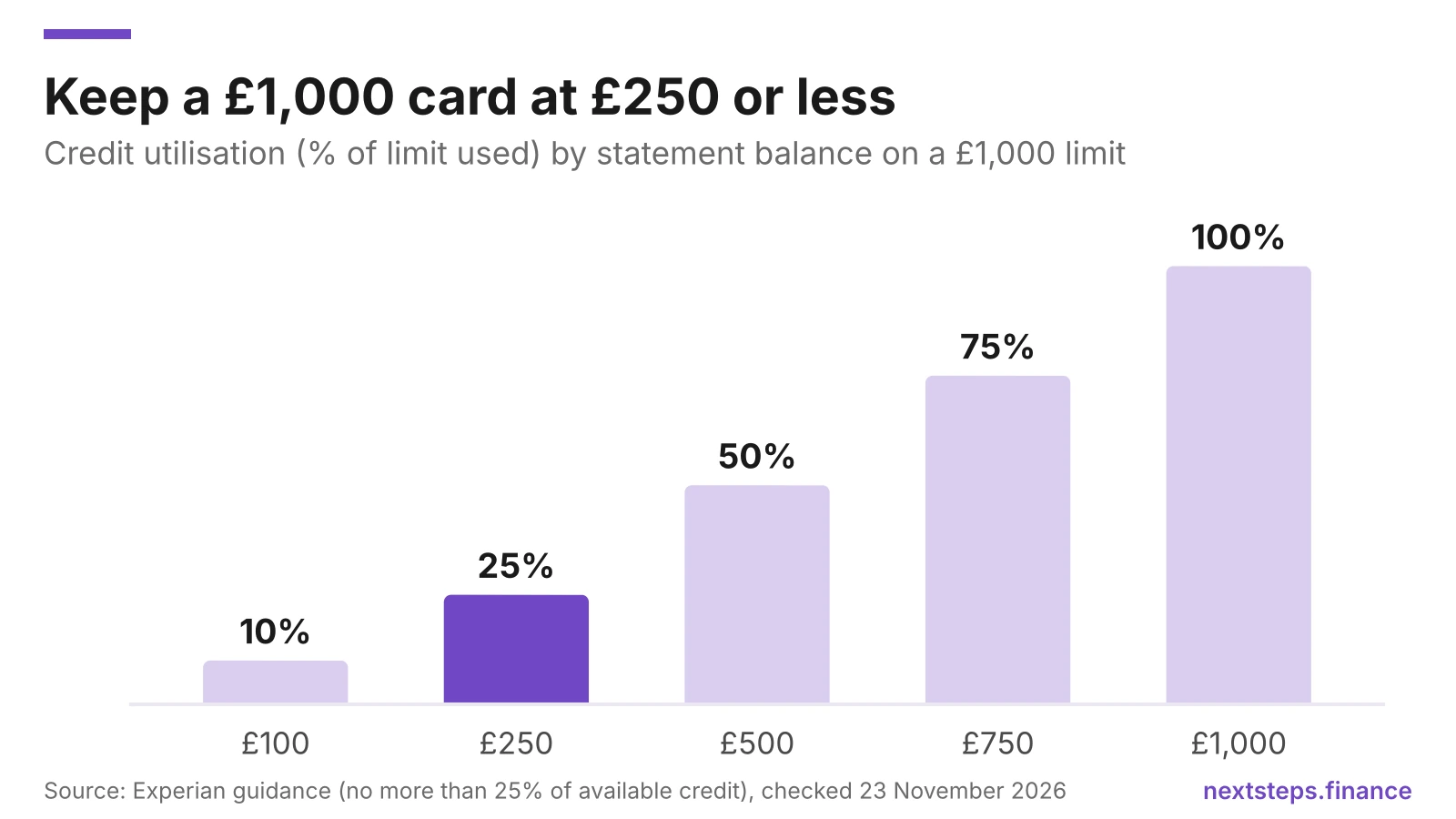
Keep card balances to no more than 25% of your limit, Experian's rule of thumb, so £250 or less on a £1,000 limit.
Space out credit applications: Experian suggests no more than one every three months, Equifax three to six months between them.
Source: Experian guidance (no more than 25% of available credit), checked 23 November 2026
Why do you have no credit score when you move to the UK?
You have no UK credit score because UK lenders only see records held by the three UK credit reference agencies, and none of them import data from other countries. TransUnion says "credit reports aren't currently transferable between countries", so most newcomers arrive "credit-invisible".
That label matters. TransUnion defines credit invisible as having no credit history with any of the UK's three agencies, and a "thin file" as having very little. Equifax makes the same point: your score and report "can't transfer across". In practice this means:
A credit card or loan application may be declined, even on a high salary.
Mobile phone contracts and some energy tariffs may ask for a deposit.
Mortgage lenders usually want to see UK history, along with your residency status.
None of this says anything bad about you. It just means there's nothing to score yet, and the steps below give the agencies something to work with.
How long does it take to build a credit score in the UK?
It usually takes three to six months before you have a score at all. Experian says it needs "at least three to six months" of activity to calculate one, and its new to the UK guide says "after a few months you might have enough credit history for us to create a credit score".
A score that lenders are comfortable with takes longer. Each month of on-time payments adds to your record, and the length of your history is part of what lenders weigh up. Equifax calls it "a slow process" and doesn't give a number. A realistic plan:
Timeframe
What to do
Why it helps
Week 1 to 2
Register to vote, open a UK current account
Confirms your identity and address
Month 1
Monthly phone contract, bills in your name by Direct Debit
Creates regular payment records
Month 1 to 3
Start rent reporting, connect Experian Boost
Adds payments that don't normally show
Month 3 to 6
Apply for one credit builder card, use it lightly
Shows you can manage credit
Month 6 onwards
Check your report, then consider bigger credit
Lets you see what lenders see
Take Action: do steps 1 and 2 in your first fortnight. They cost nothing and everything else builds on them.
How do you build credit when you're new to the UK? 7 steps
Build credit in the UK by giving the agencies proof of who you are and a steady record of on-time payments. The agencies and big banks agree on the core steps:
Register to vote at your UK address if you're eligible. Experian calls it "one of the best ways" to start.
Move to a monthly phone contract. Experian and TransUnion both suggest switching from pay as you go to a contract in your name.
Put household bills in your name and pay them by Direct Debit, as Equifax recommends.
Report your rent. Experian points renters to services such as CreditLadder, and you may need around six months of rent payments first. Our rent reporting guide compares the services.
Use a credit card lightly and clear it in full every month, once you can get one.
Check your credit report every few months and fix any errors, such as a misspelt name or wrong address.
What is Experian Boost?
Experian Boost lets you connect your current account so Experian can see regular payments such as Netflix, Spotify and Council Tax. A summary is shared with participating lenders. It's listed in Experian's building credit guide as a way to get an instant score boost, and it only affects your Experian file, not Equifax or TransUnion.
Can you register to vote if you're not a British citizen?
Yes, if you're a Commonwealth citizen with permission to be in the UK. GOV.UK says qualifying Commonwealth citizens can register if they "have permission (or do not need permission) to enter or stay in the UK". South Africa, India, Nigeria, Australia, Canada and New Zealand are all Commonwealth countries, so most visa holders from those countries can register.
Registering online "usually takes about 5 minutes". You'll be asked for your National Insurance number, but GOV.UK says you can still register without one. The minimum age is 16 in England and Northern Ireland, and 14 in Scotland and Wales.
The rules are tighter for EU citizens in England and Northern Ireland. Citizens of Denmark, Luxembourg, Poland, Portugal and Spain can register if they have permission to stay. Citizens of other EU countries generally qualify only if they had permission to stay on or before 31 December 2020 and it has continued without a break.
What if you can't register to vote?
If you aren't eligible, for example a US citizen, Experian suggests adding a short notice of correction to your credit report explaining why you're not on the register. Lenders then know there's a reason, and you lean harder on the other steps: bank account, bills, phone contract and rent.
Take Action: register on GOV.UK the week you move into a permanent address, and update it every time you move.
Can you use your overseas credit history in the UK?
Mostly no, but there's one exception worth checking. HSBC says "you might be able to use your international credit record, depending on the country", through its partnership with Nova Credit on online UK credit card applications from selected countries. HSBC's card shows a Representative 27.9% APR (variable), and credit is subject to status.
This only helps with that application. It doesn't copy your overseas record onto your UK file, so you still need the steps above to build a UK score that other lenders can see.
What is the best credit card to build credit in the UK?
The best credit card to build credit is one you can get approved for and will use for small, planned spending that you clear in full every month. Credit builder cards accept thin files but charge high interest, which doesn't matter if you never carry a balance.
How you use the card matters more than which one you pick:
Keep balances low. Experian suggests using "no more than 25%" of your available credit. On a £1,000 limit that's £250 or less, as the chart above shows.
Pay in full by Direct Debit so you never miss a payment or pay interest.
Don't apply for several cards at once. Each application leaves a hard search. Experian's rule of thumb is no more than one every three months, and Equifax suggests three to six months between applications.
Use eligibility checkers first. Most lenders offer a soft search that shows your chances without affecting your score.
Late or missed payments "may stay on your report for up to six years", Experian says, so one slip early on can follow you for a long time.
Take Action: set up a full-balance Direct Debit the day the card arrives, then put one regular bill on it, such as your phone or a streaming service.
How can you check your UK credit score for free?
You can check your TransUnion score free in several banking apps. Monzo says customers get "free access to your TransUnion credit score, and report" with a free current account, for UK residents. Its paid plans (Extra, Perks and Max) add an enhanced tool from £3 a month that tracks TransUnion and Equifax scores together.
Each agency scores you differently, because lenders don't all report to all three. Check at least two over your first year, and look at the report, not just the number: the report shows whether your address, accounts and electoral roll entry are recorded correctly.
If you're opening your first UK account anyway, Monzo gives you a free credit score in the same app. Monzo's refer a friend page says new customers invited by a friend "could both get a referral bonus" if they apply and make a first card payment within 30 days. The amount isn't shown on that page, so check the app before you apply. Monzo isn't the only option: high street banks such as HSBC and app banks such as Starling also open accounts for newcomers, and our best UK bank accounts guide compares them.
What should you avoid when building credit in the UK?
Avoid anything that leaves negative marks while your file is thin, because one missed payment weighs more when there's little else on your record. The common mistakes:
Applying for lots of credit in your first months. Several hard searches close together can look like money trouble.
Missing a payment on a phone contract, bill or card. Pay everything by Direct Debit.
Maxing out a new card, even if you clear it later. A high balance on the statement date can drag your score down.
Moving address often without updating your bank, phone provider and electoral registration.
Paying for a credit-building service you don't need. Most of what helps is free: the electoral roll, a bank account, Direct Debits and free score checks.
Building credit also goes hand in hand with a realistic first-year budget, because UK costs can surprise you. If you're setting one up from scratch:
Frequently asked questions
How long does it take to build credit in the UK as a foreigner?
Experian says it takes at least three to six months of UK activity before it can calculate a credit score. To get a score that most mainstream lenders will accept, expect around a year of on-time payments, a stable address and registration on the electoral roll if you're eligible.
Does my credit score from another country transfer to the UK?
No. Experian, Equifax and TransUnion all say overseas credit history doesn't transfer, so you start your UK file from scratch. The exception is HSBC, which can use your international credit record from selected countries through Nova Credit on online credit card applications, but that doesn't add it to your UK file.
Can I get on the electoral roll without British citizenship?
Yes, if you're a Commonwealth citizen with permission to enter or stay in the UK, or an Irish citizen. Some EU citizens can also register, depending on their country and when they got permission to stay. You can register online at GOV.UK in about 5 minutes.
Does a mobile phone contract build credit in the UK?
Yes. A monthly phone contract is a credit agreement, so on-time payments appear on your credit report. Experian and TransUnion both suggest moving from pay as you go to a contract in your own name as one of the first steps for newcomers. Pay it by Direct Debit so you never miss a month.
What is a good credit score in the UK?
There's no single UK score, because Experian, Equifax and TransUnion each use their own scale. Lenders also use their own scoring, not the number you see in an app. Focus on what drives every score: on-time payments, low card balances, few applications and an up-to-date address history.
The bottom line
When you're new to the UK, building a credit score is mostly about time and consistency, not tricks. Register to vote if you can, open a current account, put a phone contract and bills in your name, report your rent, and use one small credit card that you clear in full every month. Expect a score in three to six months and a solid one after about a year.