
InvestEngine is one of the cheapest ways to buy ETFs in the UK in 2026: if you pick your own funds, the platform itself charges nothing. I checked its costs, SIPP, safety and promotion terms pages today, 2 November 2026, and read the small print on the welcome bonus that most reviews skip.
The short version: it's excellent value for long-term, hands-off ETF investors, especially in a SIPP. The catches are that it only offers ETFs, it keeps the interest on your uninvested cash, and the "up to £200" bonus is usually about £20.
Key takeaways
- DIY portfolios have no platform fee, and InvestEngine charges no dealing, withdrawal or FX fees (InvestEngine costs). You pay only the ETFs' own charges, from 0.03% a year.
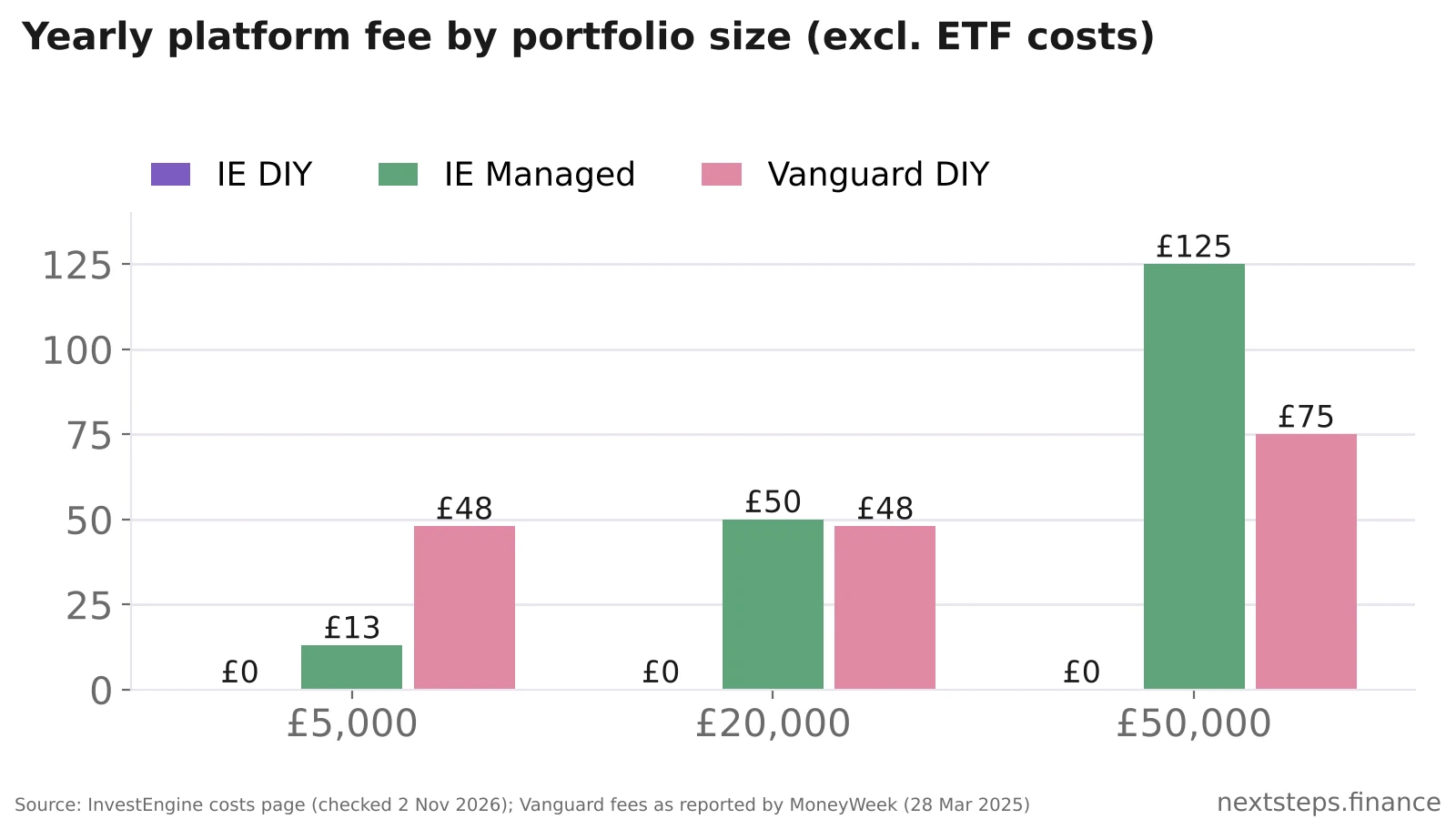
- Managed Portfolios cost 0.25% a year, about £50 on £20,000, plus ETF costs (the average in its Growth portfolios is 0.12% a year).
- The SIPP has zero account fees and opens from £100, with regular contributions from £20 a week or £50 a month (InvestEngine SIPP).
- The £20 to £200 welcome bonus is random: a 75% chance of £20 to £24 and a 2% chance of £150 to £200, and you must stay invested for 12 months (incentive terms).
- Investments are FSCS-protected up to £85,000 per person, per firm if InvestEngine fails, but not against market falls (FSCS).
What is InvestEngine and is it safe?
InvestEngine is a UK investment platform that only offers exchange-traded funds (ETFs), either picked by you (DIY) or run for you (Managed). InvestEngine (UK) Limited is authorised and regulated by the FCA under firm reference number 801128.
You can hold your ETFs in four account types:
- Stocks & Shares ISA - tax-free growth on up to £20,000 a year
- Personal pension (SIPP) - for UK residents aged 18 to 75, with tax relief on contributions
- General Investment Account - no tax wrapper, no limit
- Business Account - for UK limited companies
InvestEngine doesn't offer a Lifetime ISA or Junior ISA, so you'll need another provider for those.
Where is your money held?
InvestEngine's safety page says it holds client cash in pooled client bank accounts with a recognised bank and your investments in a pooled client account at CREST, registered to InvestEngine Nominees Limited. That keeps your ETFs separate from the company's own money.
If InvestEngine went bust and there was a shortfall, the FSCS says it can pay "up to £85,000 per eligible person, per firm" for firms that failed after 1 April 2019. It can't pay out for poor investment performance.
Take Action: Capital at risk - the value of investments can go down as well as up. FSCS protection covers the firm failing, not your ETFs falling in value.
How much does InvestEngine cost?
InvestEngine's DIY service has no platform fee, and its Managed service costs 0.25% a year. On top of either, you pay the ongoing charge of the ETFs you hold, which is built into the fund price rather than billed separately.
| Cost | DIY Portfolio | Managed Portfolio |
|---|---|---|
| Platform / management fee | £0 | 0.25% a year |
| ETF ongoing charges | From 0.03% a year (your choice) | Average 0.12% a year (Growth portfolios) |
| Dealing fee | £0 | £0 |
| Withdrawal or transfer-out fee | £0 | £0 (fee built up so far is deducted) |
| FX fee | £0 | £0 |
| ISA or SIPP account fee | £0 | £0 |
| Interest on uninvested cash | None - InvestEngine keeps it | None |
Source: InvestEngine costs page and SIPP page, checked 2 November 2026.
The Managed fee is calculated daily and usually taken monthly in arrears, and InvestEngine doesn't charge it on the cash part of a Managed Portfolio. ETFs also have a buying and selling spread; InvestEngine estimates this averages 0.07% to 0.08% a year on Managed Portfolios (its costs page quotes both figures).
How does that compare with Vanguard?
For smaller DIY pots, InvestEngine is clearly cheaper than Vanguard Investor. MoneyWeek reported that from 28 February 2025 Vanguard charges DIY investors a minimum £4 a month (£48 a year) on balances up to £32,000, then 0.15% a year, capped at £375. On £20,000 that's £48 at Vanguard against £0 on an InvestEngine DIY portfolio.
InvestEngine's Managed service is a different comparison. At 0.25% it costs more than Vanguard's DIY fee on large pots, but it's still cheap for a managed service. Our Wealthify review and robo-adviser comparison show how much more some other managed services charge.
Take Action: If you're happy choosing two or three broad global ETFs yourself, the DIY option removes the platform fee entirely.
How does the InvestEngine welcome bonus work?
New customers who open and fund an InvestEngine account with £100 or more via a referral link get a random bonus between £20 and £200. Under the Referral Programme terms (version 1.4), the bonus applies to an ISA, GIA or SIPP, and both you and the person who referred you get one.
The headline "up to £200" is real, but it's a lottery weighted heavily towards the bottom. These are InvestEngine's own published odds for personal accounts:
| Bonus band | Chance |
|---|---|
| £20 - £24 | 75% |
| £28 - £34 | 15% |
| £42 - £56 | 5% |
| £75 - £100 | 3% |
| £150 - £200 | 2% |
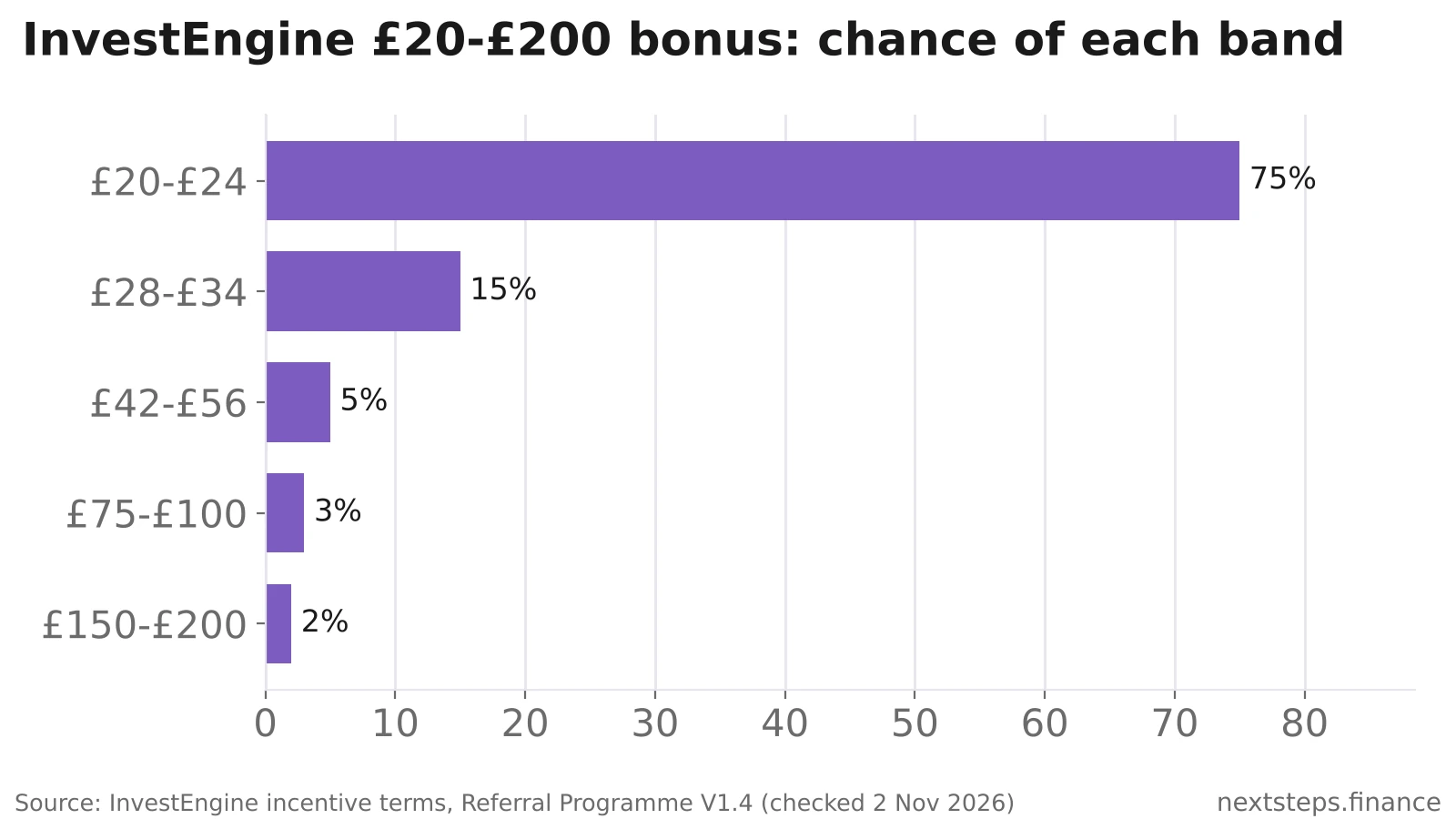
Using the middle of each band, the average bonus works out at about £30. That's still a good return on a £100 deposit, but plan on £20.
How to claim it (step by step)
- Sign up through a referral link, such as ours: InvestEngine (free to join). Capital at risk - the value of investments can go down as well as up.
- Open an ISA, GIA or SIPP and verify your identity.
- Fund a portfolio with at least £100 and invest it.
- Claim the bonus in the app. InvestEngine says it's added within 5 business days.
- Keep at least £100 plus the bonus invested for 12 months, or InvestEngine can reclaim the bonus.
You must be a new customer who has never registered with InvestEngine before. The terms don't give an end date, but InvestEngine can change or withdraw the offer on reasonable notice. Its "Win your ISA allowance" £20,000 prize draw closed on 31 October 2026, so it's no longer open.
Is the InvestEngine SIPP worth it?
For a low-cost ETF pension, the InvestEngine SIPP is hard to beat on price: there's no account fee on DIY, only ETF charges. Its SIPP page says "Zero SIPP fees", with a £100 minimum to open and optional regular payments from £20 a week or £50 a month.
That matters more in a pension than anywhere else, because you're investing for decades and percentage fees compound. A SIPP still has the usual pension rules: InvestEngine notes you can access it from age 55, rising to 57 from 2028. You can transfer in old workplace or personal pensions, and InvestEngine says it handles transfers for free.
Before transferring a workplace pension, check you won't lose employer contributions, guaranteed annuity rates or protected tax-free cash. If you're unsure, our personal finance review or a regulated adviser can help, and our employer pension guide explains what you'd be giving up.
Take Action: Keep paying into your workplace pension to get the employer match; use a SIPP for extra savings or to consolidate old pots.
What are the downsides of InvestEngine?
InvestEngine's main weaknesses are its narrow range and the interest it keeps on your cash. It won't suit everyone.
- ETFs only. It offers 870+ ETFs but no individual shares, investment trusts or traditional funds. If you want to buy Tesla or a Fundsmith fund, look elsewhere.
- No interest on uninvested cash. InvestEngine's costs page says uninvested cash "doesn't generate returns" and it retains that interest. Keep cash invested or hold it in a savings account instead.
- Built for long-term investing, not trading. InvestEngine says investors choose it "for long-term investing, not risky day trading", so it's not the platform for quick in-and-out trades.
- No Lifetime ISA or Junior ISA.
- Managed costs add up on big pots. At 0.25%, a £100,000 Managed Portfolio costs £250 a year before ETF charges.
On the positive side, it allows fractional investing from £1 per ETF, and InvestEngine cites a Trustpilot score of 4.6 from 1,043 reviews and three Which? Recommended Provider awards, including March 2026.
InvestEngine vs Trading 212: which is better?
Both have a £0 platform fee for DIY investing; the right one depends on what you want to buy. InvestEngine is simpler and ETF-only with a free SIPP, while Trading 212 also offers individual shares and pays interest on uninvested cash.
| InvestEngine | Trading 212 | |
|---|---|---|
| Platform fee | £0 DIY, 0.25% Managed | £0 |
| What you can buy | 870+ ETFs | Shares and ETFs |
| Managed option | Yes | No |
| SIPP | Yes, no account fee | Yes (administered by Platform One) |
| UK regulator | FCA (FRN 801128) | FCA (Trading 212 UK Ltd, FRN 609146) |
| FSCS investment cover | Up to £85,000 | Up to £85,000 |
| Sign up | InvestEngine | Trading 212 (commission-free) |
Capital at risk - the value of investments can go down as well as up. Trading 212 details from its UK protection page, checked 2 November 2026.
Many people use both: an ETF ISA or SIPP at InvestEngine, and shares at Trading 212. Our full Trading 212 vs InvestEngine comparison and best stocks and shares ISA guide go into more detail.
Who is InvestEngine best for?
InvestEngine may suit you if you want to invest regularly in a few low-cost ETFs and leave them alone for years. It's particularly strong for:
- Beginners with small amounts - no platform fee and fractional investing from £1 per ETF
- Pension savers - a fee-free SIPP for consolidating old pots or adding to your workplace pension
- Hands-off investors - the Managed option at 0.25% is cheaper than most robo-advisers
- ISA investors - with the £20,000 ISA allowance unchanged after the Budget (see our cash ISA limit explainer), a free ETF ISA keeps more of your return
It's less suited to people who want individual shares, a Lifetime ISA, or interest on cash waiting to be invested.
Take Action: If it fits, sign up to InvestEngine, invest £100 or more in a broad global ETF and claim your bonus. Capital at risk - the value of investments can go down as well as up.
FAQ
Is InvestEngine safe?
InvestEngine (UK) Limited is authorised and regulated by the FCA (FRN 801128). Client cash sits in pooled client bank accounts and ETFs are held at CREST in a nominee name, separate from company money. If the firm failed with a shortfall, the FSCS covers up to £85,000 per person. It doesn't protect against falling investment values.
Is InvestEngine really free?
InvestEngine's DIY portfolios have no platform, dealing, withdrawal or FX fees, and its ISA and SIPP have no account fee. You still pay each ETF's own ongoing charge, from 0.03% a year, plus small trading spreads. Managed Portfolios add a 0.25% yearly fee. InvestEngine also keeps the interest on uninvested cash.
How does InvestEngine make money?
InvestEngine earns the 0.25% yearly fee on Managed Portfolios and keeps the interest earned on customers' uninvested cash, according to its costs page. DIY customers pay no platform fee, so the cash interest is the main way it earns from them. Keeping your cash fully invested reduces what you give up.
How much is the InvestEngine welcome bonus?
New customers who invest £100 or more through a referral link get a random £20 to £200 bonus. InvestEngine's terms give a 75% chance of £20 to £24 and only 2% of £150 to £200, so the average is about £30. You must keep £100 plus the bonus invested for 12 months.
Can I transfer my ISA or pension to InvestEngine?
Yes. InvestEngine says it handles ISA and pension transfers for free, but your current provider may charge exit fees. Always use the official transfer process rather than withdrawing cash, or you'll lose the ISA tax wrapper. For workplace pensions, check you won't lose valuable guarantees or employer contributions first.
Does InvestEngine pay interest on cash?
No. InvestEngine says uninvested cash in your account "doesn't generate returns" and it retains the interest. If you're holding cash for long, a savings account or a platform that pays interest on cash will earn more. For investing, the simplest fix is to invest deposits promptly.