
Budget 2026 brought three big changes for first-time buyers. The Lifetime ISA penalty that could leave you with less than you paid in has been cut, a new First Time Buyer ISA has been confirmed for 2029, and a government equity loan scheme returns in England from April 2027.
If you're saving for your first home, these change the maths. Here's what each one means, what hasn't changed, and whether opening a Lifetime ISA now still makes sense.
Key takeaways
- From 29 October 2026, the LISA charge falls from 25% to 20% for first-time buyers whose home costs more than the £450,000 price cap (Financial Reporter).
- Other unauthorised LISA withdrawals still cost 25%, which takes back the bonus and some of your own money.
- The First Time Buyer ISA launches in April 2029: up to £4,000 a year, a 25% bonus capped at £20,000, homes up to £450,000 and no age limit.
- Existing Lifetime ISA holders can keep saving under the current rules.
- Your First Home scheme from April 2027 (England): deposits from 2.5% and an equity loan of up to 20%, interest-free for five years (Unbiased).
What has changed with the Lifetime ISA penalty?
If you use your Lifetime ISA to buy a first home costing over £450,000, the withdrawal charge is now 20% rather than 25%. That change applies from 29 October 2026.
The 25% charge was designed to claw back the government's 25% bonus, but because it's a percentage of the larger total, it also took a slice of your own savings. A 20% charge on the total takes back exactly the bonus and no more.
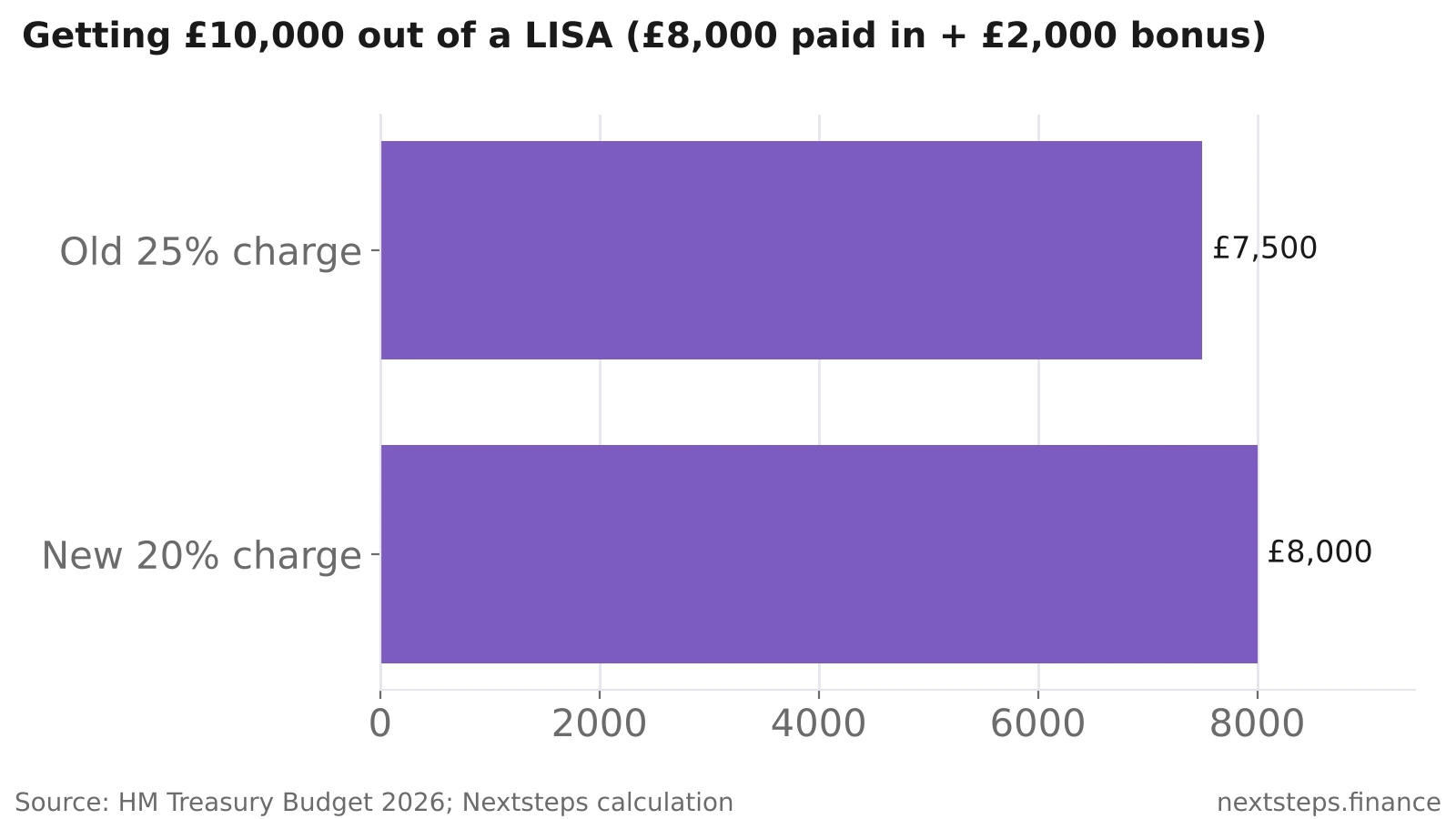
Take a £10,000 pot made up of £8,000 you paid in and a £2,000 bonus. Under the old 25% charge you'd get back £7,500, losing £500 of your own money. Under the new 20% charge you get back £8,000, exactly what you put in. Growth or interest on the pot is also subject to the charge.
Quilter's Rachael Griffin called the change a fix for a longstanding unfairness, while the HomeOwners Alliance welcomed it but argued the £450,000 cap should be higher in London (Financial Reporter).
Take Action: If you're buying above £450,000, you can now use your LISA savings without losing your own contributions. You'll still lose the bonus, so compare that with keeping the money in the LISA for retirement.
What hasn't changed?
The rest of the Lifetime ISA rules stay the same. Any other withdrawal before age 60, other than for a qualifying first home or terminal illness, still carries the 25% charge.
As a reminder, the main Lifetime ISA rules are:
| Rule | Lifetime ISA |
|---|---|
| Who can open one | Ages 18 to 39 |
| Maximum paid in | £4,000 a year, until age 50 (counts towards your £20,000 ISA allowance) |
| Government bonus | 25%, up to £1,000 a year |
| First home price cap | £450,000 |
| Minimum time open | 12 months before using it for a home |
| Penalty-free uses | First home, age 60+, terminal illness |
| Charge for other withdrawals | 25% (20% now applies only to first homes over £450,000) |
The £450,000 cap is the same as when the Lifetime ISA launched in 2017, while house prices, especially in London, have risen a long way since. That's why the penalty cut matters most to buyers in London and the South East.
What is the new First Time Buyer ISA?
It's a new account that replaces the Lifetime ISA for new savers from April 2029. It's designed only for buying a first home.
Based on the Budget and industry reporting, here's how it compares:
| Lifetime ISA (now) | First Time Buyer ISA (from April 2029) | |
|---|---|---|
| Annual limit | £4,000 | £4,000 |
| Government bonus | 25%, added monthly | 25%, paid when you buy |
| Maximum bonus | £1,000 a year (up to £32,000 over the account's life) | £20,000 |
| Home price cap | £450,000 | £450,000 |
| Age limit to open | 18 to 39 | No age limit announced |
| Can be used for retirement | Yes, from 60 | No |
Two points stand out. First, the removal of the age limit opens it to buyers in their 40s and beyond. Second, Quilter warned that paying the bonus only at purchase, rather than monthly as now, means savers miss out on interest or growth on the bonus while they save.
Existing Lifetime ISA holders can keep contributing and using their accounts under the current rules. The government hasn't yet confirmed whether you'll be able to transfer a LISA into the new account.
Should I open a Lifetime ISA before 2029?
For many first-time buyers aged 18 to 39, opening a Lifetime ISA now may still make sense, because the new account doesn't arrive until April 2029 and existing LISAs keep their rules.
- It may suit you if you're under 40, expect to buy within the £450,000 cap, and can leave money in for at least 12 months. The 25% bonus is the most generous savings incentive available to first-time buyers.
- Think carefully if you're likely to buy above £450,000, might need the money for something else, or are close to 40. Opening one before your 40th birthday keeps your options open, as you can keep paying in until 50.
- Cash or stocks and shares? If you're buying within about five years, a cash LISA avoids the risk of markets falling just before you need the deposit.
App-based providers make saving regularly easier. Plum offers a Lifetime ISA alongside its automatic saving tools, which move small amounts aside based on your spending. Check the current rate and fees on its site before opening. For day-to-day saving towards moving costs, a Monzo account lets you set up separate pots and round-ups so deposit money stays out of your spending.
Take Action: If you're eligible and saving for a home, open a LISA well before you plan to buy. The 12-month rule means the clock should start early.
How does the Your First Home scheme work?
It's a new government equity loan for first-time buyers in England, starting in April 2027. The government lends part of the price so you need a smaller deposit and mortgage.
According to Unbiased's summary of the Budget:
- Deposits from 2.5% of the purchase price
- Equity loan of up to 20%, interest-free for the first five years
- Household income caps: £110,000 outside London and £140,000 in London
- Price caps: £500,000 in outer London and £650,000 in inner London
- Funding: £4.7 billion, aimed at around 70,000 households
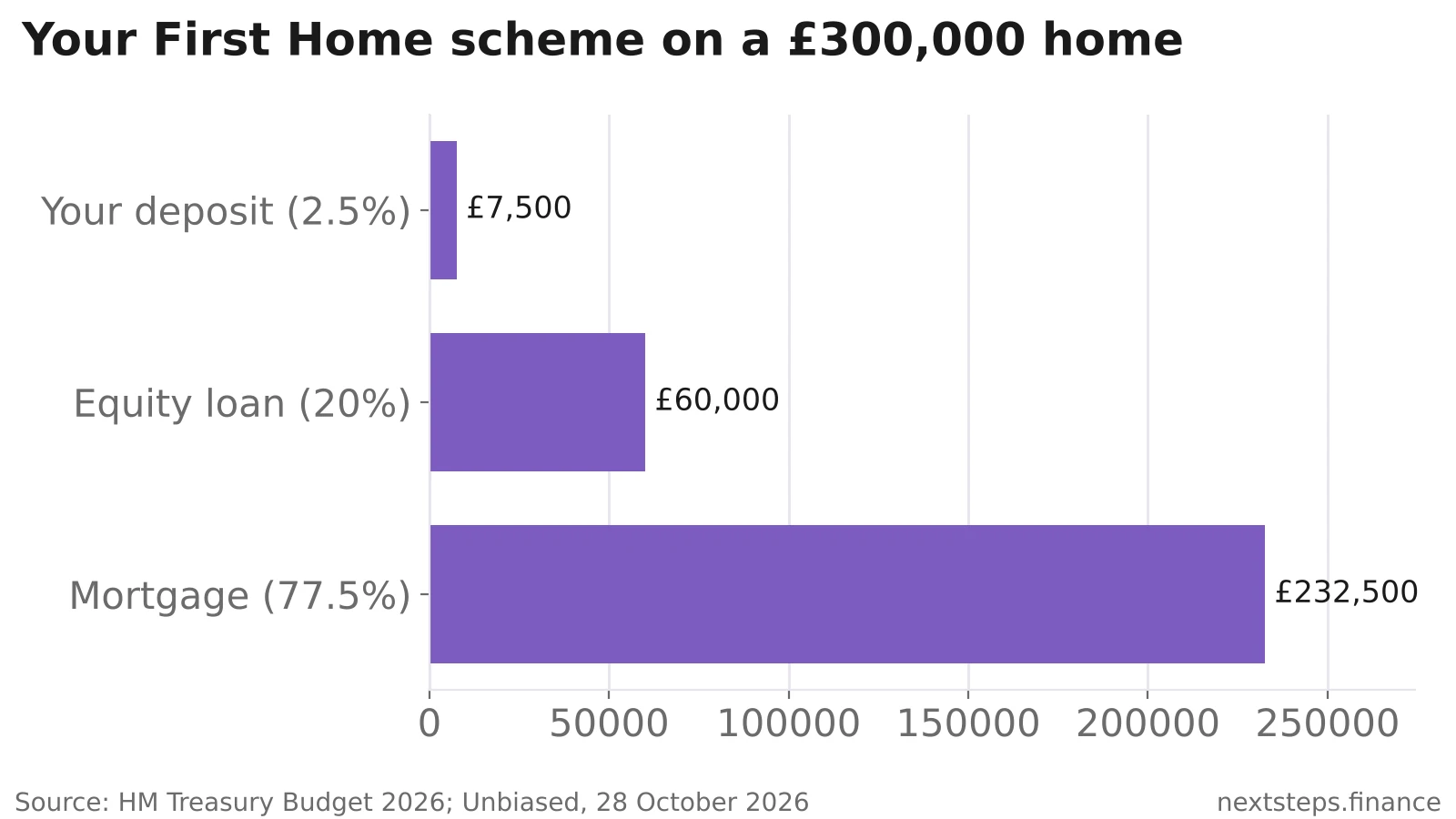
On a £300,000 home, you could put down £7,500 with a government equity loan of up to £60,000, leaving a mortgage of £232,500. Remember that an equity loan isn't free money. You repay it, usually as a share of the home's value when you sell or remortgage, and interest starts after five years. Full rules will follow before launch, so check them carefully and get mortgage advice.
How to plan your first home deposit
Start with a clear target and timeline, then pick the right accounts.
- Set your target. Include the deposit, Stamp Duty (if any), legal fees, surveys and moving costs.
- Work out what you can save each month. Our UK Budget Planner shows where your money goes and what's genuinely spare.
- Use the bonus first. Fill a Lifetime ISA up to £4,000 a year if you're eligible.
- Hold the rest in easy-access or fixed savings, ideally a cash ISA. See our fixed savings rates guide.
- Track progress monthly and adjust as prices or rates change.
Our UK First-Time Buyer Planner brings all of this together in one Google Sheet, built by a Chartered Accountant. It covers your deposit savings plan, Lifetime ISA bonus, Stamp Duty for all four UK nations, mortgage affordability and life after moving. If you're weighing up whether buying is right for you yet, our renting vs buying guide runs through the full cost comparison.
More Budget 2026 guides
For the full picture of what changed on 28 October 2026, start with our Budget 2026 summary, then dig into the details:
- Cash ISA limit stays at £20,000
- Savings tax rise from April 2027
- £100 energy payment: who gets it and when
FAQ
What is the Lifetime ISA penalty from 29 October 2026?
From 29 October 2026, first-time buyers using a Lifetime ISA for a home costing over £450,000 pay a 20% withdrawal charge instead of 25%. That takes back the government bonus but none of your own money. Other unauthorised withdrawals before age 60 still carry the 25% charge.
Is the Lifetime ISA being scrapped?
The Lifetime ISA will close to new savers when the First Time Buyer ISA launches in April 2029. Existing Lifetime ISA holders can keep paying in and using their accounts under current rules, including for retirement from age 60. You can still open a Lifetime ISA until then if you're 18 to 39.
What is the First Time Buyer ISA?
The First Time Buyer ISA is a new account launching in April 2029. You can save up to £4,000 a year and get a 25% government bonus, capped at £20,000, when you buy a first home costing up to £450,000. No age limit has been announced, but it can't be used for retirement.
Can I use a Lifetime ISA and the Your First Home scheme together?
The Budget didn't confirm how the two interact, and full Your First Home rules haven't been published yet. Lifetime ISAs have been usable alongside previous government schemes, but check the final rules when they're released before relying on it, and get mortgage advice.
Who is eligible for the Your First Home scheme?
It's for first-time buyers in England from April 2027. Household income must be under £110,000 outside London or £140,000 in London. London price caps are £500,000 in outer London and £650,000 in inner London. You'll need at least a 2.5% deposit, and full rules are still to come.
Bottom line
The Lifetime ISA is fairer from today, and first-time buyers have more help coming in 2027 and 2029. If you're under 40 and saving for a home, a Lifetime ISA is still worth considering now. To map your deposit, Stamp Duty and mortgage in one place, try the UK First-Time Buyer Planner, or book a personal finance review to talk it through.