
Matched betting is still one of the better-known ways to make extra money in the UK, but 2026 has changed the maths. Bookmakers now pay much more tax, and new Gambling Commission rules on bonuses took effect in January. This guide explains how matched betting works, what the changes mean for free bets, and the risks that rarely make it onto the "easy money" adverts.
Key takeaways
- Tax-free: the Gambling Commission confirms that "winnings from gambling for customers are tax-free, regardless of the amount won". Matched betting profits are gambling winnings, so they don't use your trading allowance (£1,000 now, rising to £3,000 from 6 April 2027).
- Operators pay more: HMRC raised Remote Gaming Duty (online casino) from 21% to 40% from 1 April 2026, and a new 25% rate of General Betting Duty will apply to online sports bets from 1 April 2027 (up from 15%).
- Bonus rules tightened: since 19 January 2026, bonus wagering requirements are capped at 10 times and offers that make you combine betting with casino play are banned.
- Mortgages: gambling doesn't show on your credit report, but lenders check 3 to 6 months of bank statements, so heavy betting activity can prompt questions.
- Not risk-free in practice: mistakes with odds, stakes or offer terms can cost you real money, and bookmakers can restrict accounts that only take offers.
What is matched betting and how does it work?
Matched betting means using a bookmaker's free bet or sign-up offer, then placing an opposite "lay" bet on a betting exchange so that, whatever the result, you lock in most of the free bet's value. You're not predicting results. You're turning a promotion into cash.
The process usually has two steps:
- Qualifying bet. You place a real-money bet at the bookmaker (the "back" bet) to unlock the free bet, and lay the same selection on an exchange at similar odds. You normally lose a few pence to a pound here.
- Free bet. You place the free bet at the bookmaker and lay it on the exchange. Because the free bet stake isn't returned with winnings ("stake not returned"), you keep only part of its face value (about 79% in the example below), depending on how close the back and lay odds are.
A worked example
Here's an illustrative example with a £10 "bet £10, get £10" offer and an exchange charging 2% commission on winnings. Real odds and commission rates vary.
| Step | Back bet (bookmaker) | Lay bet (exchange) | Result either way |
|---|---|---|---|
| Qualifying bet | £10 at 3.0 | £9.74 at 3.1 (liability £20.45) | −£0.45 |
| Free bet (stake not returned) | £10 free bet at 6.0 | £8.09 at 6.2 (liability £42.07) | +£7.93 |
| Total | +£7.48 |
Two things stand out. First, the profit is £7.48, not £10, because you lose a little on the qualifying bet and the free bet stake isn't returned. Second, you need enough money in your exchange account to cover the liability: £42.07 here for a £10 free bet. That's why most people start with a float of a few hundred pounds.
Take Action: Work through one offer slowly on paper before you put real money down, and always check the lay stake and liability before you confirm.
Is matched betting legal in the UK?
Yes. Matched betting is legal in the UK. You're simply taking up promotions that licensed bookmakers choose to offer, and using a regulated betting exchange to cover your position. You must be 18 or over, and you must stick to each bookmaker's terms, including one account per person.
What bookmakers are allowed to do is close or restrict accounts. Many people find that after taking a run of offers, a bookmaker stops sending promotions or limits their stakes (known as being "gubbed"). That isn't illegal, but it does mean the money from sign-up offers is largely a one-off.
Is matched betting tax-free?
Yes, in almost all cases. The Gambling Commission confirms that "in the UK, winnings from gambling for customers are tax-free, regardless of the amount won. Instead, tax is levied on the profits (Gross Gambling Yield) of gambling operators."
That means matched betting profits don't go on a Self Assessment return and don't count towards the trading allowance. We cover the difference between gambling winnings and taxable side income in our guide to the £3,000 trading allowance.
Two caveats are worth knowing. Interest on money sitting in a savings account is still taxable as normal, and income from writing about or teaching matched betting (a blog, affiliate links, a course) is trading income, not gambling winnings.
How do the 2026 gambling tax rises affect free bets?
The short answer: bookmakers are paying much more tax, so promotions are likely to get less generous over time, although free bet offers are still widely available today.
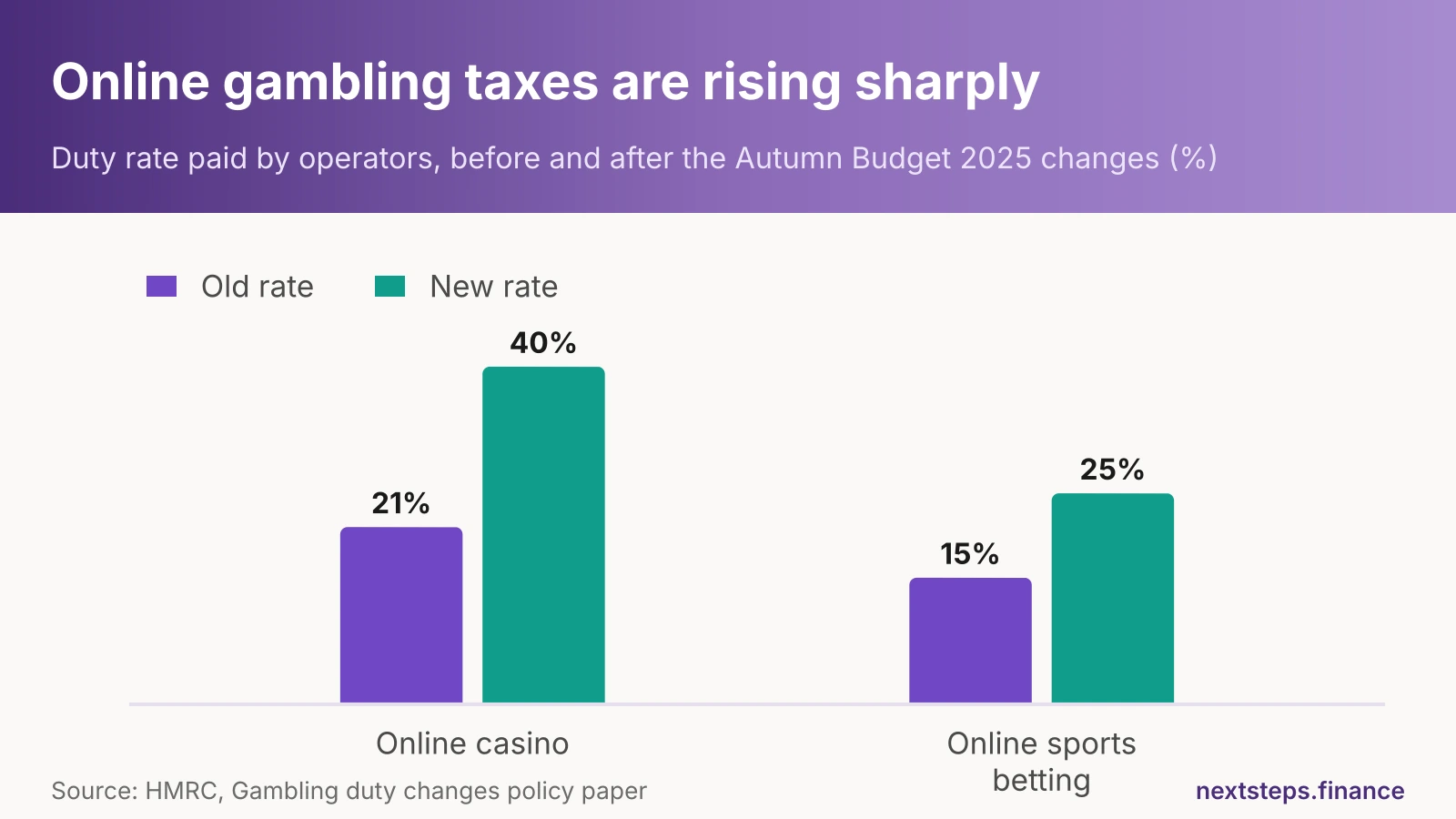
According to HMRC's gambling duty changes policy paper, announced in the Autumn Budget 2025:
| Duty | Applies to | Old rate | New rate | From |
|---|---|---|---|---|
| Remote Gaming Duty | Online casino, slots | 21% | 40% | 1 April 2026 |
| General Betting Duty (remote) | Online sports bets, except UK horseracing | 15% | 25% | 1 April 2027 |
| General Betting Duty | Bets on betting shop terminals | 15% | 15% (unchanged) | - |
| Bingo Duty | Bingo | - | Abolished | 1 April 2026 |
HMRC's costings, certified by the OBR, expect the changes to raise £810 million in 2026-27, rising to £1,155 million by 2030-31. For context, the OBR estimates betting and gaming duties raised about £4 billion in 2025-26.
The Budget on 28 October 2026 added a further change for betting shops rather than online. Pinsent Masons reports that Machine Games Duty rises for higher-stake machines from April 2027. It doesn't directly affect matched betting.
What it means for you
- Casino offers were hit first and hardest. Online casino duty nearly doubled in April 2026, so expect fewer casino bonuses and smaller reload offers.
- Sports offers have until April 2027 before their duty rises. If you've been meaning to try sign-up offers, the next few months are likely to be better than later in 2027. That's a judgement, not a certainty: bookmakers set their own marketing budgets.
- Horseracing bets online stay outside the new 25% rate, so racing promotions may hold up better than football ones.
What changed with gambling bonuses in January 2026?
The Gambling Commission's new rules on promotions came into force on 19 January 2026. They made two big changes.
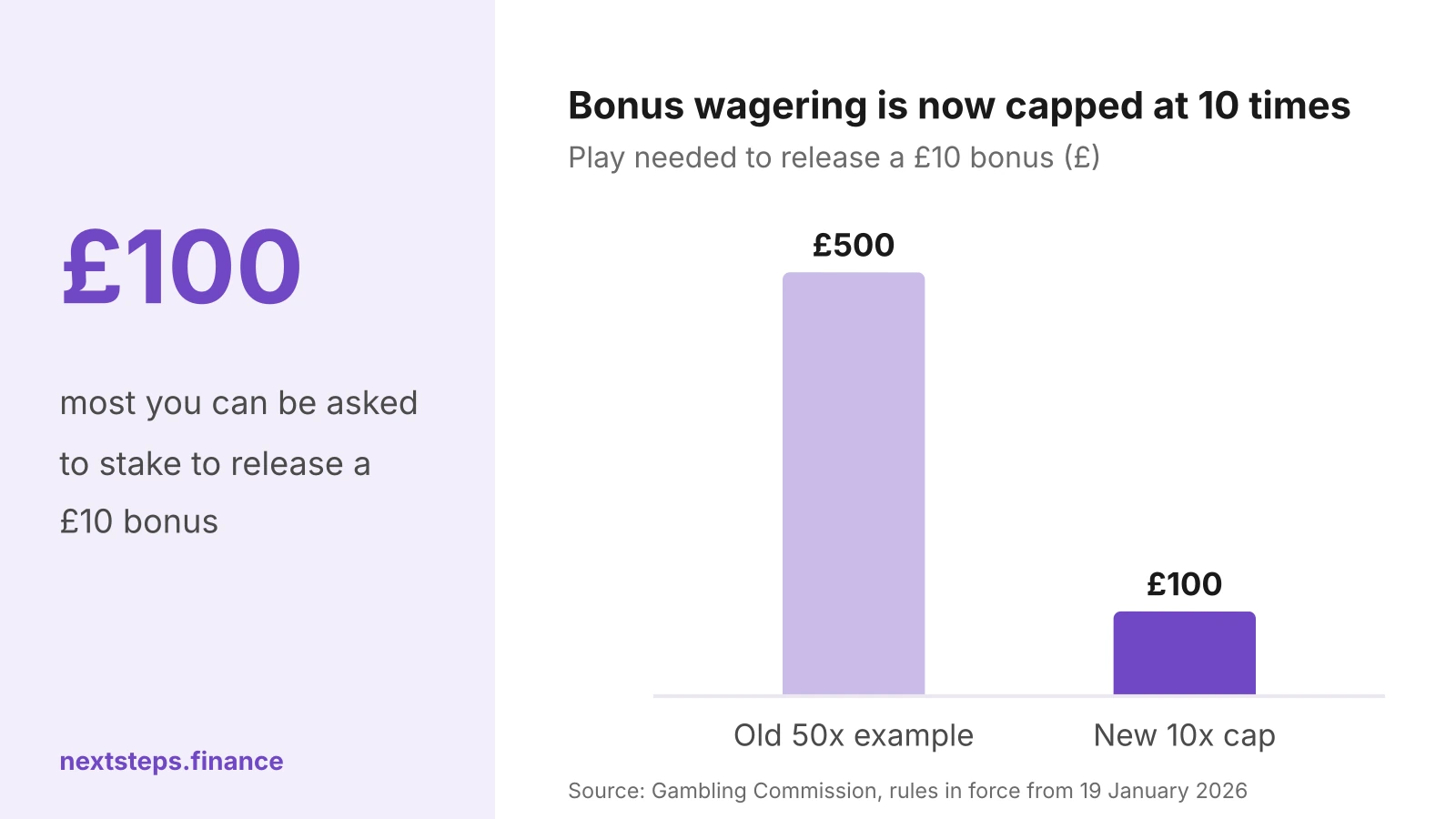
- Wagering requirements capped at 10 times. The Commission's own example is a £10 bonus with a 50 times wagering requirement, which meant £500 of play before you could withdraw. Under the cap, a £10 bonus can require no more than £100 of play.
- Mixed-product promotions banned. Bookmakers can no longer offer bonuses that require you to do two types of gambling, such as "bet on football and get free spins".
For matched bettors, the wagering cap makes some casino offers easier to clear. But casino offers carry real variance: unlike a laid sports bet, you can lose money on them. If you're new, sports free bets are the place to start.
How much can you make from matched betting in 2026?
There's no reliable figure, and you should be wary of anyone promising a monthly income. What you make depends on how many sign-up offers you haven't used yet, how much time you put in, and how quickly bookmakers restrict your accounts.
OddsMonkey's help centre, checked today, says its free trial uses step-by-step video and written tutorials to work through the bookmaker sign-up offers available to you. After that, its paid Starter Membership adds the ongoing "reload" offers, tools, training guides and its community forum. Reload offers usually pay much less per offer than sign-up offers, so earnings tend to fall after the first few months.
A realistic way to think about it:
- Sign-up offers: the bulk of the money, but each one only works once per person.
- Reload offers: smaller and less predictable, and they shrink once accounts are restricted.
- Your time: each offer takes minutes once you're practised, but early on it's slower. Count your hourly rate honestly.
Take Action: Track every offer in a simple spreadsheet (date, bookmaker, profit, money tied up) so you know your true return. Our free UK Budget Planner can help you decide what the extra money is for.
Does matched betting affect your credit score or mortgage?
Gambling doesn't directly affect your credit score. Checkmyfile explains that "the act of gambling itself won't show up on your credit report", and neither your gains nor your losses are reported to Experian, Equifax or TransUnion.
Mortgages are different. Lenders typically ask for three to six months of bank statements, and Checkmyfile notes that "gambling transactions (or unusual patterns of cash withdrawals) are likely to be subject to further questioning." Matched betting creates exactly that pattern: lots of deposits and withdrawals with bookmakers and exchanges.
If you're planning to buy or remortgage soon, especially with mortgage rates at a three-year high, it may be sensible to pause matched betting for the months before you apply, or use a separate bank account for it and be ready to explain it to a broker.
Who matched betting suits, and the alternatives
Matched betting may suit you if you're organised, comfortable with simple maths, have a few hundred pounds you can tie up for a few weeks, and have no history of problem gambling. It isn't for anyone who finds betting sites tempting, because you'll be spending a lot of time on them.
| Option | Who it may suit | Key condition | Link |
|---|---|---|---|
| OddsMonkey | Beginners who want guided tutorials and an odds-matching tool | 18+; free trial first, paid membership for reload offers (check current prices) | Start the OddsMonkey free trial |
| Do it yourself | Confident with odds and lay stake maths | You need to find offers and calculate stakes yourself | Free, but slower and easier to make mistakes |
| TopCashBack | Anyone who wants extra money without gambling sites | Cashback can take weeks to confirm | See our best cashback apps guide |
If you'd rather avoid betting sites entirely, cashback sites and gift card apps pay smaller amounts but carry no betting risk. We compare the options in our best side hustles UK guide.
Please gamble responsibly. Matched betting is for over-18s only. If betting stops feeling like a numbers exercise, stop, and get free, confidential support from BeGambleAware.org. Many UK banks also let you block gambling transactions in their app.
FAQ
Is matched betting legal in the UK?
Yes. Matched betting is legal in the UK because you're using promotions that licensed bookmakers choose to offer and covering your bets on a regulated exchange. You must be 18 or over and follow each bookmaker's terms. Bookmakers can, however, restrict or close accounts that only take offers.
Do you pay tax on matched betting profits?
No, in almost all cases. The Gambling Commission confirms gambling winnings for UK customers are tax-free, regardless of the amount, because tax is charged on operators instead. Matched betting profits don't go on a Self Assessment return and don't use the trading allowance.
Is matched betting still worth it in 2026?
It can be, especially for sign-up offers you haven't used. Online casino duty rose to 40% in April 2026 and online sports betting duty rises to 25% in April 2027, so promotions may shrink. Reload offers pay much less than sign-up offers, so earnings usually fall after the first few months.
Does matched betting affect getting a mortgage?
It can. Gambling doesn't appear on your credit report, but mortgage lenders typically review three to six months of bank statements, and frequent gambling transactions are likely to prompt questions. Many people pause matched betting before applying or keep it in a separate account they can explain.
What does gubbed mean in matched betting?
Being "gubbed" means a bookmaker has restricted your account, usually by stopping promotions or limiting how much you can stake. It often happens after you've taken several offers without placing other bets. It's legal, and it's the main reason matched betting income tends to fall over time.
How much money do you need to start matched betting?
You need enough to cover both your bookmaker stakes and the liability on the exchange. In our example, a £10 free bet needed £42.07 of exchange liability. Many beginners start with a float of a few hundred pounds and don't use money they need for bills.