Most of the coverage of today's rate rise is about mortgages and savings (see will interest rates rise again?). But if you have a credit card balance, an overdraft or a loan, the rise matters too, just not always in the way people expect. Here's what changes, what doesn't, and the quickest ways to pay less interest.
Key takeaways
- Existing personal loans and most car finance are fixed. Your payments won't change because of the rise.
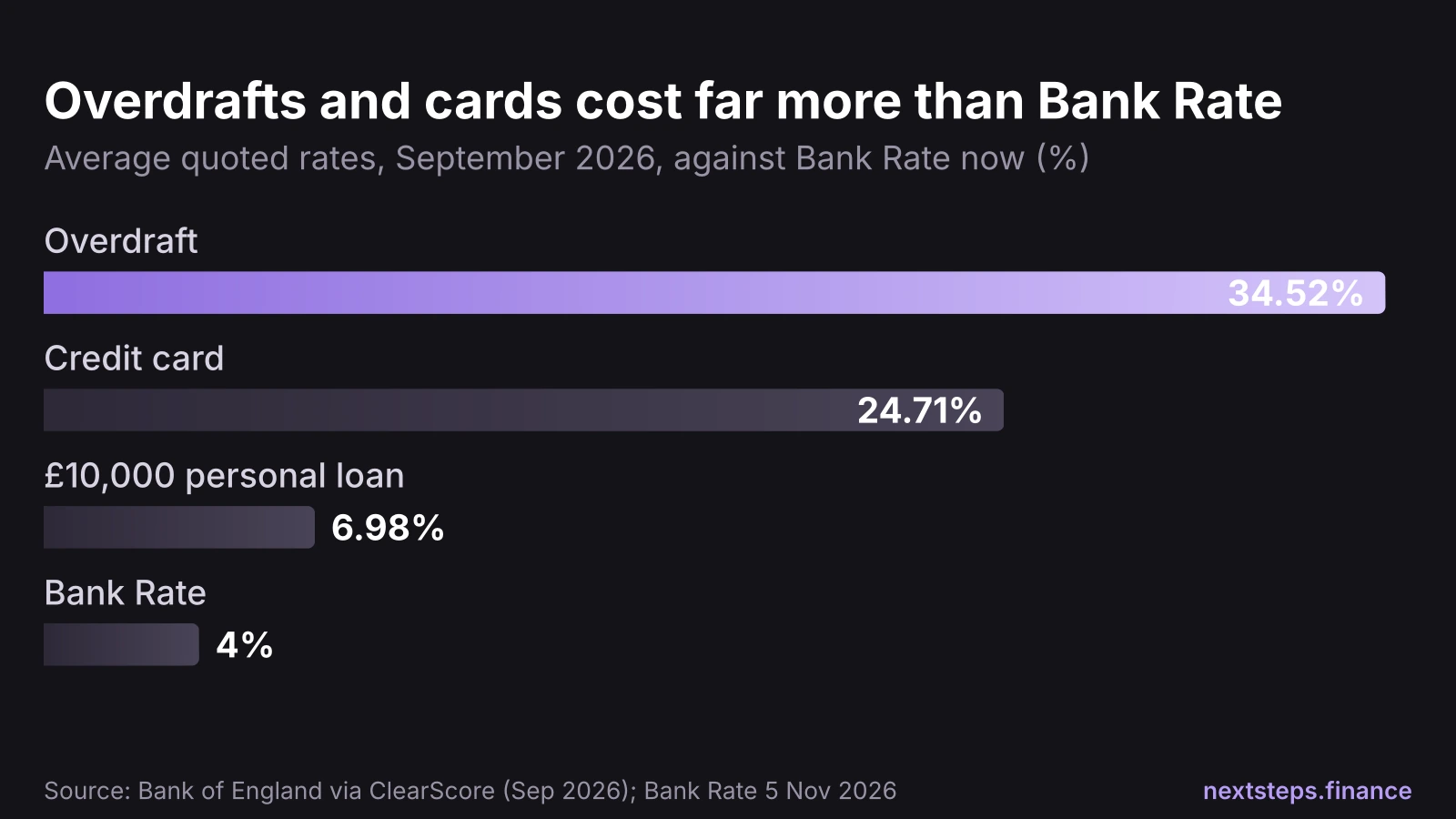
- Credit card rates are usually variable. The average quoted card rate was 24.71% in September 2026, the highest since records began in 1995 (ClearScore, using Bank of England data).
- Overdrafts are the most expensive debt, averaging 34.52%.
- New loans may cost more, as lenders price in higher rates. A £10,000 personal loan averaged 6.98% in September.
- 0% balance transfer cards are still the fastest way to stop paying interest, if you can get one.
What happens to borrowing costs after the rate rise?
It depends on whether your borrowing has a fixed or variable rate:
| Type of borrowing | Rate type | Affected by the rise? |
|---|---|---|
| Existing personal loan | Fixed for the term | No |
| Car finance (PCP or HP) | Usually fixed for the term | No, for existing deals |
| Credit card | Usually variable | Possibly, with notice |
| Overdraft | Variable, set by your bank | Possibly |
| New personal loan | Set when you apply | New deals may cost more |
| Buy now, pay later | Usually interest-free | No, unless you miss payments |
| Plan 1 and Plan 4 student loans | Linked partly to Bank Rate | Possibly (see below) |
Card and overdraft providers don't have to follow Bank Rate. Many card rates have barely moved with past rate changes, because they're set mainly by risk and competition. But if your provider does raise your rate, it must normally give you at least 30 days' notice and the chance to reject the change and pay off the balance at your current rate.
Will my credit card interest go up?
It might, but the bigger issue is how high card rates already are. A 0.25-point rise on a 24.71% card makes it about 24.96%. On a £3,000 balance, that's roughly £7.50 a year extra. Compared with the roughly £700 of interest a £3,000 balance at 24.71% costs in its first year, the rise is small.
So the real win is getting the rate down, not worrying about the rise. See how quickly you could clear a balance:
- Balance owed£3,000
- Interest rate (APR)24.71%
- Monthly payment£100
- Extra each month£50
Adding even £50 a month to a £100 payment cuts the time to clear a £3,000 balance by more than a year and saves hundreds in interest.
Take Action: Check your latest credit card statement for your interest rate, and look for any letters about rate changes in the coming weeks.
How to pay less interest on credit cards
- Move the balance to a 0% card. A 0% balance transfer card pauses interest for a set period, usually for a one-off fee of a few percent. Use an eligibility checker first so a rejection doesn't affect your credit file.
- Pay more than the minimum. Minimum payments are mostly interest. Set up a fixed Direct Debit above the minimum.
- Clear the most expensive debt first. If you have several cards, pay the minimum on all of them and put everything else towards the highest rate (the "avalanche" method).
- Consider a personal loan to consolidate. At around 7%, a £10,000 loan costs far less than a 25% card, but only if you stop using the cards. Our debt consolidation guide explains the risks.
Our step-by-step plan on how to get out of debt goes into each method.
What about overdrafts?
Overdrafts are the most expensive mainstream borrowing, averaging 34.52% in September 2026. Banks set these rates themselves, so the rise could prompt increases.
If you use your overdraft every month, it's worth treating it as debt to clear rather than a buffer. Moving the balance to a 0% money transfer card or a cheaper loan can save a lot. A budgeting app such as Emma can show you how often you're dipping into it and what it's costing.
Will personal loans and car finance cost more?
Existing personal loans and car finance won't change. These are almost always fixed for the whole agreement, so your payments stay the same.
New loans are different. Lenders set rates based on their own funding costs, and those tend to rise when Bank Rate goes up, so new loan rates may creep higher over the coming weeks. If you're planning to borrow for a car or home improvements, compare the total cost and APR, not just the monthly payment:
- Amount borrowed£10,000
- APR7%
- Term60 months
Before taking on new debt, check your credit file and improve it where you can. Our credit score guide covers quick fixes.
Does the rate rise affect student loans?
It depends on your plan. Plan 2 and Plan 5 student loan interest is linked to RPI inflation, not Bank Rate, so today's rise doesn't change them directly.
Plan 1 and Plan 4 loans charge the lower of RPI or Bank Rate plus 1%. With Bank Rate now 4%, that cap is 5%, so the rate on these plans may change depending on where RPI sits. Repayments are based on your income, not the interest rate, so your monthly deductions won't change either way. Our student loans guide explains how repayments work.
Is now a good time to pay off debt?
Usually, yes, especially expensive debt. Rates on savings are rising a little, but no easy-access savings account pays anywhere near 25%. If you have cash in savings earning 4% and a credit card at 25%, paying off the card is often the better deal, as long as you keep an emergency fund.
What makes sense depends on your circumstances, including whether you might need that cash soon. If you'd like help weighing up debt, savings and your budget together, our household finances review can help, and our UK Budget Planner shows where extra repayments can come from.
With inflation forecast to near 5%, our guide to protecting your budget covers the wider squeeze. If you're struggling with repayments, contact your lender early and get free help from MoneyHelper, StepChange or Citizens Advice.
FAQ
Does the Bank of England rate rise affect credit cards?
It can. Most credit card rates are variable, so providers can raise them after a Bank Rate rise, usually with at least 30 days' notice. But card rates are set mainly by risk and competition, so many won't move. The average quoted card rate was 24.71% in September 2026.
Will my personal loan payments go up?
No. Existing personal loans in the UK are almost always fixed for the whole term, so your rate and monthly payment won't change because of the 5 November 2026 rise. New loans may cost more, as lenders adjust their rates to higher funding costs.
Does the rate rise affect car finance?
Not for existing deals. PCP and hire purchase agreements are usually fixed for the whole agreement, so your payments stay the same. New car finance deals may be priced slightly higher. Check the APR and total amount payable before you sign.
Should I pay off my credit card or save?
If your card charges far more than your savings earn, paying it off usually saves more. A card at around 25% costs far more than any savings account pays. Most people keep a small emergency fund first, then put spare cash towards the most expensive debt.
Are overdrafts going up after the rate rise?
They might. Banks set overdraft rates themselves, and the average was already 34.52% in September 2026. If your bank changes your rate, it must tell you in advance. If you use your overdraft every month, moving that balance to cheaper borrowing can save a lot.
The bottom line
The rise to 4% won't change your existing loan or car finance payments. Credit cards and overdrafts could get a little more expensive, but they're already so costly that the rise itself is small by comparison. The biggest saving comes from cutting that debt down, using 0% deals, overpaying and clearing the most expensive balances first.
Start with your statements this week, then use the calculators above to make a plan.