
The Bank of England's rate rise today came with a warning: inflation is going to get worse before it gets better. Its new forecasts show prices rising faster through the winter and into spring 2027, with energy the main cause. Here's what that means for your household budget, and seven practical steps to get ahead of it.
Key takeaways
- CPI inflation was 3.5% in September, up from 3.1% in August (Professional Pensions, reporting ONS figures).
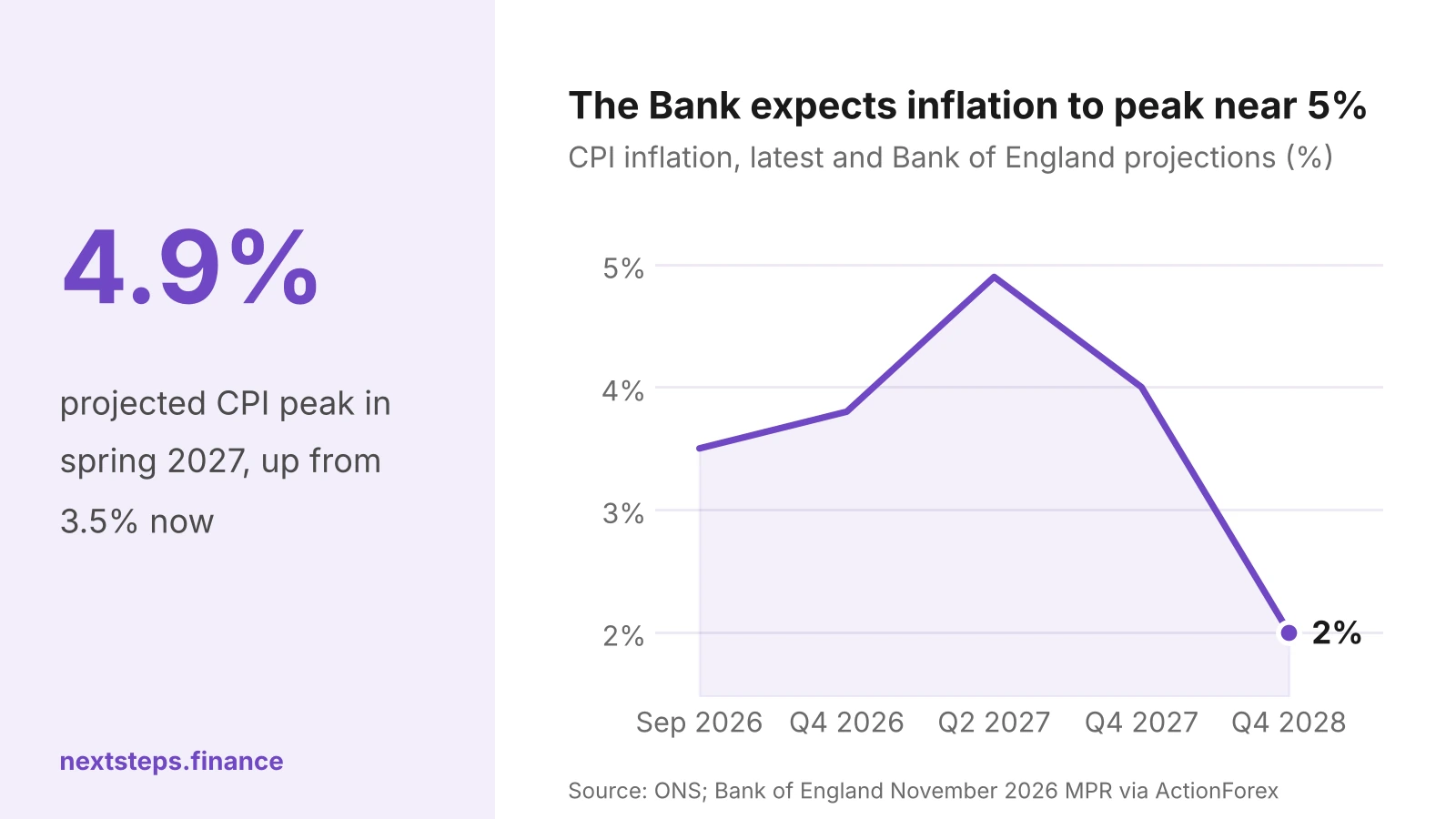
- The Bank expects inflation to peak at about 4.9% in Q2 2027, before falling back to around 2% by late 2028 (ActionForex).
- Energy bills are forecast to rise about 27% in January, from £1,723 to around £2,186 a year for a typical household (Uswitch). Ofgem confirms the figure by 25 November.
- Unemployment is projected to rise to about 5.0% by the end of 2027, so job security matters too.
- Savings at 4.5%+ still beat today's inflation, but may not beat a 4.9% peak.
Why is inflation rising again?
Mainly energy. The conflict in the Middle East has pushed up oil and gas prices, which feed into petrol, household energy bills and, over time, the cost of making and transporting almost everything else. Fuel prices were a key driver of the jump to 3.5% in September.
The Bank's worry is that higher energy costs spread into wider prices and wages, so inflation stays high even after energy prices settle. That's why it raised rates today. Its projections have inflation at about 3.8% at the end of 2026, 4.9% in spring 2027, then 4.0% at the end of 2027, falling to around 2% by late 2028. In a worse scenario, it reaches 5.5% at the end of 2027.
For what the rate rise means for borrowing and saving, see will interest rates rise again? and our inflation explainer for September.
What does 5% inflation mean for your budget?
At 5% inflation, something that costs £100 today costs about £105 a year later. That doesn't sound much, but it compounds and it's uneven: energy and food usually rise faster than the headline rate when energy is the cause.
See what inflation does to the value of your money:
- Amount today£10,000
- Yearly inflation4.9%
- Years2 yrs
If your pay doesn't rise as fast as prices, your real income falls. The practical answer is to plan your budget around higher costs now, rather than waiting to notice the squeeze.
How much will energy bills go up?
The energy price cap is £1,723 a year for a typical household paying by Direct Debit until 31 December 2026. An average of supplier forecasts from 29 October puts the January cap at about £2,186, a rise of around £463 a year or roughly £39 a month. Ofgem announces the real figure by 25 November.
There's some help. Budget 2026 announced a £100 Household Energy Payment for homes in council tax bands A to D in England, paid from January 2027, and extended 0% VAT on household electricity to July 2027. See our guides to the £100 energy payment and the January price cap forecast, which covers whether a fixed tariff makes sense.
7 ways to protect your budget from rising inflation
1. Rebuild your budget around next year's costs
Don't budget on last year's bills. Add the forecast energy rise (about £39 a month for a typical home), any mortgage or rent increase, and a bit extra for food and fuel. Our UK Budget Planner is built for exactly this: you enter your income and bills, and it shows what's left and where to trim. Our complete guide to budgeting walks through the method.
2. Separate your bills from your spending money
Moving bill money into a separate pot on payday makes it much harder to overspend. Banking apps like Monzo let you set up bill pots that pay your Direct Debits automatically, so what's left in your main balance is genuinely yours to spend. Monzo's current welcome offer for new customers is £10 when you add money and make a card payment within 30 days. Our best budgeting apps guide compares others.
3. Lock in fixed costs where it pays
Inflation is a reason to fix what you can, at a fair price:
- Mortgage: if your deal ends within six months, see whether to fix now.
- Energy: compare fixed tariffs against the January forecast.
- Phone and broadband: many contracts rise each April by inflation plus a fixed amount, or by a set number of pounds. Check yours, and haggle or switch when you're out of contract.
4. Make your savings work harder
Money in a current account loses value fast when inflation is high. The best easy access savings accounts paid around 4.5% after today's rise, above September's 3.5% inflation. The Plum Cash ISA paid 4.66% AER (variable), tax-free, when checked today. See how a regular saving habit adds up:
- Starting balance£500
- Monthly saving£100
- Interest rate (AER)4.5%
- Years1 yrs
Our Cash ISA or savings account guide explains which to use, especially with savings tax rising in April 2027.
5. Build or top up your emergency fund
With unemployment projected to rise and prices climbing, a cash buffer matters more. A common target is three months of essential spending. If that feels impossible, start with one month, or even a fixed amount like £500.
6. Tackle expensive debt first
Inflation and higher rates make debt harder to manage. Credit cards averaged 24.71% and overdrafts 34.52% in September. Clearing those beats almost any savings rate. Our guide to the rate rise and credit cards, loans and overdrafts has a step-by-step plan.
7. Check what you're entitled to
Rising costs can bring you within reach of help you didn't qualify for before. Use a free benefits calculator such as Entitledto or Turn2us to check, and look at the £100 energy payment if you're in England. If you're struggling with bills, contact your supplier or lender early, and get free help from Citizens Advice, StepChange or MoneyHelper.
Take Action: Pick two of the steps above and do them this weekend. Start with the budget: everything else is easier once you know your numbers.
Will inflation and interest rates come down?
The Bank expects both to come down eventually, but not soon. Its projections show inflation peaking in spring 2027 and returning to around 2% by late 2028. Most forecasters expect Bank Rate to rise once more, to about 4.25%, before any cuts.
That depends heavily on energy prices. If the Middle East conflict eases and oil and gas prices fall, inflation could drop faster. If not, it could stay higher for longer. Planning for higher costs through 2027 is the safer assumption.
If you'd like help building a plan that covers your budget, mortgage, savings and debt together, book a household finances review.
FAQ
Will UK inflation reach 5%?
It may get close. The Bank of England's November 2026 forecast has CPI inflation peaking at about 4.9% in the second quarter of 2027, up from 3.5% in September 2026. In its worse scenario, inflation reaches 5.5% at the end of 2027. Energy prices are the main reason.
Why did the Bank of England raise rates if inflation is caused by energy?
Higher interest rates can't lower energy prices directly. The Bank raised rates to stop higher energy costs spreading into wider prices and wages, which could keep inflation high for longer. Its aim is to bring inflation back to the 2% target over time.
How much will my energy bill go up in January 2027?
Forecasts point to a typical bill of about £2,186 a year from 1 January 2027, up around £463 or 27% from £1,723, based on an average of supplier forecasts on 29 October 2026. Ofgem confirms the real figure by 25 November. Your bill depends on how much energy you use.
How can I protect my savings from inflation?
Move savings out of low-rate accounts into ones paying at least the rate of inflation. Top easy access accounts paid around 4.5% in early November 2026, above September's 3.5% inflation. A Cash ISA keeps the interest tax-free, which matters more with savings tax rising in April 2027.
When will inflation come down?
The Bank of England expects inflation to peak in spring 2027 and fall back to about 2% by late 2028. That depends on energy prices, wages and the wider economy. Monthly inflation figures from the ONS, next due on 18 November 2026, will show which way it's heading.
The bottom line
Inflation is heading towards 5% next year, and energy bills are likely to jump in January. The rate rise won't fix that quickly. The best protection is practical: rebuild your budget around higher costs, keep bill money separate, fix costs where it makes sense, keep savings earning a good rate, and clear expensive debt.
Start with your numbers this week. Our UK Budget Planner makes that a 20-minute job.