
Average household bills in the UK add up to roughly £5,060 a year, or £423 a month, for the basics every home pays: council tax, energy, water, broadband, a phone and a TV licence. That's before rent or a mortgage, food, transport or insurance. This guide breaks down each bill using the latest official figures, shows what a typical renter, couple and family pay, and explains which bills you can actually cut.
Foundations
Average Household Bills UK: Monthly Costs
Average household bills UK 2026: council tax, energy, water, broadband, mobile and TV licence cost about £423 a month before rent. See every figure.
In this article
- 01Key takeaways
- 02What are the average household bills in the UK per month?
- 03How much is the average council tax bill?
- 04How much is the average energy bill per month?
- 05How much are water, broadband, mobile and TV licence bills?
- 06What are the average bills for a single person, couple and family?
- 07What percentage of income should go on bills?
- 08How can I reduce my household bills?
- 09How do I budget for household bills?
- 10FAQ
- 11Bottom line
Key takeaways
- Core bills cost about £423 a month (£5,064 a year) for an average home in late 2026, before rent, mortgage or food.
- Council tax is the biggest bill: £1,868 a year per dwelling in England in 2026-27 (about £156 a month), with Band D at £2,392, up 4.9% (MHCLG).
- Energy costs £1,723 a year for a typical dual-fuel home on the Ofgem price cap from 1 October to 31 December 2026, about £144 a month.
- Water averages £639 a year in England and Wales for 2026-27, up £33 (5.4%), and the TV licence is £180.
- Renters pay the most: the UK average private rent was £1,406 a month in September 2026 (ONS), so housing plus bills comes to about £1,829.
If you'd like to plan your own bills month by month, the UK Budget Planner works from your take-home pay and keeps track of bills, savings and sinking funds for the year.
What are the average household bills in the UK per month?
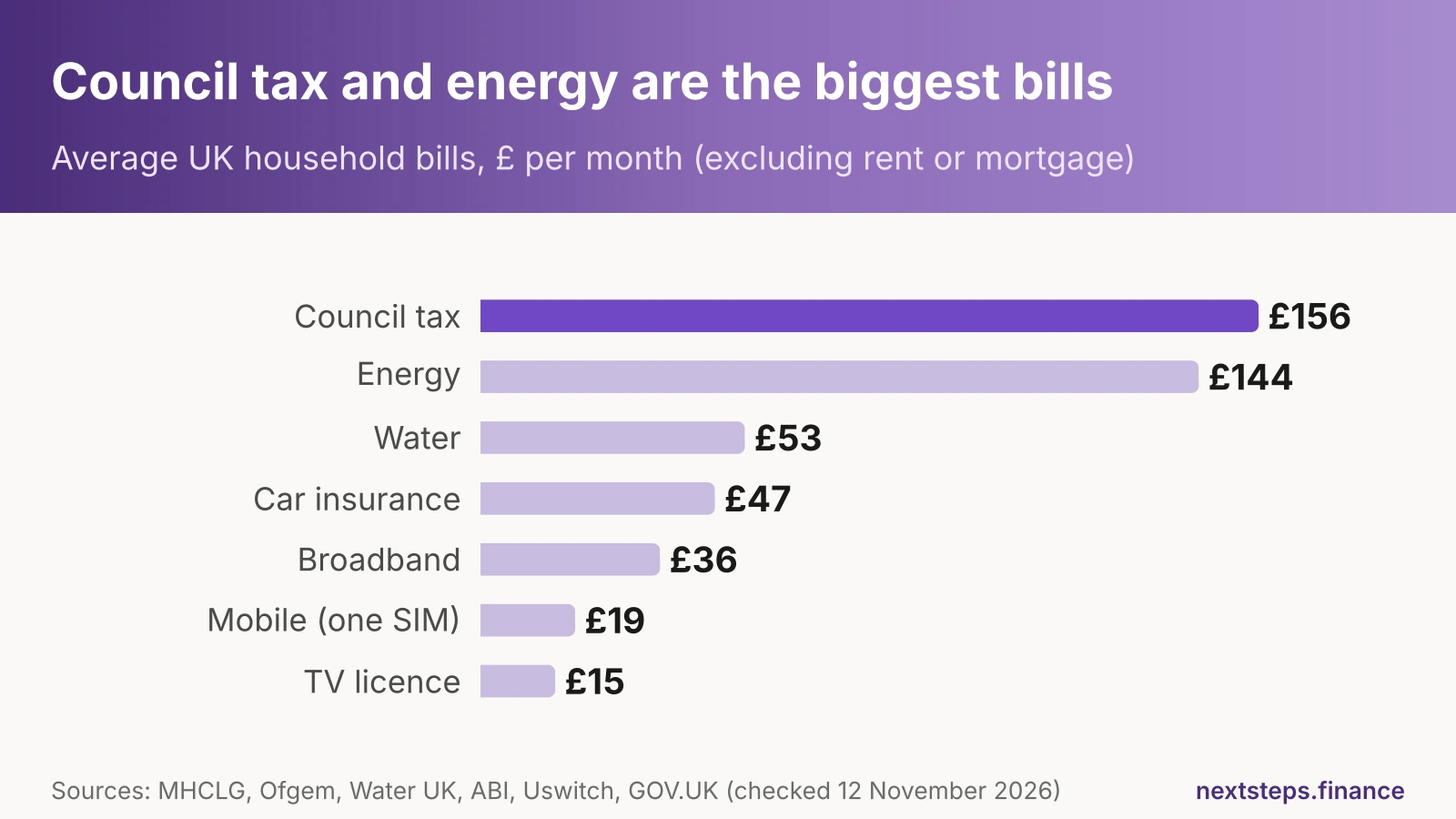
The average UK household pays about £423 a month for six core bills, based on the latest official and industry figures. Add car insurance and it's about £469.
| Bill | Average per year | Average per month | Source and period |
|---|---|---|---|
| Council tax (England, per dwelling) | £1,868 | £156 | MHCLG, 2026-27 |
| Energy (gas and electricity) | £1,723 | £144 | Ofgem price cap, Oct-Dec 2026 |
| Water and sewerage | £639 | £53 | Water UK, 2026-27 |
| Broadband | £431 | £36 | Uswitch, average bill (Dec 2025 survey) |
| Mobile phone (one person) | £223 | £19 | Uswitch, average bill (Dec 2025 survey) |
| TV licence | £180 | £15 | DCMS, from 1 April 2026 |
| Core bills total | £5,064 | £423 | |
| Car insurance (if you drive) | £566 | £47 | ABI, Q2 2026 |
These are averages, so your own bills could be much higher or lower. Council tax depends on your band and council, energy on how much you use, and broadband and mobile on your contract. Every additional adult with a phone adds roughly another £19.
For a wider view, the ONS Family spending survey found average household spending of £676.60 a week (about £2,932 a month) in the year to March 2025. Housing (net of mortgage repayments), fuel and power took £118.40 a week, or 18%, and transport £96.40 a week.
Take Action: Pull up your last three months of bank statements and write your real figure next to each line in the table. The gaps show where to look first.
How much is the average council tax bill?
The average council tax bill in England is £1,868 a year per dwelling for 2026-27, or about £156 a month spread over 12 months. The average Band D bill is £2,392, up £111 (4.9%) on last year, according to MHCLG's official statistics.
The per-dwelling figure is lower than Band D because most homes are in Bands A to C. Band D averages also vary by type of area:
| Area type | Average Band D 2026-27 | Increase |
|---|---|---|
| London | £2,068 | 4.4% |
| Metropolitan areas | £2,409 | 5.2% |
| Shire areas | £2,452 | 4.6% |
| Unitary areas | £2,490 | 5.3% |
Two things change what you actually pay each month:
- Instalments. Council tax is usually split into 10 monthly payments, so a £1,868 bill is £186.80 a month from April to January, with nothing in February and March (GOV.UK). You can ask your council to spread it over 12 instead.
- Discounts. You get 25% off if you live alone or everyone else in your home is "disregarded", such as full-time students (GOV.UK). You have to apply for it.
Take Action: If you live alone and your bill doesn't show a single person discount, apply to your council now.
How much is the average energy bill per month?
The average energy bill is £1,723 a year, or about £144 a month, for a typical home on a dual-fuel Direct Debit tariff between 1 October and 31 December 2026. That's up £60 a year from the previous cap, Ofgem confirmed in its August announcement, mostly because gas bills rose 8%.
The cap limits unit rates and standing charges, not your total bill. For October to December 2026, EDF lists the capped rates as:
| Unit rate | Standing charge | |
|---|---|---|
| Electricity | 26.32p per kWh | 54.83p a day |
| Gas | 7.97p per kWh | 29.68p a day |
The standing charges alone come to about £308 a year before you use any energy at all. That's why a small flat can't get much below £25 a month however careful you are.
The cap changes every three months, and the next one starts on 1 January 2027. Our January 2027 price cap forecast explains what suppliers expect and whether fixing could be worth it.
Take Action: Budget for energy as an annual figure split over 12 months, and build a buffer for winter, when usage is highest.
How much are water, broadband, mobile and TV licence bills?
Together these four bills cost the average home about £123 a month. Water is set once a year by your water company, while broadband and mobile depend heavily on whether you're in or out of contract.
Water
The average water and sewerage bill in England and Wales is £639 a year for 2026-27 (about £53 a month), up £33 or 5.4%, according to Water UK. It varies a lot by company: Southern Water customers pay an average of £759, Thames Water £658. If you live alone or use little water, a water meter may cut your bill.
Broadband and mobile
Uswitch's survey put the average broadband bill at £35.90 a month and the average mobile bill at £18.60 a month before April's price rises. Most big broadband providers then added up to £4 a month in April 2026.
Ofcom found 28% of broadband customers are out of contract, and in-contract customers pay £7 to £9 a month less. If you claim certain benefits, broadband social tariffs cost £12.50 to £24 a month, yet 70% of eligible households don't know they exist.
TV licence
A colour TV licence costs £180 a year from 1 April 2026, up £5.50 (GOV.UK). You need one to watch live TV or use BBC iPlayer. Setting aside £15 a month covers it.
Take Action: Check your broadband and mobile end dates. Uswitch estimates the average household coming out of contract could save £329 a year by switching.
What are the average bills for a single person, couple and family?
Bills don't double when you add a second person. Council tax, energy standing charges, broadband and the TV licence are shared, so bills per person fall sharply for couples and housemates. Here are three illustrative monthly budgets using the averages above, renting at the UK average of £1,406 (ONS, September 2026).
| Monthly cost | Single renter | Couple renting | Family of four |
|---|---|---|---|
| Rent | £1,406 | £1,406 | £1,406 |
| Council tax | £117 (25% discount) | £156 | £156 |
| Energy | £144 | £144 | £144 |
| Water | £53 | £53 | £53 |
| Broadband | £36 | £36 | £36 |
| Mobile phones | £19 | £38 | £38 |
| TV licence | £15 | £15 | £15 |
| Total | £1,790 | £1,848 | £1,848 |
| Per adult | £1,790 | £924 | £924 |
In practice, a single person often lives somewhere smaller and cheaper than the UK average, and a family uses more energy and water than a typical home, so treat these as starting points. Rents also vary hugely: the average is £2,338 in London, £1,466 across England, £1,011 in Scotland and £848 in Wales.
For a worked budget on a specific salary, see how to budget on £30,000.
What percentage of income should go on bills?
There's no official rule, but the popular 50/30/20 budget suggests keeping all your needs, including rent and bills, to about 50% of take-home pay. On the figures above, a single renter paying £1,790 a month would need take-home pay of about £3,580 to stay within that.
That's why rent, not utility bills, is usually what breaks a budget. The £423 of core bills is about 20% of the £2,093 monthly take-home on a £30,000 salary; adding average rent takes it well above half. If your bills are over 50%, sharing, a cheaper area or trimming the "wants" side of your budget are the levers that make the biggest difference.
How can I reduce my household bills?
The quickest savings come from bills where you can switch, claim a discount or come off an expensive deal. Here's where to start, in order of likely saving:
- Broadband and mobile: end of contract is when you can usually switch without an exit fee. Moving to SIM-only once your phone is paid off is often the biggest single cut.
- Council tax: claim the 25% single person discount if eligible, and check your band is right.
- Energy: compare a fixed deal with the price cap before each quarterly change, and give a meter reading so you're not billed on an estimate.
- Water: ask about a meter if fewer people live in your home than bedrooms.
- Subscriptions: cancel streaming and app subscriptions you've forgotten about.
A budgeting app can do some of the spotting for you. Emma lists your bills and subscriptions in one place and sends alerts when subscription prices go up. The Basic plan is free, and paid plans start at £41.99 a year with a 7-day free trial (Emma). A free alternative is a simple budget template that you update once a month.
Take Action: Put every bill into the free UK budget calculator to see your total against your take-home pay.
How do I budget for household bills?
The simplest way is to turn every bill into a monthly figure and pay them all from one place. Annual and quarterly bills (TV licence, car insurance, energy in winter) are what usually catch people out.
- List every bill with its annual cost, then divide by 12. Council tax over 10 months still needs budgeting over 12.
- Use a separate bills account or pot so that your spending money is what's left after bills go out.
- Line up due dates with payday where your providers let you choose.
- Review twice a year: in April, when council tax, water, broadband and mobile prices usually rise, and in autumn, when energy use climbs.
Our complete guide to budgeting in the UK covers each step, and the budgeting hub brings all our guides together. To set it up for the year, the UK Budget Planner is built around UK bills such as council tax and the TV licence.
FAQ
What is the average monthly bill for a household in the UK?
The average UK household pays about £423 a month for council tax, energy, water, broadband, one mobile phone and a TV licence in late 2026. Add the UK average private rent of £1,406 and housing plus core bills comes to about £1,829 a month. Food, transport and insurance are extra.
What bills do you pay when you rent?
Most renters pay council tax, gas and electricity, water, broadband, a TV licence if they watch live TV or iPlayer, and contents insurance, on top of rent. Some rents include some bills, so check your tenancy agreement before you budget.
How much should a single person spend on bills?
A single person paying average bills would spend about £384 a month on council tax (after the 25% single person discount), energy, water, broadband, a mobile and a TV licence. Living somewhere smaller, using a water meter and choosing SIM-only can bring that down further.
Are household bills going up in 2027?
Some are likely to. The energy price cap changes on 1 January 2027, and suppliers' forecasts point to a rise. Council tax, water, broadband and mobile prices usually change each April, so check the new figures before setting your 2027 budget.
How much is the energy price cap now?
The Ofgem energy price cap is £1,723 a year for a typical dual-fuel household paying by Direct Debit from 1 October to 31 December 2026. That's about £144 a month. It caps unit rates and standing charges, so a home using more energy than typical will pay more.
Bottom line
Average UK household bills come to about £423 a month before housing, and around £1,829 once you add the average rent. Council tax and energy make up more than two-thirds of the core bills, but broadband, mobile and subscriptions are where switching usually saves the most. Turn every bill into a monthly figure, keep them in one place and review them each April. The UK Budget Planner is built to do exactly that across the whole year.
Found this useful? Add Next Steps Finance as a preferred source and Google will show you more of our guides in search and AI answers.
Put this into practice
Build your budget in one sitting
The UK Budget Planner works out your take-home pay, splits it with the 50/30/20 rule, tracks spending through the year and forecasts five years ahead. Made for UK pay, tax and bills.