
Energy bills look set for their biggest jump in years this January. The price cap only rose £60 in October, but the latest forecasts from British Gas, EDF and E.ON put the January rise at around 27%, driven by the conflict in the Middle East pushing up wholesale gas prices.
Below I've set out what the forecasts say, what last week's Budget does (and doesn't) do to help, whether fixing now makes sense, and how to budget for a bigger winter bill.
Key takeaways
- The current cap is £1,723 a year for a typical dual-fuel household on Direct Debit, from 1 October to 31 December 2026 (Ofgem).
- January 2027 forecasts range from £1,959 to £2,188. The newest, an average of supplier predictions from 29 October, is £2,186 (+27%) (Uswitch).
- Ofgem announces the January cap on or before 25 November 2026, based on wholesale prices from 19 August to 17 November.
- Budget help: a £100 payment in January 2027 for council tax bands A to D in England, and 0% VAT on electricity extended into summer 2027.
- Fixed tariffs don't currently beat the October cap, but Uswitch and MoneySavingExpert both say they can save money against the forecast January cap.
How much will the energy price cap rise in January 2027?
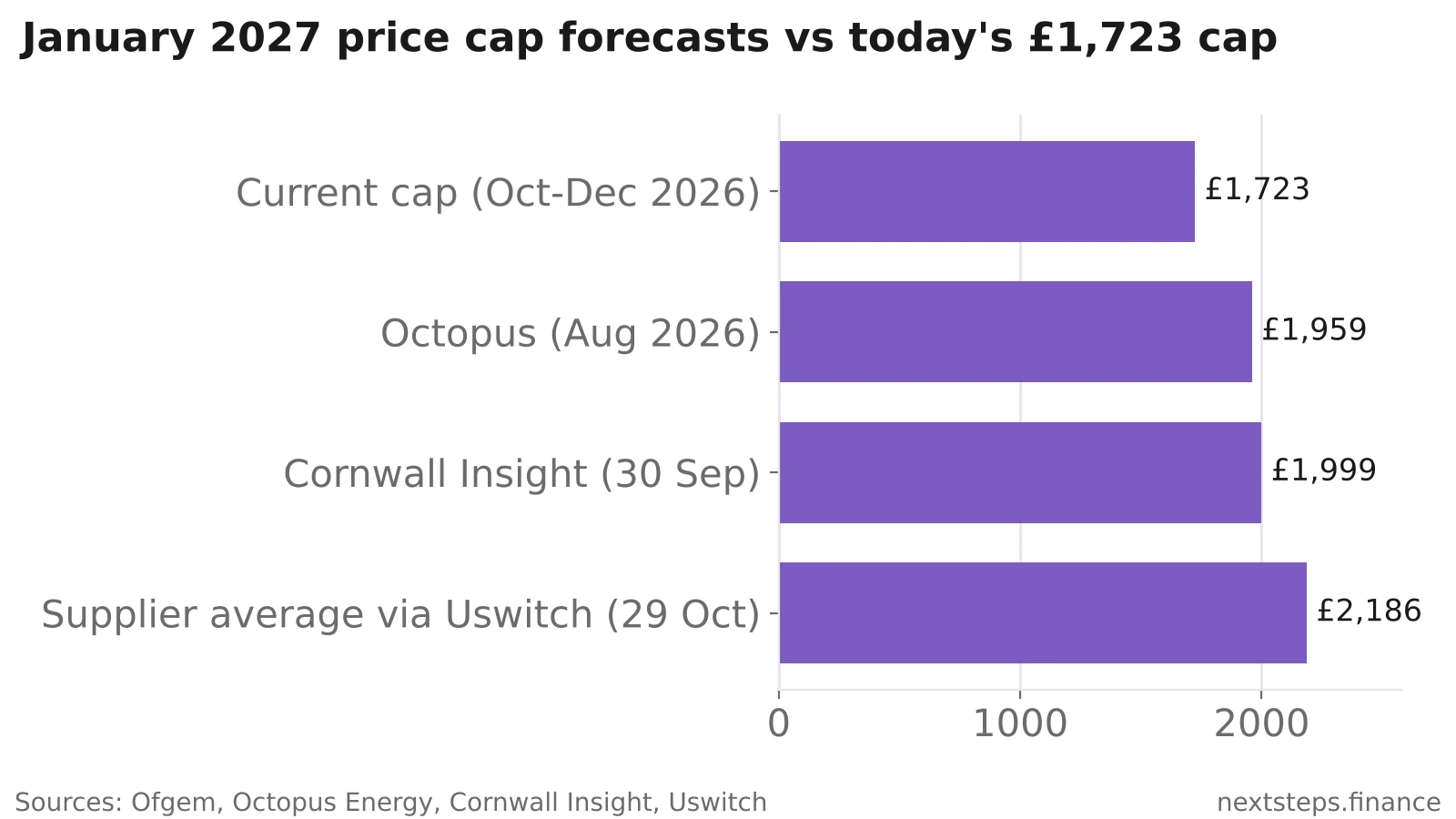
Most forecasts now point to a rise of between 14% and 27%, and the more recent the forecast, the higher it is. The cap for 1 January to 31 March 2027 hasn't been set yet, so all of these are predictions.
| Forecaster | Date | Forecast annual bill | Change vs £1,723 |
|---|---|---|---|
| Octopus Energy | August 2026 | £1,959 | +£236 |
| Cornwall Insight | 30 September 2026 | £1,999 | +£276 (+16%) |
| Supplier average (British Gas, EDF, E.ON) via Uswitch | 29 October 2026 | £2,186 | +£463 (+27%) |
| MoneySavingExpert (EDF and E.ON average) | w/c 25 October 2026 | £2,188 | +£465 (+27%) |
Cornwall Insight's September forecast blamed "escalating conflict in the Middle East, which continues to disrupt gas supplies to the UK", with EU gas storage at its lowest September level in 15 years. Uswitch points to the war in Iran and the closure of the Strait of Hormuz. Since September, the forecasts have moved up, not down.
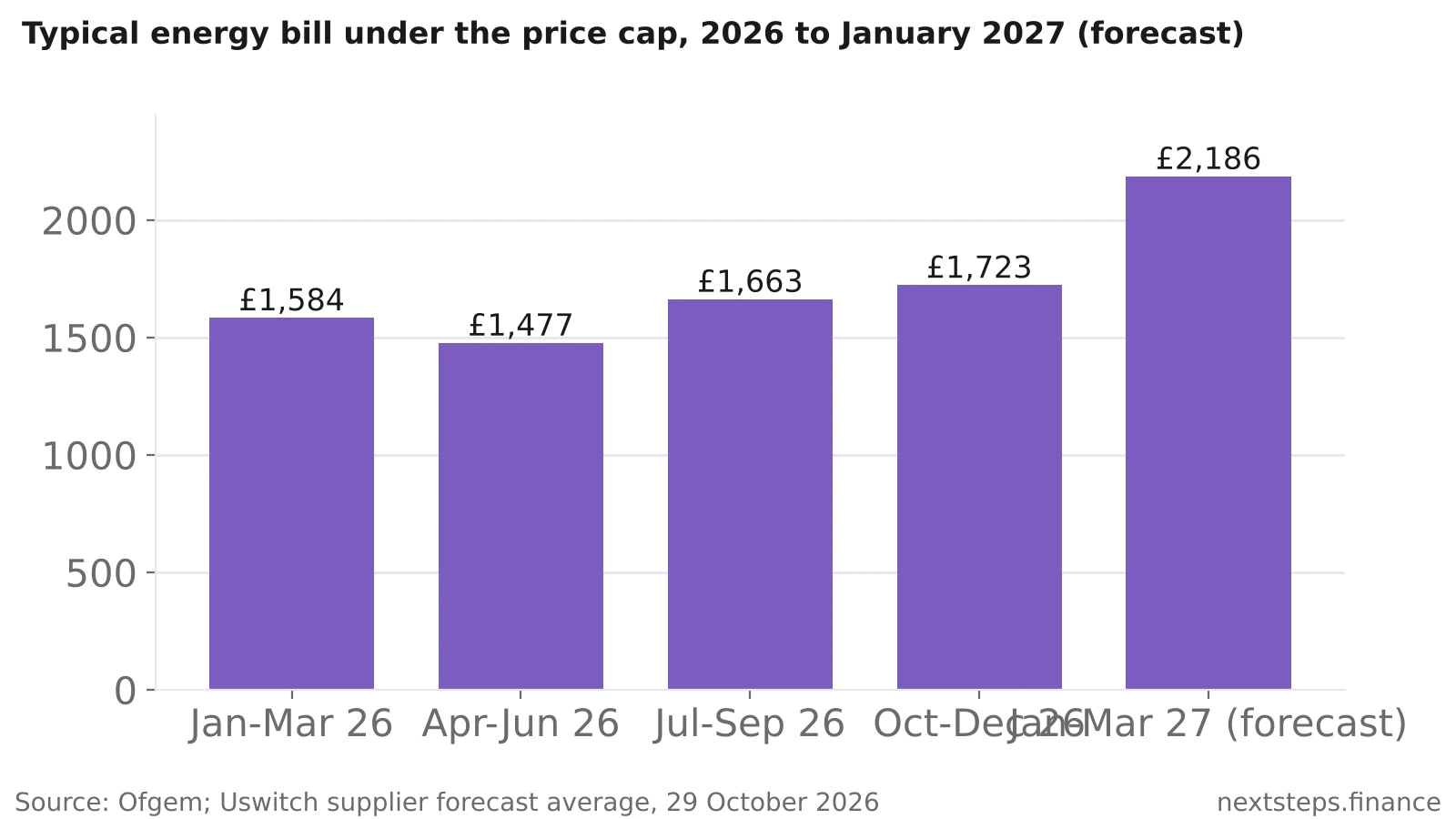
If the £2,186 forecast is right, a typical household would pay about £39 a month more than now. The cap would also be the highest it's been all year, after rises of 13% in July and about 4% in October.
When will Ofgem announce the January 2027 price cap?
Ofgem will announce the cap on or before 25 November 2026. It's calculated from wholesale prices over an observation window that runs from 19 August to 17 November, so the final number won't be known until that window closes (Uswitch).
The new cap applies from 1 January 2027. The next one, for April to June 2027, is due on or before 23 February 2027. Uswitch's supplier average currently puts that at £2,285, and it warns that if the situation in the Middle East doesn't change, prices are likely to stay around the January level or rise further.
Take Action: Note 25 November in your diary. If you're thinking about fixing, the best deals tend to disappear quickly once a big rise is confirmed.
What does the price cap actually limit?
The price cap limits your unit rates and daily standing charges, not your total bill. The £1,723 figure is just what a typical household would pay over a year, so if you use more energy, you pay more.
Under the October cap, average Direct Debit rates are (Uswitch):
| Fuel | Unit rate | Standing charge |
|---|---|---|
| Electricity | 26.32p per kWh | 54.83p per day |
| Gas | 7.97p per kWh | 29.68p per day |
Rates vary by region and payment method. Ofgem says prepayment customers pay on average about £45 a year less than Direct Debit customers, so check the figures on your own bill rather than relying on the typical number.
What help is there with energy bills this winter?
The Budget on 28 October added some targeted help, but nothing that offsets a 27% rise for most homes. Here's what was announced, according to MoneySavingExpert and Saffery's Budget summary:
- £100 energy payment. Households in council tax bands A to D in England (about 20 million homes) get £100 in January 2027. Council tax Direct Debit payers get it automatically; others should contact their council. Full details are in our guide to the £100 energy payment 2027.
- 0% VAT on electricity. VAT on household electricity was cut from 5% to 0% on 1 October 2026 and is now extended into summer 2027. Ofgem says the October cap would have been about £45 higher without it.
- Gas standing charges scrapped. The cost will move into the unit rate instead, from 2027 at the earliest. That helps low gas users but could cost high users slightly more.
Separately, check whether you qualify for the Warm Home Discount, Winter Fuel Payment or Cold Weather Payments. If you're already struggling, contact your supplier early and ask what support it offers, such as an affordable repayment plan. Citizens Advice can help too.
Should I fix my energy before January 2027?
Fixing may make sense if you want certainty and the forecasts turn out right, but it's not guaranteed to save money. Uswitch says that "while you can't save against the October 2026 price cap with the fixed deals that are currently available, you can save against the January 2027 price cap." MoneySavingExpert's 30 October analysis reaches a similar conclusion for one-year fixes.
So in November and December you'd pay more than you do now, and from January you'd (probably) pay less. A simple way to check a fix:
- Find the fix's estimated annual cost for your usage on a comparison site or the supplier's own quote.
- Compare it with the forecast January cap (about £2,186 for typical use, so roughly 27% above your current costs).
- Check the exit fee. A low exit fee means you can leave if prices fall sharply.
- Consider length. Uswitch's forecast for April to June 2027 is even higher, but forecasts that far out are much less reliable.
As a worked example: a fix costing 10% more than today's cap would be about £1,895 a year. That's £172 more than the current cap, but about £291 less than the £2,186 January forecast. If wholesale prices fell before 17 November and the January cap came in lower, the fix could end up costing you more.
This may suit you if you value predictable bills and expect prices to stay high through 2027. Staying on the cap may suit you if you think the Middle East situation could ease, or if the fixes on offer have high exit fees.
Take Action: Get a quote for your own usage before 25 November, and only fix if the saving against the forecast cap outweighs the extra cost in November and December.
How can I budget for higher energy bills?
Plan for the January rise now rather than waiting for the first bigger Direct Debit. On a typical bill, the forecast rise is about £39 a month, or around £116 over January to March alone.
- Check your Direct Debit. Suppliers often raise it after a cap rise. Make sure it reflects your real usage, and ask for a refund if you're well in credit.
- Take meter readings on or just before 1 January, so you're not billed estimated usage at the new rates.
- Build a winter buffer. Putting £40 a month aside from now means the extra cost is covered when the higher bills land. A separate easy-access pot keeps it out of your spending money. The Plum Easy Access Savings Account currently pays 3.05% AER variable on the free Basic plan (up to 3.65% on paid plans), is provided by Lloyds Bank and is FSCS-protected up to £120,000 (Plum). Most banks' own saving pots do the same job.
- Track the real cost. A budgeting app like Emma can pull your bank accounts into one place and show what you're really spending on energy each month. Our UK Budget Planner does the same job if you'd rather use a spreadsheet.
If a higher bill would wipe out your savings, our emergency fund guide covers how much to keep aside. And with the Bank of England's 5 November rate decision expected to push rates up, it's worth checking that your savings are earning a competitive rate too.
FAQ
Will energy prices go up in January 2027?
Very likely. Every major forecast predicts a rise, from Octopus Energy's £1,959 to an average of supplier predictions of £2,186 (+27%) compiled by Uswitch on 29 October 2026. Ofgem confirms the actual figure by 25 November, and it applies from 1 January 2027 to 31 March 2027.
How much will the average energy bill be in January 2027?
On the latest forecasts, a typical dual-fuel household paying by Direct Debit would pay about £2,186 a year, up from £1,723 now. That's roughly £463 a year or £39 a month more. Your own bill depends on your usage, region and payment method, because the cap limits unit rates and standing charges.
When is the next energy price cap announcement?
Ofgem will announce the January to March 2027 price cap on or before 25 November 2026. It's based on wholesale prices between 19 August and 17 November 2026. The following cap, for April to June 2027, is due on or before 23 February 2027.
Is it worth fixing energy prices now?
It can be, if the forecasts are right. Uswitch says current fixed deals cost more than the October cap but can save money against the forecast January cap. Compare a fix's annual cost for your usage with the forecast, check exit fees, and remember the January cap could come in lower if wholesale prices fall.
What help is available with energy bills in 2027?
The Budget on 28 October 2026 confirmed a £100 payment in January 2027 for households in council tax bands A to D in England, 0% VAT on household electricity into summer 2027, and plans to scrap gas standing charges from 2027. You may also qualify for the Warm Home Discount or Winter Fuel Payment.
Why are energy bills going up in January?
Wholesale gas prices have risen because of conflict in the Middle East, including disruption linked to the Strait of Hormuz. Cornwall Insight also points to low European gas storage. Ofgem's cap follows wholesale costs with a lag, so rises seen this autumn feed through to bills from January.
The bottom line
A January rise is all but certain, and the latest forecasts put it around 27%. You can't control the cap, but you can decide before 25 November whether a fix makes sense for you, make sure your Direct Debit and meter readings are right, and put a little aside each month now so January's bills don't come as a shock. For a wider look at your household finances, our Budget 2026 guide covers the other changes coming in 2027.