
Standard vs Premium is the decision most Revolut users face. One is free with sensible limits; the other costs about £100 a year and bundles in a lot. I've put the two side by side using Revolut's plan comparison and fees, checked today, and worked out the point where Premium starts paying for itself.
Key takeaways
- Standard is £0. Premium is £8.99 a month or £90 a year for new customers. Existing Premium customers move from £7.99 on 19 December 2026.
- Exchange: Standard allows £1,000 a month before a 1% fee. Premium has no limit and no weekend fees.
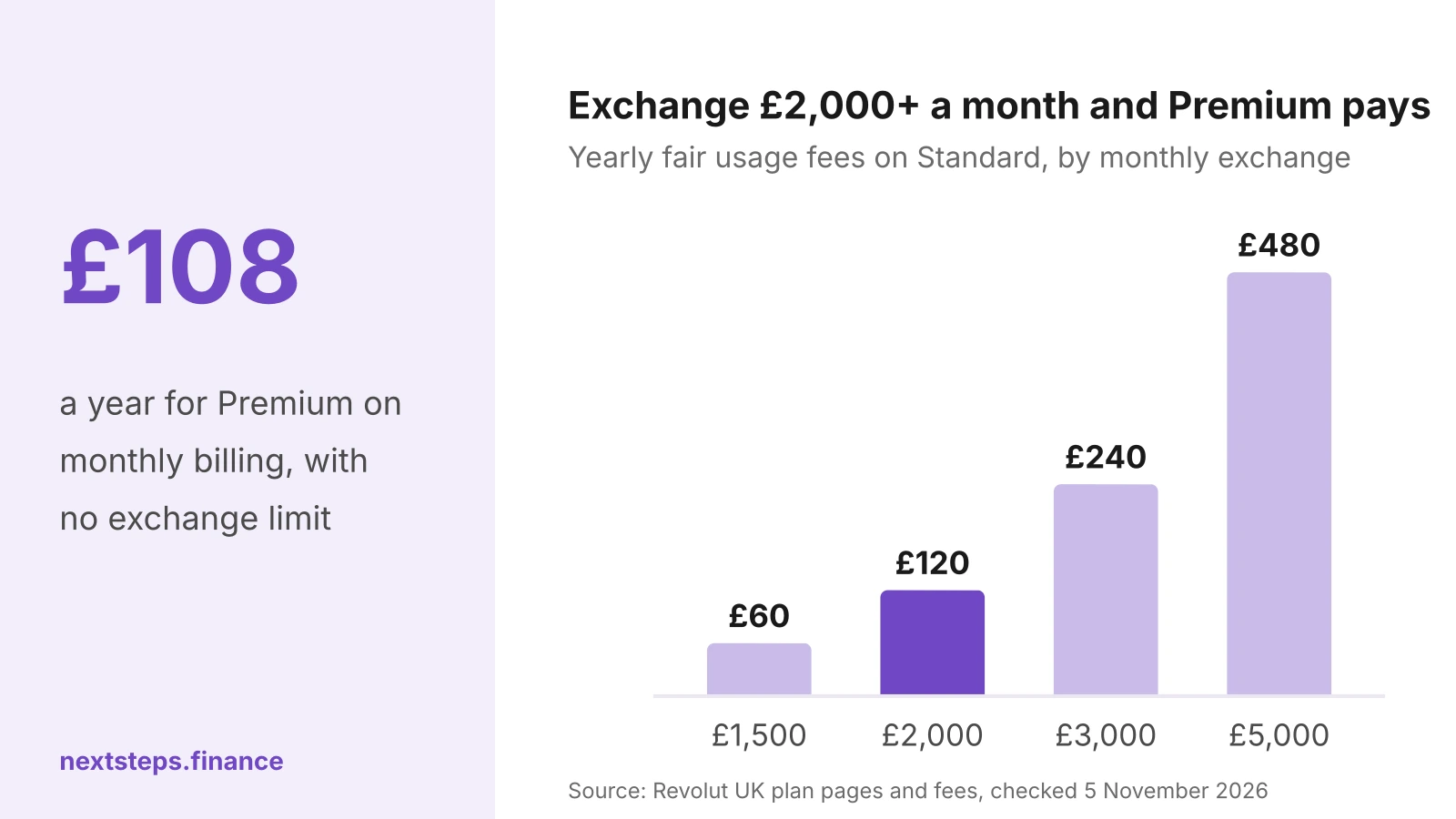
- Break-even on exchange alone: around £1,900 a month. Above that, Standard's fees cost more than Premium.
- Savings: 2.90% vs 3.25% AER (variable). On £10,000 that's only about £35 a year more.
- Premium is a 12-month plan. Standard has no commitment at all.
Revolut Standard vs Premium at a glance
Premium keeps everything in Standard and raises almost every limit. Here are the differences from Revolut's own pages:
| Standard | Premium | |
|---|---|---|
| Monthly price | £0 | £8.99 (£90 a year upfront) |
| Minimum term | None | 12 months |
| Currency exchange | £1,000 a month, then 1% | Unlimited, no weekend fees |
| Free ATM withdrawals | £200 or 5 a month | £400 a month |
| ATM fee above limit | 2%, minimum £1 | 2%, minimum £1 |
| Savings (AER, variable) | 2.90% | 3.25% |
| RevPoints | 1 per £10 | 1 per £4 |
| Commission-free trades | 1 a month | 5 a month |
| International transfers | Standard fees | 20% off |
| Purchase protection | None | Up to £2,500 a year |
| Subscriptions | None | Uber One, Headspace, NordVPN and more |
| Airport lounges | Pay per visit | Discounted passes |
| Support | In-app chat | 24/7 priority support |
If you're only deciding between the two paid tiers, see Plus vs Premium. You can read each plan in depth in our Revolut Standard review and Revolut Premium review.
When does Premium pay for itself?
Premium pays for itself when the money it saves you, or the subscriptions you'd otherwise buy, come to more than £90 to £108 a year. There are three ways to get there.
1. Currency exchange
On Standard, Revolut charges a 1% fair usage fee on exchange above £1,000 a month. Exchange £2,000 every month and that's £10 a month, or £120 a year, which is more than Premium costs on monthly billing (£107.88). The break-even is roughly £1,900 a month of exchange.
If you only go over the limit on one or two big holidays a year, Standard is cheaper. A £2,000 trip costs £10 in fees, not £108.
2. Subscriptions
Premium's bundle includes Uber One (only if you've never had it before), Headspace, NordVPN Standard, Freeletics, Sleep Cycle Premium, Picsart Gold and Tinder Plus. Revolut rotates partners, so check the current list in the app. If you'd pay for just one or two of these anyway, Premium can cover its own cost before you count anything else.
3. RevPoints
Premium earns 1 RevPoint per £4 spent against 1 per £10 on Standard. If you value a RevPoint at about 1p when converted to airline miles, that's like 0.25% back on Premium versus 0.1% on Standard. Try it with your own spending:
- Monthly card spending£1,000
- RevPoints value (% of spend)0.25%
- Premium yearly cost£90
RevPoints on their own rarely cover the fee. On £1,000 a month, Premium earns about £30 of points a year, against £12 on Standard. They're a bonus, not a reason to upgrade.
Take Action: Add up your yearly exchange fees on Standard, the subscriptions you'd use, and any ATM fees. If the total is over £90, Premium may suit you.
Is the higher savings rate worth upgrading for?
No, not on its own. Premium pays 3.25% AER (variable) and Standard pays 2.90%. The 0.35-point gap is worth about £35 a year on £10,000, so you'd need roughly £26,000 in Revolut savings before the extra interest alone covered £90 a year. Our Revolut savings account review has the full maths for every plan.
What about the 12-month commitment?
This is the biggest practical difference. Standard has no term at all. Premium is a 12-month plan: if you pay monthly and downgrade early, a break fee may apply under Revolut's Paid Plan Terms. If you pay annually, you keep Premium until the end of the year you've paid for.
That's why it makes sense to use Standard first, see how often you hit the limits, and only then commit to Premium.
If you're already on Premium
If you already pay for Premium, your price rises from £7.99 to £8.99 a month (or £80 to £90 a year) on 19 December 2026, according to DepositScout's report on Revolut's updated fees page. Before then:
- Check how much you exchange. In the app, look at the last few months. If you're under £1,000 most months, you may not need Premium.
- List the subscriptions you actually use. If it's none, the main reason to pay has gone.
- Consider annual billing. £90 upfront is £17.88 cheaper than 12 monthly payments at the new price.
- If you want to leave, ask in-app chat about downgrading. If you don't accept the price change, Revolut's terms let you close your account free of charge before it takes effect. A free downgrade is at Revolut's discretion.
Who should choose Standard and who should choose Premium?
| You... | Plan that may suit you |
|---|---|
| Use Revolut as a holiday card a few times a year | Standard |
| Want a free second account for bills or budgeting | Standard |
| Exchange more than about £1,900 a month | Premium |
| Would use Uber One (and haven't had it) or 2+ bundled apps | Premium |
| Withdraw more than £200 cash a month abroad | Premium |
| Want no long-term commitment | Standard |
Investing through Revolut carries risk. Capital at risk: the value of investments can go down as well as up.
FAQ
What is the difference between Revolut Standard and Premium?
Revolut Standard is free with a £1,000 monthly exchange limit, £200 of free ATM cash and 2.90% savings. Premium costs £8.99 a month and removes the exchange limit, doubles free ATM cash to £400, pays 3.25% on savings, earns 2.5x the RevPoints and includes subscriptions such as Uber One and Headspace.
Is Revolut Premium worth it over the free plan?
Revolut Premium is worth it if you exchange more than about £1,900 a month, or you'd use two or more of its bundled subscriptions. Otherwise the free Standard plan covers most people, including for holidays. Premium is a 12-month plan, so test Standard first.
Can I switch from Revolut Standard to Premium at any time?
Yes. You can upgrade from Standard to Premium at any time in the Revolut app, and the new limits apply from the date the change takes effect. Moving back down is different: Premium is a 12-month plan, so monthly payers may pay a break fee if they downgrade early.
Does Revolut Premium include Uber One?
Yes, if you've never had Uber One before. Revolut Premium includes Uber One for new Uber One members only. Metal and Ultra include it even if you've had it. You usually need to pay for Uber with your Revolut card or Revolut Pay to keep the membership.
Is my money safer on Revolut Premium?
No. FSCS protection is the same on every plan. Eligible deposits with Revolut Bank UK are protected up to £120,000 per person, whether you're on Standard or Premium. Crypto, stocks and commodities aren't FSCS protected on any plan.
The bottom line
For most people, Revolut Standard is enough, and it costs nothing. Premium is worth the upgrade if you regularly exchange more than about £1,900 a month or would use the subscriptions, especially Uber One.
The smart move is to open a free Revolut account, use it for a couple of months, and upgrade in the app only once you know you'll use Premium. For every plan side by side, see Revolut plans compared.