
Revolut has five UK plans, and the paid ones get most of the attention. But the free Standard plan is the one most people should start on, and plenty of people never need anything more. I've checked every limit and fee on Revolut's own pricing and fees pages so you can see exactly what you get for £0 and where it starts to cost you.
Key takeaways
- Revolut Standard costs £0 and has no minimum term, unlike the 12-month paid plans.
- £1,000 a month of currency exchange with no fair usage fee. Above that, Revolut charges 1%.
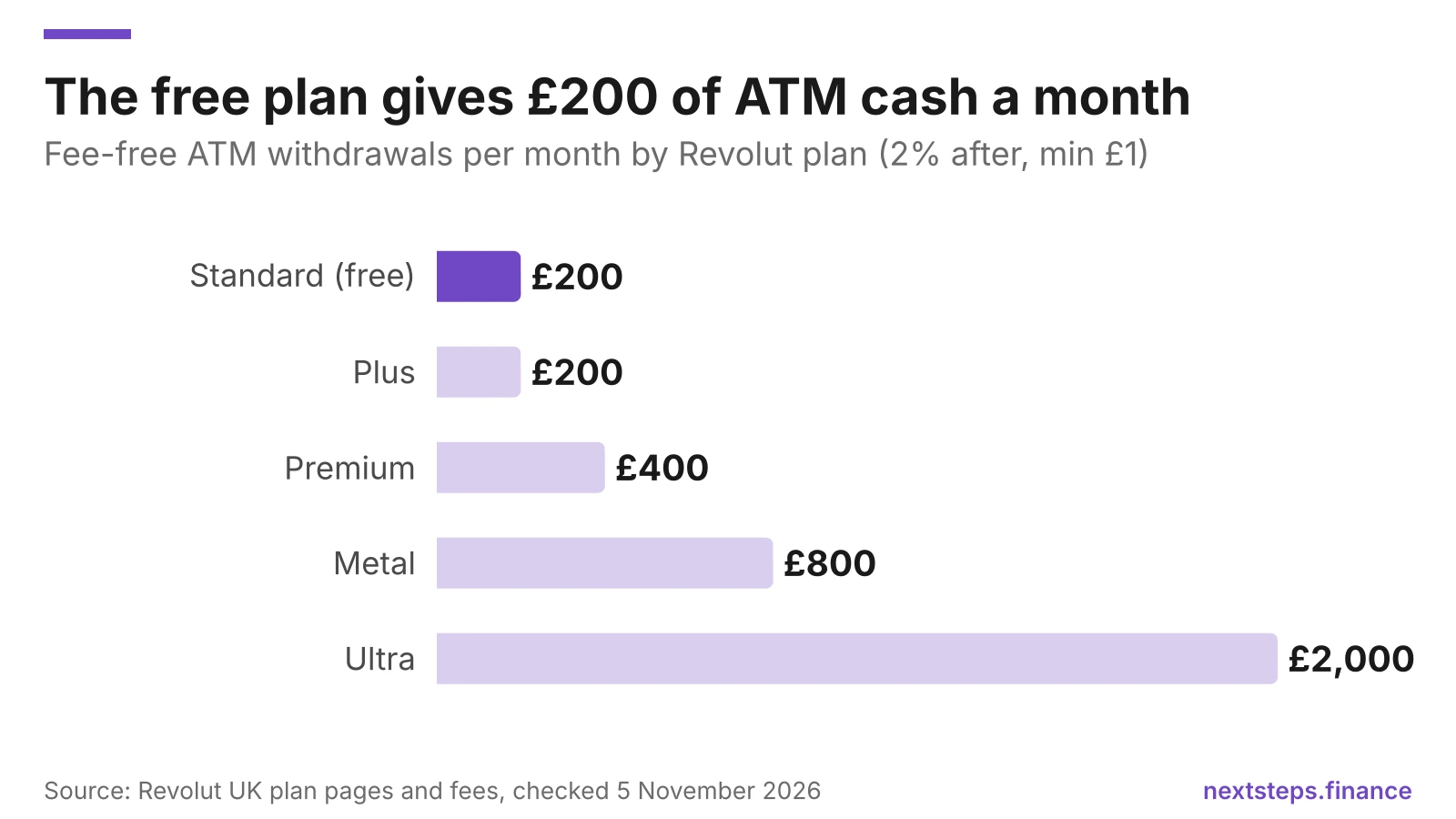
- £200 or 5 ATM withdrawals a month free, then 2% per withdrawal (minimum £1).
- Savings pay 2.90% AER (variable), with eligible deposits FSCS protected up to £120,000 since Revolut became a UK bank.
- RevPoints at 1 per £10 spent and 1 commission-free stock trade a month. Capital at risk on investments.
What do you get with Revolut Standard?
You get a full UK current account and app for free. According to Revolut's plan comparison page, Standard includes:
- A UK account number and sort code, plus a contactless debit card (with Apple Pay and Google Pay)
- Accounts in 35+ currencies, so you can hold euros or dollars before a trip
- Budgeting tools, spending categories and bill splitting
- Instant Access Savings at 2.90% AER (variable)
- 1 RevPoint per £10 spent on eligible card payments
- 1 commission-free stock trade a month
- Pay-per-visit airport lounge passes
There's no monthly fee and no minimum term. You can open the account, use it as a travel card or a second spending account, and close it whenever you like.
Take Action: If you don't have Revolut yet, open a free Revolut account. Any welcome reward running at the time is shown in the app when you sign up.
What are the Revolut Standard limits and fees?
The free plan's limits only matter if you travel a lot or take out cash often. These are the figures from Revolut's personal fees page:
| Feature | Revolut Standard | What happens above the limit |
|---|---|---|
| Monthly price | £0 | N/A |
| Currency exchange | £1,000 a month | 1% fair usage fee |
| Free ATM withdrawals | £200 or 5 withdrawals a month | 2% per withdrawal, minimum £1 |
| Extra physical card | N/A | £4.99 each |
| Savings rate | 2.90% AER (variable) | N/A |
| RevPoints | 1 per £10 spent | N/A |
| Commission-free trades | 1 a month | Fee per trade |
The ATM limit is the one people trip over. Five withdrawals or £200, whichever comes first, so five £20 withdrawals use up the whole month's free allowance even though you've only taken £100. Other ATM operators can add their own fees on top.
The exchange limit resets monthly. Revolut uses its own exchange rate during the week, and weekend exchanges can carry an extra markup on the free plan, so if you're converting a big sum, do it on a weekday.
Is Revolut Standard good for travel?
Yes. Standard is one of the best free cards to take abroad, as long as you stay within the £1,000 monthly exchange limit. You can pay in local currency on the card, and Revolut converts at its own rate with no fee until you hit the limit.
For a week in Spain or a long weekend in New York, most people won't spend £1,000. A two-week family holiday might go over, and you'd then pay 1% on the extra. On £1,500 of spending abroad, that's £5 in fees on the £500 above the limit. Plus costs £3.99 a month but locks you in for 12 months, so upgrading for one big trip rarely pays.
A few travel tips:
- Always choose to pay in the local currency when a card machine asks. Letting the shop convert to pounds usually costs more.
- Take cash out in one or two larger withdrawals rather than lots of small ones, to stay inside the 5-withdrawal limit.
- Hold a little of the local currency in the app before you go, so a weekend markup doesn't apply when you land.
If you're also booking the trip online, our guide to travel cashback shows how to stack cashback sites on hotels and flights.
How much interest does Revolut Standard pay?
Revolut Standard pays 2.90% AER (variable) on its Instant Access Savings, paid daily. You can withdraw at any time. Since Revolut received its UK banking licence in 2026, eligible deposits are protected by the FSCS up to £120,000.
Try it with your own numbers:
- Starting balance£5,000
- Monthly saving£100
- Interest rate (AER)2.9%
- Years1 yrs
That's a decent easy-access rate for a free account, but it isn't the top of the market. Premium pays 3.25%, Metal 3.40% and Ultra 4.00% (variable). On a £5,000 balance, the gap between Standard and Premium is under £20 a year, so a higher savings rate alone is rarely a reason to pay for a plan. Our Revolut savings account review works out the break-even balance for each plan.
Revolut Standard vs the paid plans
Each paid plan raises the limits and adds perks. New customers have paid higher prices since 14 October 2026, and existing customers move to them on 19 December 2026, according to DepositScout's report on Revolut's updated fees page.
| Plan | Monthly price | Exchange limit | Free ATM | Savings (AER) |
|---|---|---|---|---|
| Standard | £0 | £1,000 | £200 / 5 | 2.90% |
| Plus | £3.99 | £3,000 | £200 | 2.90% |
| Premium | £8.99 | Unlimited | £400 | 3.25% |
| Metal | £16.99 | Unlimited | £800 | 3.40% |
| Ultra | £60 | Unlimited | £2,000 | 4.00% |
Paid plans are 12-month commitments. Standard isn't, which is a real advantage if you're not sure how much you'll use Revolut. For a full side-by-side, read Revolut plans compared, or see our individual reviews of Revolut Plus, Revolut Premium and Revolut Ultra.
Weighing up the most common upgrade? Our Revolut Standard vs Premium comparison works out the break-even point.
Take Action: Use Standard for a month or two. If you hit the exchange or ATM limit more than once, look at the paid plans. If you don't, stay free.
Who is Revolut Standard best for?
Standard may suit you if you:
- Want a free card for spending abroad
- Want a second account for bills, budgeting or splitting costs with a partner or housemates
- Are trying Revolut before deciding whether to move your salary there
- Want an easy-access savings pot inside your spending app
It's less suited to people who exchange more than £1,000 a month, withdraw a lot of cash, or would genuinely use bundled subscriptions such as Uber One, which start on Premium.
Many people run Revolut alongside a high-street account rather than instead of one. That also means you can still claim a bank switching bonus with your main account. See the current deals on our bank switching offers page.
The downsides of Revolut Standard
Revolut's free plan is good, but it's not perfect:
- The 5-withdrawal cap catches people out more than the £200 limit does.
- Weekend exchange markups apply on the free plan, so convert money during the week.
- App-only support. There are no branches, and paid plans get priority support first.
- Crypto and stocks aren't FSCS protected. Capital at risk: investments can fall as well as rise.
- Revolut can change limits and rates, so check the app before relying on a figure.
If your bigger goal is getting your spending under control, pair a free Revolut account with our UK Budget Planner. Revolut's spending categories show where the money went, and the planner shows where it should go.
FAQ
Is Revolut Standard really free?
Yes. Revolut Standard has no monthly fee and no minimum term. You only pay if you go over the free limits: 1% on currency exchange above £1,000 a month, 2% (minimum £1) on ATM withdrawals above £200 or 5 a month, and £4.99 for each extra physical card.
How much can I withdraw from an ATM for free on Revolut Standard?
Revolut Standard gives you £200 or 5 withdrawals a month free, whichever comes first. After that, Revolut charges 2% of each withdrawal, with a minimum fee of £1. The ATM owner may add its own charge, which is shown on the machine before you confirm.
Is my money safe in a Revolut Standard account?
Revolut became a UK bank in 2026, so eligible deposits with Revolut Bank UK are protected by the FSCS up to £120,000 per person. Crypto, stocks and commodities are not FSCS protected. You can check which Revolut entity holds your account in the app.
What is the Revolut Standard savings rate?
Revolut Standard pays 2.90% AER (variable) on Instant Access Savings, as checked on 5 November 2026. Interest is paid daily and you can withdraw at any time. Premium pays 3.25%, Metal 3.40% and Ultra 4.00%, but the paid plans cost £3.99 to £60 a month.
Should I upgrade from Revolut Standard?
Upgrade only if you regularly go over the free limits or would use a paid plan's perks. Plus at £3.99 suits people exchanging £1,000 to £3,000 a month. Premium at £8.99 suits people who'd use Uber One and the bundled apps. Paid plans lock you in for 12 months.
The bottom line
Revolut Standard is one of the best free accounts in the UK for travel and everyday spending. Its £1,000 exchange limit and £200 ATM allowance cover most people's trips, the 2.90% savings rate is respectable, and there's no lock-in.
Start on the free plan, see how you actually use it, then decide. Sign up to Revolut for free and you can upgrade inside the app at any time. If you're comparing it with other app banks, our Monzo vs Revolut guide is the next read.