The paper Self Assessment deadline passed last night, so if you haven't filed your 2025/26 tax return yet, you now need to do it online by 31 January 2027. That's 13 weeks away, and it also lands straight after Christmas, when most people's bank balances are at their lowest.
This guide covers every date that matters, what HMRC charges if you're late, and how to make January's bill easier to pay, whether you're a sole trader, a landlord or someone with a side hustle.
Key takeaways
- 31 January 2027 is the deadline to file your 2025/26 return online and pay the tax you owe (GOV.UK).
- 30 December 2026 is the last day to file online if you want HMRC to collect what you owe through your PAYE tax code instead of paying a lump sum.
- Filing late costs £100 straight away, then £10 a day after three months (up to £900), then further charges of 5% or £300 at six and 12 months (GOV.UK penalties).
- About 1 million people missed the last deadline on 31 January 2026, and 475,722 filed on the final day (HMRC).
- Late tax also attracts interest at Bank Rate plus 4%, which is 7.75% while Bank Rate is 3.75%.
When is the Self Assessment deadline for 2025/26?
The online deadline is 11:59pm on Sunday 31 January 2027, and your tax bill is due by the same time. This covers income from the 2025/26 tax year, which ran from 6 April 2025 to 5 April 2026.
Here are all the dates for this return, taken from HMRC's deadlines page:
| Date | What's due |
|---|---|
| 5 October 2026 | Register for Self Assessment if you're new (now passed) |
| 31 October 2026 | Paper tax returns (now passed) |
| 30 December 2026 | File online if you want a bill collected through your tax code |
| 31 January 2027 | File your online return and pay the tax you owe; first payment on account for 2026/27 if you make them |
| 31 July 2027 | Second payment on account for 2026/27 |
If you registered late (after 5 October), HMRC will send you a letter or email with your own filing deadline, which is three months from the date of that letter. You still have to pay by 31 January 2027, though, or you may get a "failure to notify" penalty.
Missed the paper deadline? You haven't lost anything yet. You can still file online until 31 January without a penalty.
Take Action: Put 30 December and 31 January in your calendar today, and log in to your HMRC online account to check you can access it. Getting a new Government Gateway or One Login set up can take days, not minutes.
Who needs to file a Self Assessment tax return?
You need to file if HMRC has sent you a notice to file, or if your income wasn't fully taxed through PAYE. HMRC's 10-step guide says you'll need a return for 2025/26 if any of these applied:
- you were self-employed as a sole trader and earned more than £1,000 before expenses
- you were a partner in a business partnership
- you had to pay Capital Gains Tax on something you sold
- you had to pay the High Income Child Benefit Charge and don't pay it through PAYE
You may also need one if you had untaxed income such as rent from a property, tips and commission, savings and investment income or dividends, or foreign income. If you're not sure, use HMRC's online checker.
The £1,000 sole-trader figure is the trading allowance. The Budget raises it to £3,000 from 6 April 2027, so the £1,000 limit still applies to the return you're filing now.
What happens if you miss the 31 January deadline?
You get a £100 penalty the moment you're late, even if you owe no tax. The charges then build up the longer the return is outstanding. According to GOV.UK:
For filing late:
- An initial £100 penalty.
- After 3 months, £10 a day, up to a maximum of £900.
- After 6 months, a further 5% of the tax due or £300, whichever is greater.
- After 12 months, another 5% or £300, whichever is greater.
For paying late: a penalty of 5% of the unpaid tax at 30 days, 6 months and 12 months, plus interest on everything you owe.
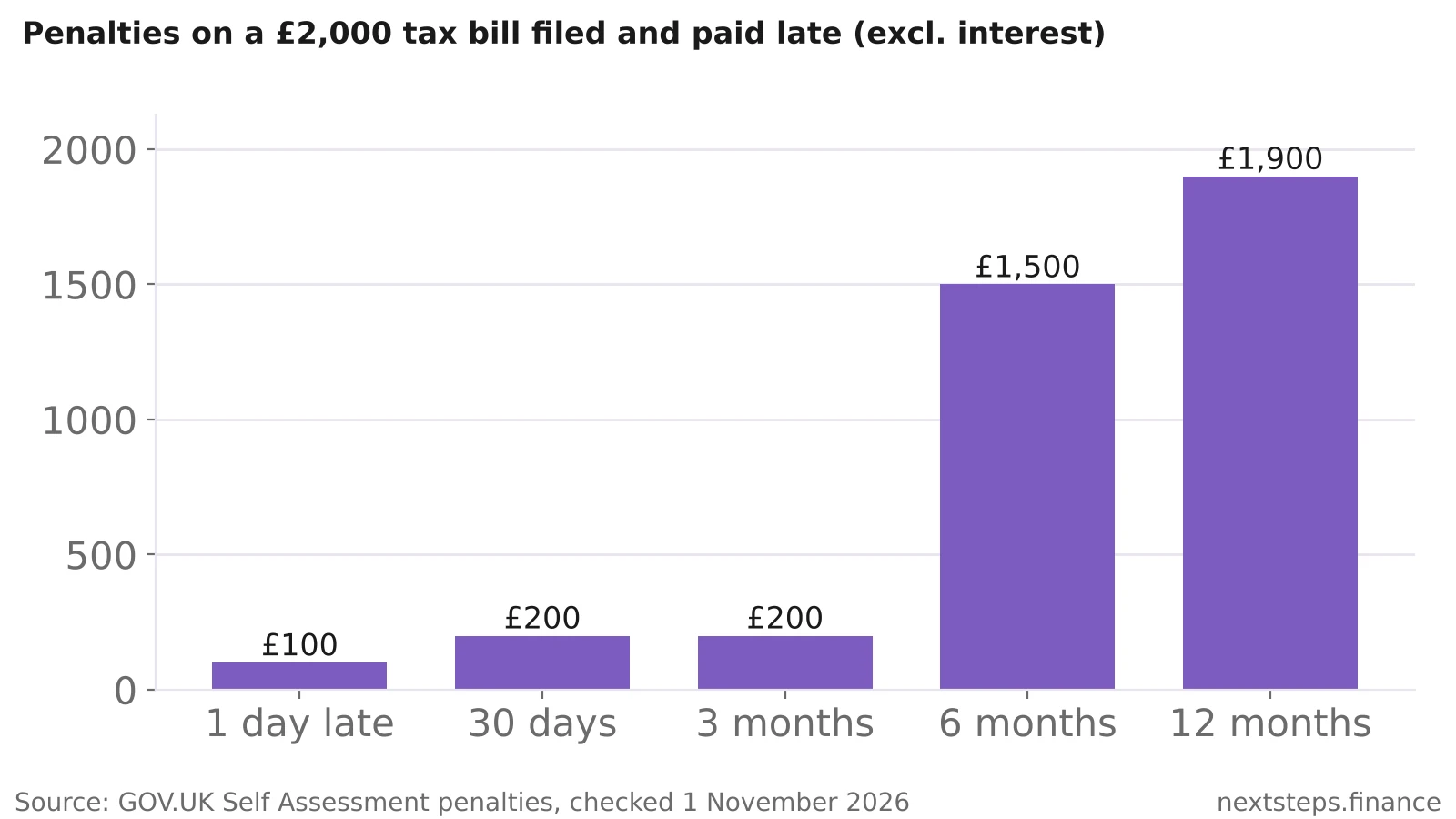
On a £2,000 tax bill, being a year late on both filing and payment costs £1,900 in penalties. Interest at 7.75% adds roughly £155 on top, taking the total extra cost close to the original bill.
The interest rate is set at Bank Rate plus 4 percentage points. HMRC raised the margin from 2.5 to 4 points from 6 April 2025, and MoneyWeek confirms the current rate is 7.75%. If the Bank of England raises rates on 5 November, as most economists expect (see our preview), HMRC's rate would follow, to 8%.
If you have a reasonable excuse, such as a serious illness or a bereavement close to the deadline, you can appeal against a penalty. Forgetting, or relying on someone else who forgot, doesn't usually count.
Can you pay your Self Assessment bill through your tax code?
Yes, if you're employed or get a private pension and you file online by 30 December 2026. HMRC then collects what you owe in instalments through your tax code over the following tax year, instead of you paying it in one go in January.
This only works for smaller bills. The Low Incomes Tax Reform Group says it "may be possible where you owe less than £3,000", and you need a job or pension paid through PAYE for HMRC to adjust a tax code. If you miss 30 December, you'll have to pay another way by 31 January.
Paying through your tax code can be a big help with cash flow, because the bill is spread across 12 months of pay packets. The trade-off is that your take-home pay drops slightly each month from April.
Take Action: If you have a PAYE job and a small side income, aim to file by mid-December so you have room to fix any problems before the 30 December cut-off.
What if you can't afford to pay your tax bill?
HMRC lets you set up a payment plan online if you owe up to £30,000, once your return is filed. In its latest guidance on spreading the cost, HMRC says you can spread payments over a maximum of 12 months without contacting it directly. If you owe more, you can still apply but need to call HMRC.
Three things to know:
- You must file first. HMRC says taxpayers must file their Self Assessment return before setting up a Time to Pay arrangement.
- Interest still runs. A plan stops further late-payment penalties, but interest at 7.75% keeps building on the unpaid balance.
- Set it up early. Don't wait until you've missed the deadline. Contact HMRC as soon as you know you can't pay in full.
If tax is one of several debts you're struggling with, free help is available from StepChange or Citizens Advice.
How to make next January's tax bill easier
The best way to avoid a January shock is to put tax money aside as you earn it. HMRC's own guide points to a Budget Payment Plan, which lets you pay HMRC weekly or monthly towards your next bill.
Many self-employed people prefer to keep the money themselves until the bill is due, so it earns interest in the meantime. A common rule of thumb is to move 20-30% of every payment you receive into a separate savings pot, depending on your tax band.
Here's how a separate "tax pot" compares with paying HMRC in advance:
| Option | How it works | Interest | Best for |
|---|---|---|---|
| HMRC Budget Payment Plan | Regular weekly or monthly payments to HMRC | None | People who want the bill gone and won't be tempted to dip in |
| Easy access savings pot | Move a % of each payment into savings, pay HMRC in January | Variable, e.g. 3.05%-3.65% AER at Plum | People who want interest and flexibility |
| Pay through tax code | HMRC collects via PAYE the following year | None, but no lump sum | Employees with a small extra bill, filed by 30 Dec |
Plum's Easy Access account currently pays 3.05% AER variable on its free Basic plan and up to 3.65% AER on its £14.99-a-month Max plan, according to Plum's site (checked 1 November 2026). The account is provided by Lloyds Bank, so eligible deposits are FSCS-protected up to £120,000, and you can withdraw the same day. Its automatic saving rules can move a set amount or percentage for you, which suits a tax pot. The catch: the higher rates need a paid plan, and the paid plan's fee can outweigh the extra interest on a small balance. A free easy access account from your own bank may suit you better if you'd rather keep things simple.
Interest you earn on a tax pot is itself taxable above your Personal Savings Allowance, and savings tax rates are rising from April 2027. Our UK Budget Planner can help you build a monthly tax set-aside into your budget.
Take Action: Set up a separate pot now and start moving a slice of each payment into it, so the January 2028 bill is already covered.
Does Making Tax Digital change the January 2027 deadline?
No. Making Tax Digital (MTD) for Income Tax started on 6 April 2026 for sole traders and landlords with qualifying income over £50,000, but HMRC confirms that "the tax return deadline remains 31 January" and that quarterly updates "do not replace the tax return" (HMRC, July 2026).
What MTD does change:
- If you're in MTD, you send quarterly updates through compatible software for 2026/27 onwards. The first was due on 7 August 2026.
- HMRC isn't issuing penalty points for late quarterly updates in the first year. From the second year, you get one point per missed deadline, and four points trigger a £200 penalty.
- The threshold falls to £30,000 from April 2027 and £20,000 from April 2028.
For the full picture, read our guide to self-employed finances and the new digital tax rules.
FAQ
When is the Self Assessment deadline for 2025/26?
The deadline for filing your 2025/26 Self Assessment tax return online is 11:59pm on 31 January 2027. You must also pay any tax you owe by then. The paper return deadline was 31 October 2026, and if you want a bill collected through your tax code, you need to file online by 30 December 2026.
What happens if I miss the Self Assessment deadline?
HMRC charges a £100 penalty as soon as your return is late, even if you owe no tax. After three months you pay £10 a day, up to £900. Further penalties of 5% of the tax due or £300 apply at six and 12 months. Paying late adds 5% penalties and interest at Bank Rate plus 4%.
Can I still file a paper tax return after 31 October?
No, not without a penalty. HMRC had to receive paper returns for 2025/26 by 11:59pm on 31 October 2026. If you missed it, you can still file online by 31 January 2027 without being charged. Filing online also gives you an instant calculation of what you owe, and HMRC confirms receipt straight away.
Can I pay my Self Assessment tax in instalments?
Yes. If you can't pay in full, HMRC lets you set up an online payment plan for bills up to £30,000, spread over up to 12 months, once your return is filed. Interest still applies. For future bills, a Budget Payment Plan lets you pay HMRC weekly or monthly in advance.
Do I need to do Self Assessment if I earn under £1,000 from a side hustle?
Usually not. For 2025/26, HMRC says sole traders need a return if they earned more than £1,000 before expenses, which is the trading allowance. Below that, you generally don't need to register for that income. You may still need a return for other reasons, such as untaxed rental income or Capital Gains Tax.
How much is HMRC late payment interest?
HMRC charges late payment interest at Bank Rate plus 4 percentage points, a margin that applies from 6 April 2025. With Bank Rate at 3.75%, that's 7.75% a year, charged on unpaid tax from the day after it was due. If the Bank of England changes Bank Rate, HMRC's rate changes too.
This article is general information, not personal tax advice. If your tax affairs are complicated, speak to a qualified accountant or book a personal finance review. Figures checked on 1 November 2026.