
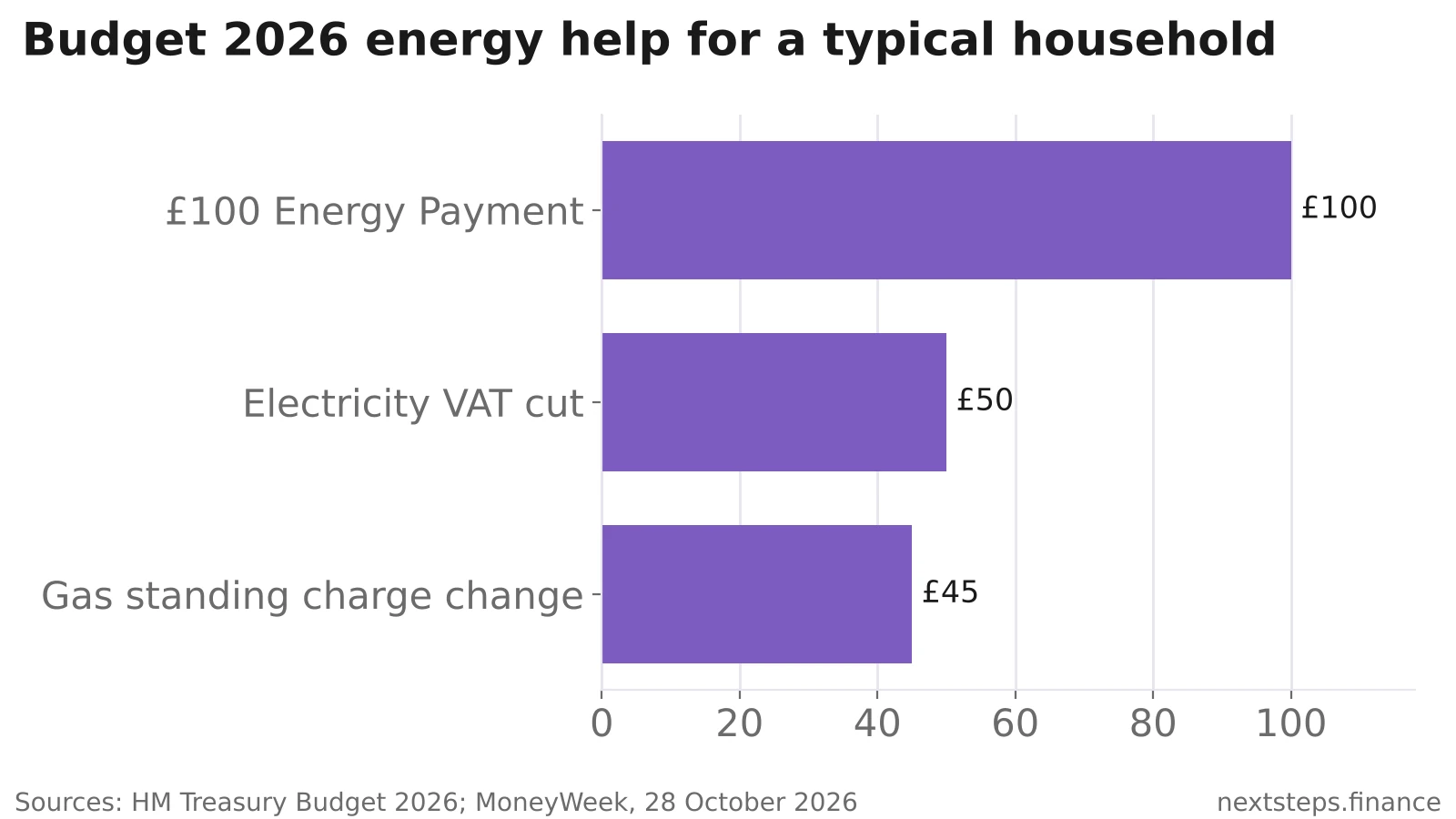
Help with energy bills was the headline of Budget 2026 for most households. Chancellor John Healey announced a £100 payment for around 20 million homes, kept VAT off electricity bills for longer, and confirmed that gas standing charges will be abolished.
It comes as bills are forecast to rise this winter. Here's who gets the £100, when it arrives, what the other changes are worth, and what you can do now to cut your own bills.
Key takeaways
- £100 Household Energy Payment for households in council tax bands A to D in England, paid directly into bank accounts from January 2027 (GOV.UK Budget 2026).
- About 20 million households will get it, at a cost of £2.6 billion.
- 0% VAT on household electricity extended to July 2027. It was cut from 5% on 1 October 2026 and is expected to take about £50 off the price cap from April 2027.
- Gas standing charges to be scrapped in 2027, with the cost moved into unit rates. Around 60% of households could save an average of £45 a year (MoneyWeek).
- Fuel duty's 5p cut and freeze is extended to 1 July 2027.
Who gets the £100 energy payment?
Households in England whose home is in council tax bands A, B, C or D. That's around 20 million homes.
The Budget document describes it as a Household Energy Payment worth £100 per household, costing £2.6 billion. The payment is linked to your home's council tax band, not your income or benefits, so you don't need to be on benefits to get it.
| Your situation | Do you get the £100? |
|---|---|
| Home in England, council tax band A to D | Yes, expected from January 2027 |
| Home in England, band E to H | No, unless further support is announced |
| Home in Scotland, Wales or Northern Ireland | Not under this scheme. Devolved governments set their own support. |
| Two adults sharing one home | One payment per household |
Take Action: Check your council tax band on your council tax bill or the GOV.UK council tax band checker.
When will the £100 energy payment be paid?
From January 2027. The government says it will be paid directly into bank accounts.
Full delivery details haven't been published yet. Uswitch reports that the method is still to be confirmed, and an energy bill credit had been floated as an alternative. Expect more information from the government and councils before January.
Watch out for scams
Scammers always follow announcements like this. You shouldn't have to pay anything or share your card details or PIN to receive the payment. Be wary of texts, emails or calls asking you to "claim" or "register" for the £100, and only trust information from GOV.UK or your own council.
What else did the Budget do for energy bills?
Three other measures will lower bills for most households, though the savings vary.
VAT on electricity stays at 0% until July 2027
VAT on household electricity was cut from 5% to 0% on 1 October 2026 (VATCalc) and was due to end in spring. The Budget extends it to July 2027, which the government expects to take about £50 off the annual Ofgem price cap from April 2027. It applies automatically. You don't need to do anything.
Gas standing charges to be scrapped
Standing charges are the fixed daily fee you pay just for being connected, whether or not you use any energy. The average gas standing charge is about £108 a year, according to Unbiased. The government has asked Ofgem to abolish gas standing charges in 2027, moving the cost into the unit rate.
That means low gas users should save, while high users could pay more. The government estimates around 60% of households will save an average of £45 a year. Reform of electricity standing charges is due to be set out next year.
Fuel duty cut extended
The 5p-a-litre fuel duty cut and freeze is extended to 1 July 2027, keeping pump prices lower for drivers.
Will energy bills still go up this winter?
Probably, yes. The Budget measures soften rises rather than reverse them.
Uswitch is forecasting a significant rise in the Ofgem price cap from January, which it says could add hundreds of pounds a year to a typical bill on a standard variable tariff. Forecasts can change before Ofgem announces the cap, but it's a good reason to review your energy deal and budget now rather than wait.
Take Action: Take a meter reading now and submit it to your supplier, so you're billed accurately at today's prices.
How can I cut my energy bills now?
Beyond the Budget help, these steps can make a bigger difference to your bills over the winter.
- Compare fixed tariffs. If forecasts of a January rise are right, a fixed deal priced below the expected cap could protect you. Check exit fees and compare the total annual cost, not just the unit rate.
- Earn cashback when you switch. Cashback sites such as TopCashBack and Quidco often pay cashback when you take out a new energy, broadband or insurance deal through them. Check the terms and that the deal is still the cheapest before switching. Our cashback apps guide compares them.
- Check if you qualify for the Warm Home Discount or other support through your supplier or council, especially if you're on a low income or certain benefits.
- Budget for winter bills. Set aside a fixed amount each month so January's bill isn't a shock. A separate pot in an app such as Monzo keeps bill money out of your day-to-day spending.
- Find your other subscriptions and bills. Budgeting apps like Emma pull your accounts together and flag recurring payments you could cancel or renegotiate. See our best budgeting apps comparison.
How to make the £100 go further
Plan for it rather than letting it disappear into your current account. The simplest options are to put it straight into your bills pot for January and February, or to use it to start an emergency fund if your bills are already covered.
If money is tight this winter, it's worth seeing your whole picture in one place. Our UK Budget Planner is a Google Sheet that gives every pound a job, tracks your monthly spending and maps out the next five years. For more tips, see our complete guide to budgeting in the UK.
More Budget 2026 guides
For the full picture of what changed on 28 October 2026, start with our Budget 2026 summary, then dig into the details:
- Cash ISA limit stays at £20,000
- Savings tax rise from April 2027
- Lifetime ISA penalty cut and the new First Time Buyer ISA
FAQ
Who is eligible for the £100 energy payment?
Households in England in council tax bands A to D, around 20 million homes, are eligible for the £100 Household Energy Payment announced in Budget 2026. It's based on your property's council tax band rather than income or benefits. Homes in Scotland, Wales and Northern Ireland aren't covered by this scheme.
When will I get the £100 energy payment?
The government says the £100 Household Energy Payment will be paid directly into bank accounts from January 2027. Full details of how it will be delivered haven't been published yet, so watch for updates from GOV.UK and your council. You shouldn't need to pay anything to receive it.
Do I need to apply for the £100 energy payment?
The government hasn't said you'll need to apply, and the payment is linked to your council tax band. Full delivery details are still to come. Be wary of any message asking you to register or share bank card details to claim it, as this is a common scam tactic.
Are standing charges being scrapped?
Gas standing charges are due to be abolished in 2027, with the cost moved into unit rates. The government estimates around 60% of households will save an average of £45 a year, while high gas users could pay more. Reform of electricity standing charges will be set out next year.
Is VAT on electricity being cut?
VAT on household electricity was cut from 5% to 0% on 1 October 2026. Budget 2026 extended the cut to July 2027, which the government expects to take about £50 off the annual price cap from April 2027. It's applied automatically to your bill.
Bottom line
The £100 payment, the VAT extension and the end of gas standing charges will help, but they won't cancel out a winter price rise. Check your council tax band, watch for official details of the payment, and use this month to compare tariffs and earn cashback with TopCashBack or Quidco if you switch. And if you'd like a free list of current bank switching bonuses to boost your budget, grab our free UK Bank Switching Guide.