
The National Living Wage April 2027 rate is £13.21 an hour, a rise of 50p. The government accepted all of the Low Pay Commission's recommendations at the Budget on 28 October 2026, so every minimum wage rate goes up by the same 3.9% on 1 April 2027.
The headline rise is decent, but tax thresholds are frozen, so part of it goes straight back to HMRC. Below are the new rates, what a full-time and part-time worker actually keeps, how it interacts with Universal Credit, and what to do with the extra money.
Key takeaways
- The National Living Wage rises to £13.21 an hour from 1 April 2027, up 50p (3.9%) from £12.71, according to the Low Pay Commission.
- 18 to 20 year olds get £11.27 (up 42p). 16 to 17 year olds and apprentices get £8.31 (up 31p).
- Around 2.3 million workers are expected to benefit, and a full-time National Living Wage worker gains about £910 a year on a 35-hour week (CIPP).
- On 37.5 hours a week, gross pay rises by £975 to £25,759.50, but with the £12,570 Personal Allowance frozen, a basic-rate taxpayer keeps about £702 after 20% tax and 8% National Insurance.
- The Low Pay Commission paused its plan to bring 18 to 20 year olds up to the adult rate, so the gap between the two rates stays.
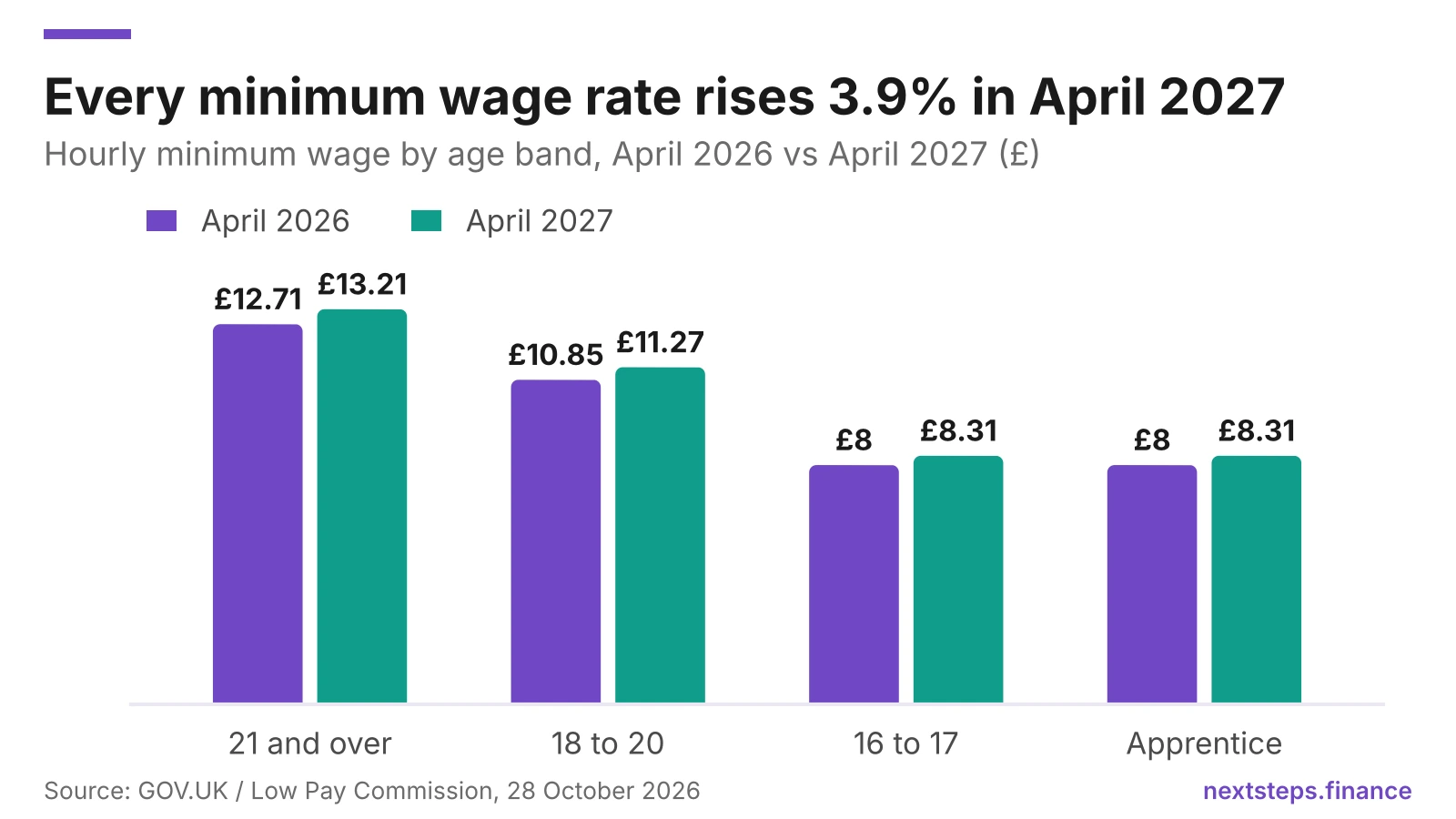
National Living Wage April 2027: the new rates by age
From 1 April 2027 the minimum hourly rate is £13.21 for anyone aged 21 or over, and lower for younger workers and apprentices. The GOV.UK minimum wage rates page has already been updated with the new figures.
| Rate | April 2026 | April 2027 | Rise |
|---|---|---|---|
| National Living Wage (21 and over) | £12.71 | £13.21 | +50p (3.9%) |
| 18 to 20 | £10.85 | £11.27 | +42p (3.9%) |
| 16 to 17 | £8.00 | £8.31 | +31p (3.9%) |
| Apprentice | £8.00 | £8.31 | +31p (3.9%) |
| Accommodation offset (per day) | - | £11.53 | +43p (3.9%) |
A few rules catch people out:
- Apprentices only get the apprentice rate if they're under 19, or 19 or over and in the first year of their apprenticeship. After that they're entitled to the rate for their age, so a 21-year-old in the second year of an apprenticeship should get £13.21.
- The accommodation offset is the most an employer can deduct from your pay for accommodation they provide, now £11.53 a day.
- Age bands apply on your birthday. If you turn 21 in May 2027, your employer should move you to £13.21 from your next pay period.
Take Action: Check your April 2027 payslip. If your hourly rate (gross pay divided by hours worked) is below your band's rate, raise it with your employer first, then with Acas or HMRC if it isn't fixed.
How much is £13.21 an hour a year?
At £13.21 an hour, a 37.5-hour week works out at about £25,760 a year before tax. That's £495.38 a week, or £2,146.63 a month.
These are gross figures for a full year, assuming 52 paid weeks:
| Hours a week | Annual pay at £12.71 (2026) | Annual pay at £13.21 (2027) | Gross rise |
|---|---|---|---|
| 16 | £10,574.72 | £10,990.72 | £416 |
| 20 | £13,218.40 | £13,738.40 | £520 |
| 35 | £23,132.20 | £24,042.20 | £910 |
| 37.5 | £24,784.50 | £25,759.50 | £975 |
| 40 | £26,436.80 | £27,476.80 | £1,040 |
The £910 figure quoted by payroll body CIPP assumes a 35-hour week. Many full-time contracts are 37.5 or 40 hours, so your rise may be a bit higher.
How much of the pay rise will I actually keep?
A full-time worker on 37.5 hours keeps about £702 of the £975 rise, or 72p in every extra pound. The rest goes in 20% income tax and 8% National Insurance, because the extra pay sits above both tax-free thresholds.
HMRC's Budget 2026 rates annex confirms the figures that matter for 2027/28:
- Personal Allowance: £12,570, the same as 2026/27.
- Basic rate: 20% on the next £37,700 of taxable income.
- Employee National Insurance: 8% on weekly earnings between £242 (the Primary Threshold) and £967, unchanged.
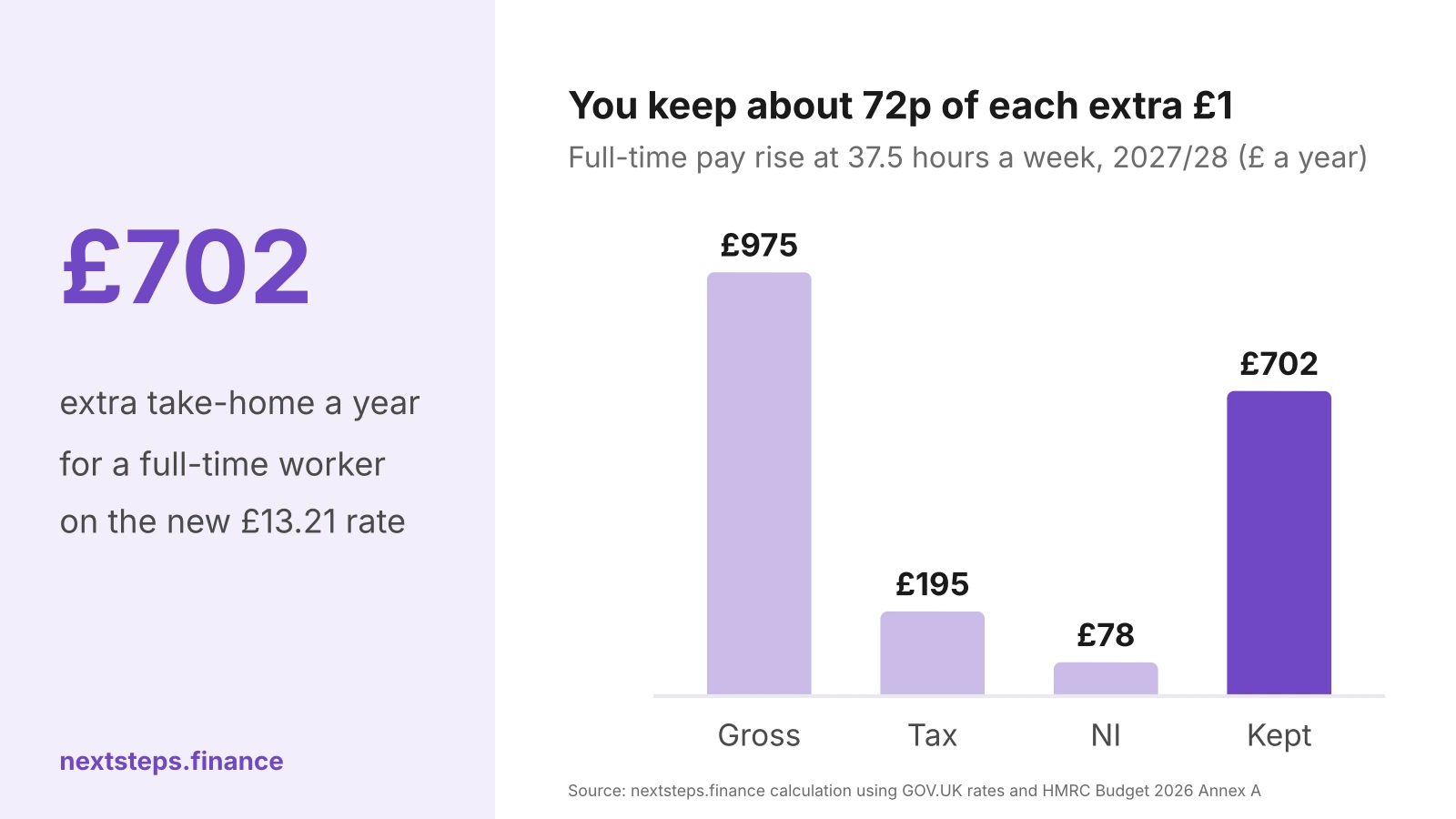
Here's how it works out by hours (England, Wales and Northern Ireland; Scottish taxpayers have different income tax bands):
| Hours a week | Gross rise | Tax and NI on the rise | You keep |
|---|---|---|---|
| 16 | £416 | £0 | £416 |
| 20 | £520 | £145.60 | £374.40 |
| 37.5 | £975 | £273 | £702 |
The 16-hour worker keeps the whole rise because £10,990.72 a year is below the £12,570 Personal Allowance, and £211.36 a week is below the £242 National Insurance threshold. If you have a second job or other income, your tax code may change that.
If you pay into a workplace pension through auto-enrolment, a little of the rise also goes into your pension. That isn't lost money: your employer adds to it too. Our guide to workplace pensions explains how the contributions work.
Does the minimum wage rise affect Universal Credit?
Yes. If you claim Universal Credit and already earn more than your work allowance, your payment falls by 55p for every extra £1 of take-home pay, according to GOV.UK's Universal Credit earnings guidance.
That's worked out on your earnings after tax and National Insurance. So for a full-time worker who keeps £702 more after tax, Universal Credit could fall by about £386 over the year, leaving roughly £316 better off.
The work allowance is the amount you can earn before the taper starts. It's currently:
- £427 a month if your Universal Credit includes help with housing costs
- £710 a month if it doesn't
You only get a work allowance if you have children or limited capability for work. You're still better off working more hours, just by less than the headline rise suggests. Report any change in pay through your online journal so your payments stay correct.
Why is the National Living Wage going up by 3.9%?
The Low Pay Commission recommended 3.9% because it's above forecasts for inflation and most forecasts for pay growth between April 2027 and March 2028. That should protect the rate's buying power, according to the LPC's advice letter.
The 2027 rise is smaller than recent years for a few reasons:
- The two-thirds of median pay target: the LPC estimates £13.44 (5.7%) would be needed to reach it by October 2027, but chose a lower figure because hiring has slowed and unemployment is expected to rise.
- A "low hire, low fire" job market: LPC chair Baroness Stroud said growth "is not leading to hiring".
- Young workers: the 18 to 20 rate rose almost 60% over the past four years. The LPC recommended pausing the move to a single adult rate and giving 18 to 20 year olds the same 3.9% this year.
With inflation forecasts still uncertain, read our guide to protecting your budget as inflation heads towards 5%. It covers how far a 3.9% rise goes if prices rise faster than expected.
What should I do with the extra money?
The simplest way to make a pay rise count is to save it before you get used to spending it. Set up a standing order for the extra £58 or so a month on the day you're paid, starting with your first April 2027 payslip.
Some options:
- Build an emergency fund first. Aim for at least a month's essential spending in easy access savings. Our emergency fund guide shows how to set a target.
- Automate it with an app. Plum can move money for you automatically. Its Easy Access Savings, provided by Lloyds Bank, pays 3.15% AER variable on the free Basic plan, rising to 3.90% on the £14.99-a-month Max plan, according to Plum's interest rate page. Paid plans are free for the first month. On a small balance, the free plan usually makes more sense than paying a fee for a higher rate.
- Use a cash ISA for longer-term savings. Plum's Cash ISA pays 4.71% AER variable on all plans (withplum.com/plans), and our cash ISA vs savings account guide compares other options.
- Clear expensive debt. If you have credit card or overdraft debt, paying it off usually beats any savings rate.
Try it with your own numbers:
- Starting balance£0
- Monthly saving£58
- Interest rate (AER)3.15%
- Years1 yrs
For a full plan for the rest of your money, try the UK Budget Planner.
Take Action: Before April, decide where the extra £58 a month will go, and set up the transfer so it happens automatically on payday.
Does the National Living Wage apply to Uber drivers and gig workers?
It applies to anyone legally classed as a worker or employee, which includes Uber drivers in the UK. It doesn't apply to people who are genuinely self-employed.
Uber's driver FAQ says drivers "will always earn at least the National Living Wage" for engaged time, from accepting a trip to completing it, after vehicle expenses at 55p a mile for the first 10,000 miles. Drivers also get 12.07% holiday pay and a 3% Uber pension contribution if they pay in 5%. Time spent waiting for a trip doesn't count towards the guarantee.
If you want to top up your income by driving with Uber, our Uber driver earnings guide covers the real costs, including fuel, insurance and licensing, and the £3,000 trading allowance explains the tax on side income.
FAQ
What is the National Living Wage from April 2027?
The National Living Wage will be £13.21 an hour from 1 April 2027 for workers aged 21 and over. That's a 50p (3.9%) rise from £12.71. The government accepted the Low Pay Commission's recommendation at the Budget on 28 October 2026. Employers must pay at least this rate from the start of the first pay period on or after 1 April.
What is the minimum wage for 18 year olds in 2027?
From 1 April 2027, the minimum wage for 18 to 20 year olds is £11.27 an hour, up 42p from £10.85. The Low Pay Commission recommended pausing plans to bring this age group up to the adult rate in 2027. At 21, workers move to the National Living Wage of £13.21.
How much is £13.21 an hour per year?
£13.21 an hour is about £25,760 a year on a 37.5-hour week, or £24,042 on a 35-hour week, before tax. After income tax and National Insurance in 2027/28, a full-time worker on 37.5 hours takes home about £22,070, assuming a standard tax code and no pension or student loan deductions.
When does the minimum wage go up in 2027?
The new minimum wage rates start on 1 April 2027. If you're paid monthly, your first full month at the new rate is usually April, though employers apply the rise from the first pay period starting on or after 1 April. Check your April or May payslip to make sure the new rate has been applied.
Is the National Living Wage the same as the Real Living Wage?
No. The National Living Wage is the legal minimum for workers aged 21 and over, set by the government on Low Pay Commission advice. The Real Living Wage is a separate, voluntary rate set by the Living Wage Foundation and paid by employers who sign up to it. Employers don't have to pay it.
Will the pay rise push me into a higher tax band?
No, not on minimum wage alone. A full-time National Living Wage salary of about £25,760 is well below the £50,270 point where 40% tax starts. But because the £12,570 Personal Allowance is frozen, more of each pay rise is taxed at 20%, and you'll pay 8% National Insurance on earnings above £242 a week.
The bottom line
The National Living Wage rises to £13.21 an hour on 1 April 2027, and every other minimum wage rate rises by the same 3.9%. A full-time worker gets around £975 more a year before tax, and keeps about £702 once tax and National Insurance are taken off. Universal Credit claimants keep less.
Check your payslip in April, and decide now where the extra money goes. Even £58 a month moved automatically into savings with an app like Plum adds up to around £700 in a year. For a wider look at your finances, our free personal finance review is a good next step.