A house deposit can feel like an impossible target when rent, bills and everyday spending already take most of your income. Breaking it into a price, a deposit percentage, a deadline and a monthly amount makes it easier to track progress-and easier to adjust if your buying plans change.
This guide uses illustrative figures, current Lifetime ISA rules and practical saving steps. For the wider buying process, see our how to buy a house UK guide.
Key takeaways
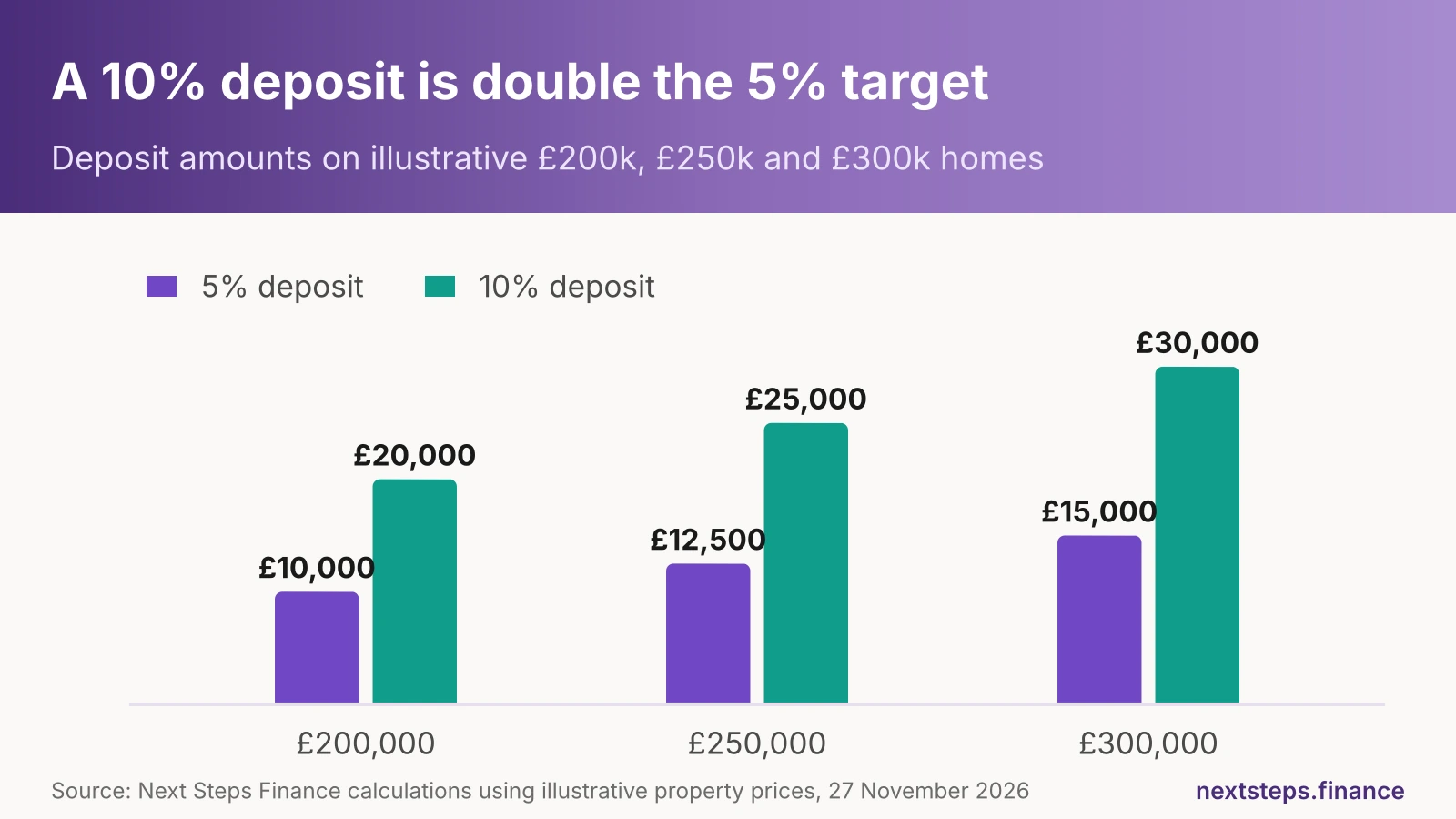
A 5% deposit on a £250,000 home is £12,500; 10% is £25,000, before buying costs.
HM Land Registry puts the average first-time buyer price in Great Britain at £229,110 (September 2026).
Saving £300 a month, a £12,500 deposit takes about 42 months from zero, before interest or bonuses.
A Lifetime ISA adds 25% to up to £4,000 a year (£1,000 maximum bonus) for first homes costing up to £450,000.
Above £450,000, a first-home LISA withdrawal has carried a 20% charge since 29 October 2026.
How much deposit do I need to buy a house?
A 5% deposit is a common starting point for first-time buyers, although mortgage availability and affordability depend on the lender and your circumstances. A larger deposit reduces the loan-to-value (LTV) ratio and may unlock a wider range of mortgage deals or lower rates. It is not a guarantee.
Example home price
5% deposit
10% deposit
15% deposit
£200,000
£10,000
£20,000
£30,000
£250,000
£12,500
£25,000
£37,500
£300,000
£15,000
£30,000
£45,000
These are simple percentage calculations, not lender offers. The UK House Price Index for September 2026, published by HM Land Registry on 18 November, puts the average first-time buyer price in Great Britain at £229,110 (Northern Ireland has no buyer-type figure). Prices vary sharply by location: the same release gives £184,000 for first-time buyers in Wales and £466,000 in London. A 5% deposit on the Great Britain figure is about £11,500; 10% is about £22,900.
Source: Next Steps Finance calculations using illustrative property prices, 27 November 2026
You do not have to aim for 10% before looking at mortgages. Set a target that fits your local prices, affordability and the products available when you apply. Our 1% deposit mortgage UK guide explains one specialist low-deposit option and its restrictions.
How to save for a house deposit UK: build a realistic plan
Work backwards from the home you might buy rather than choosing an arbitrary savings target.
Choose a realistic property price. Use local listings and recent sold prices rather than the national average.
Pick a deposit percentage. Compare 5%, 10% and a higher target if you can afford to wait.
Add purchase costs separately. Legal work, searches, surveys, mortgage fees, moving and any tax can require cash on top of the deposit.
Subtract what you have already saved. Keep emergency savings separate if you do not intend to use them for the purchase.
Set a date and monthly amount. If the target is unrealistic, adjust the date, price or deposit percentage rather than making the plan depend on cutting every essential expense.
For example, a 5% deposit on a £250,000 home is £12,500. If you have £3,000 set aside for the deposit, the remaining target is £9,500. Saving £300 a month would take about 32 months, ignoring interest and bonuses.
Create separate pots for the deposit, buying fees and an emergency reserve. It can help prevent the deposit target from quietly absorbing money you will need for a solicitor, survey or unexpected repair after moving.
How long will it take to save a deposit?
Divide the amount still needed by the amount you can save each month. The table below shows how long it would take to reach the full deposit on a £250,000 example home from zero, without interest or a Lifetime ISA bonus.
Monthly saving
£12,500 (5%)
£25,000 (10%)
£200
63 months
125 months
£300
42 months
84 months
£500
25 months
50 months
£750
17 months
34 months
The figures are rounded up to a whole month. Interest, bonus payments, changes to your saving rate and a rising or falling target price will change the actual timeline.
Try the savings calculator with your own starting balance, monthly contribution, rate and time period. It estimates how a savings pot could grow, rather than deciding what deposit you need.
Calculator
How much could your deposit pot grow?
Starting balance£3,000
Monthly saving£300
Interest rate (AER)3.11%
Years3 yrs
Balance after 3 years£14,586
You pay in£13,800
Interest earned£786
Illustrative only: 3.11% AER variable is Plum's Cash Lifetime ISA base rate, checked 27 November 2026, assumed constant. This estimate does not include the 25% Lifetime ISA bonus or decide your deposit target.
A practical routine is to automate a transfer just after payday, review it every few months, and increase it when a bill ends or your income rises. A smaller amount that you can sustain is often more useful than a plan that depends on an unrealistic monthly sacrifice.
Should I use a Lifetime ISA to save for my first home?
A Lifetime ISA (LISA) can be valuable for an eligible first-time buyer because the government adds a 25% bonus to contributions, up to £4,000 paid in each tax year. That means a maximum bonus of £1,000 a year. You must open the account between ages 18 and 39, and AJ Bell notes you can keep paying in until the day before your 50th birthday. The £4,000 counts towards your £20,000 ISA allowance.
The bonus is not a substitute for checking the rules before you buy. To use a LISA for a qualifying first home:
You must have been saving into the LISA for at least 12 months.
You must never have owned a home, in the UK or anywhere else in the world.
The home must cost £450,000 or less for a charge-free first-home withdrawal.
You must buy with a residential mortgage (not a buy-to-let one), and the provider sends the money straight to your conveyancer or solicitor.
If you buy with someone else, each of you needs your own LISA; you can't share one.
From 29 October 2026, a 20% withdrawal charge applies when a first-time buyer uses LISA money for a home above the £450,000 cap, down from 25%, according to HMRC's policy paper on the change. HMRC confirms all other unauthorised withdrawals are still charged at 25%, which can take some of your own contributions as well as the bonus. Our Lifetime ISA penalty-cut guide explains the change.
If you have an old Help to Buy ISA, compare its rules with a LISA before transferring or using either bonus. You can hold both, but you only get the government bonus on one of them when you buy your first home. MoneySavingExpert's Lifetime ISA guide compares current LISA providers. Our Lifetime ISA withdrawal guide explains the conveyancer process and what happens if a purchase falls through.
Where should I keep house deposit savings?
Match the account to the date you expect to need the money and the restrictions you can accept.
Easy-access savings: useful when you need flexibility or are still deciding when to buy. Rates can change.
Regular saver: may pay a higher rate but can have monthly contribution limits or conditions.
Cash ISA: can shelter interest from tax, subject to ISA rules and allowances.
Lifetime ISA: adds a bonus for eligible first-home buyers, but has strict withdrawal rules. For example, Plum's Cash Lifetime ISA pays 4.00% AER variable for the first 12 months (3.11% base plus a 0.89% Plum bonus, rate from 23 November 2026), then 3.11%. The bonus is lost if you transfer out or close the account within a year. Banks, building societies and investment platforms offer LISAs too.
Fixed-term savings: may offer a fixed rate, but access can be limited or unavailable before maturity.
For a purchase that could be a few years away, cash savings can make the amount available more predictable than investments whose value can fall just when you need it. If you are considering investments for a deposit, think carefully about the timing and the risk of having to sell after a fall.
Rates and terms change. Compare the actual access conditions, minimum deposits, bonuses and withdrawal restrictions-not just the headline rate.
How much should I save for buying costs as well as the deposit?
The deposit is only part of the cash needed to buy. Set aside a separate amount for conveyancing, searches, the survey, mortgage fees, removals, furniture, insurance and any property tax that applies to your purchase.
Costs vary with the home, location, mortgage and service providers. A leasehold flat may have additional checks or charges, and the survey may identify work you need to budget for. Our house survey types UK guide explains what the different surveys cover.
You may also want to keep an emergency fund intact after completion. Owning a home means you are responsible for repairs and maintenance that a landlord would normally handle. Avoid treating every pound of savings as available for the deposit.
How can I make my deposit plan easier to manage?
A spreadsheet or savings app can help you see whether you are on track, especially if you are saving as a couple, using more than one account or expecting a LISA bonus. The useful information is not just the balance: record the target, each contribution, bonus, interest, expected purchase date and the amount still needed.
The UK First-Time Buyer Planner is a one-off-purchase Google Sheets tool. It has up to six savings pots, LISA bonus tracking, a savings log, purchase-cost and Stamp Duty calculations for all four UK nations, mortgage estimates and a before-and-after moving budget. It can help organise a deposit plan, but it does not guarantee a mortgage or replace lender checks.
It is not designed for shared ownership, Right to Buy, guarantor mortgages, buy-to-let or buyers who are not UK resident. It is a planning tool, not regulated financial or mortgage advice.
You can also use a free spreadsheet, bank savings pots or your own budgeting app. If your plan is simple and you already have a system you trust, you may not need a paid template.
When the deposit is ready, check your credit files, work out the mortgage payment you can comfortably afford, and obtain an agreement in principle before making offers. An agreement in principle is not a guarantee of a mortgage. Lenders still assess your income, commitments, credit history and the property.
Frequently asked questions
Is a 5% deposit enough to buy a house?
A 5% deposit is available on some mortgages, but lenders assess affordability and the property. A larger deposit may improve the choice of mortgage deals or reduce the rate. Compare the monthly payment and other costs, not only the deposit percentage.
How much deposit should I save on a £250,000 house?
A 5% deposit is £12,500, a 10% deposit is £25,000 and a 15% deposit is £37,500. You also need cash for purchase costs and ideally an emergency reserve. The right target depends on the mortgage available and your budget.
Can I use a Lifetime ISA for any house?
No. A charge-free first-home withdrawal needs a home costing £450,000 or less, a residential mortgage (not buy-to-let), a conveyancer and at least 12 months of saving into the LISA. You must never have owned a home anywhere. Above £450,000 a 20% charge applies. Check the rules before withdrawing.
Should I put my house deposit in investments?
It depends on your timeframe and risk tolerance. Investments can fall in value, so money needed for a specific purchase date may be better held in a savings account where the balance is more predictable. Consider the risk of having to sell after a market fall.
Can I use a gifted deposit?
A family gift may help, but lenders have their own requirements. They may ask who gave the money, whether it is a gift rather than a loan, and for evidence of the source. Check the lender's requirements early and read our gifted deposit mortgage guide.
This is educational information, not personal financial or mortgage advice. Deposit targets, mortgage availability, interest rates and costs depend on your circumstances and may change. Check the latest rules and lender terms before making decisions.
Found this useful? Add Next Steps Finance as a preferred source and Google will show you more of our guides in search and AI answers.