The information on this website is not financial advice. We may earn a commission through affiliate links - see our Disclaimer.
Foundations
Should I Fix My Energy? Cap Rises 26%
Should I fix my energy before January? Ofgem's cap rises 26% to £2,166 on 1 January 2027. How fixes compare, exit fees and who may be better off waiting.
If you've been wondering "should I fix my energy?", Ofgem's announcement yesterday makes the answer clearer than it's been all year. A typical household on a standard variable tariff will pay £443 a year more from 1 January, and the cheapest fixed deals now sit well below that new level.
This guide sets out the confirmed January figures, how today's fixes compare, when staying on the cap could still make sense, and how to budget for winter whichever way you go.
Key takeaways
The cap rises 26% from 1 January 2027, from £1,723 to £2,166 a year for a typical dual fuel household paying by Direct Debit (Ofgem, 25 November 2026).
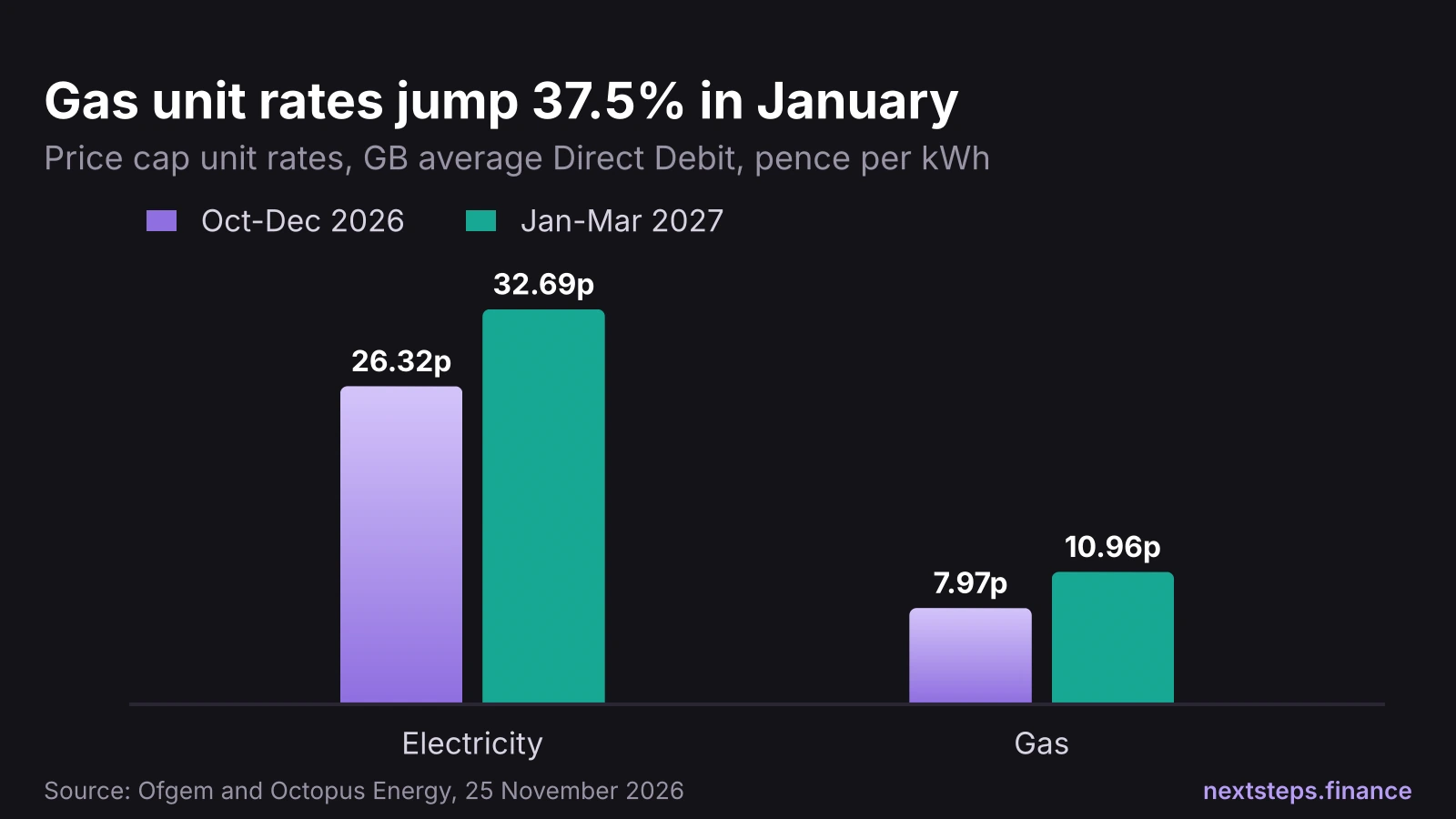
Gas is hit hardest: the gas unit rate rises 37.5% to 10.96p per kWh, while electricity rises 24.2% to 32.69p.
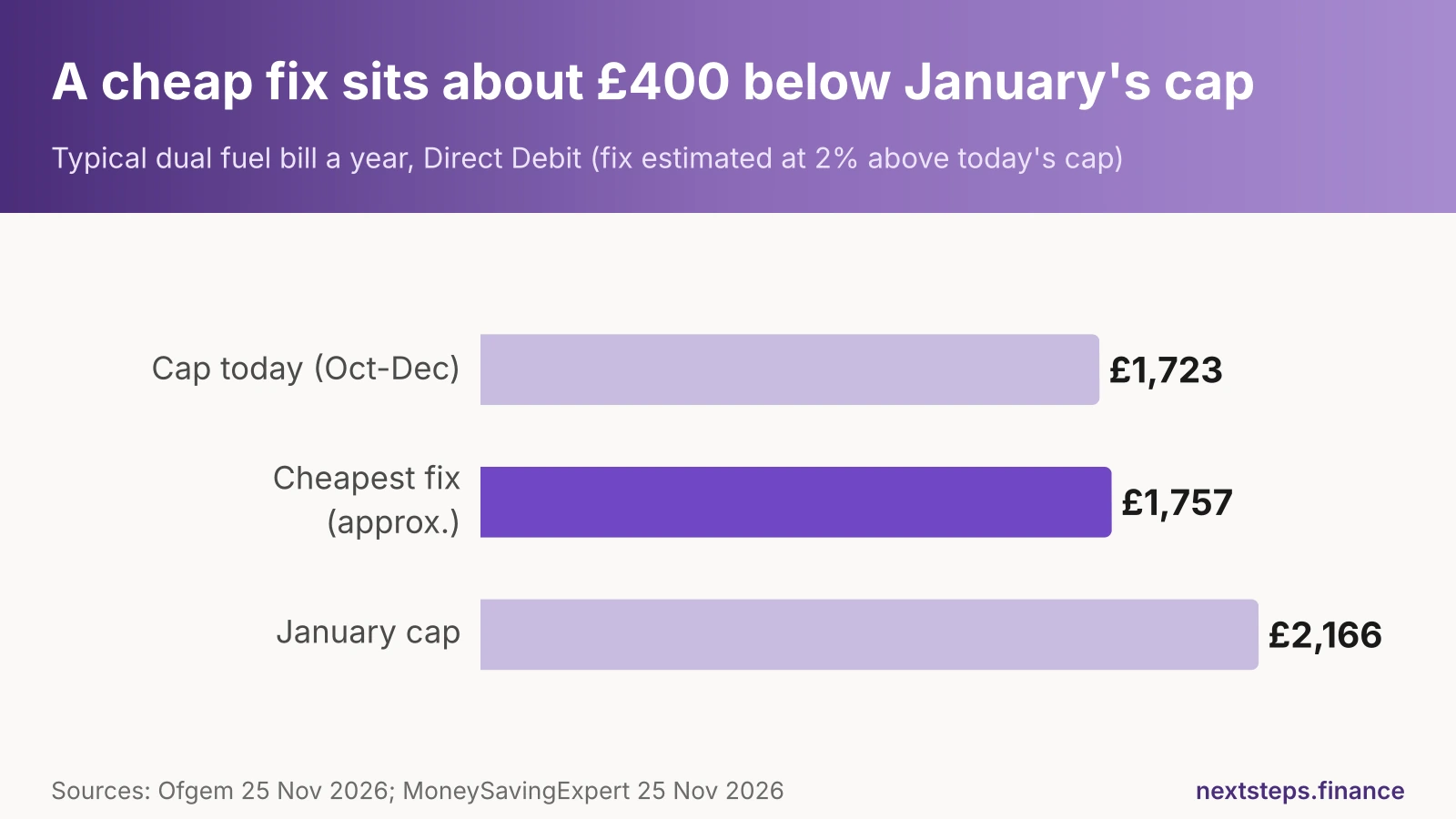
The cheapest fixes are about 2% above today's cap, which MoneySavingExpert says makes them around 19% cheaper than January's cap.
Analysts expect prices to stay high: MSE's forecasts put April to June 2027 a further 2.5% higher, at about £2,222 a year.
About 10 million fixed-tariff homes are unaffected until their deal ends, according to Ofgem.
How much is the energy price cap rising in January 2027?
The cap rises by 26%, or £443 a year, for a typical household. Ofgem announced on 25 November 2026 that the typical annual bill on Direct Debit goes from £1,723 to £2,166 for 1 January to 31 March 2027, "if this level was sustained for a year".
Ofgem blames "continued conflict in the Middle East pushing up international gas prices". It says gas wholesale prices have "roughly tripled" since the conflict began. That's why gas bills rise about 33% and electricity about 19% in Ofgem's typical-bill figures.
Source: Ofgem and Octopus Energy, 25 November 2026
How you pay matters too. Octopus gives these typical annual figures for January: £2,108 on prepayment, £2,166 on Direct Debit and £2,328 if you pay on receipt of a bill. Ofgem's Neil Kenward says moving from paying on receipt of bill to Direct Debit "would save the average customer about £160 over a year".
For many households, fixing now is the lower-risk option, because the cheapest fixes cost far less than the new cap. Martin Lewis said on 25 November that "the risk-averse thing to do is to get off the Cap and lock in to a cheap fix now", noting the cheapest fix is about 2% above the current cap, "making it 19% cheaper than the Cap will be in January".
In pounds, a fix 2% above today's £1,723 cap works out at roughly £1,757 a year for typical use. That's about £409 less than January's £2,166.
Sources: Ofgem 25 Nov 2026; MoneySavingExpert 25 Nov 2026
The catch is timing. On a fix you pay slightly more than the cap in December, then less from January. The saving only holds if prices stay high for most of your fix. Here's what MSE's analyst forecasts (week beginning 23 November 2026) suggest for the year ahead:
Cap period
Forecast change
Typical annual bill
1 Oct to 31 Dec 2026 (now)
n/a
£1,723
1 Jan to 31 Mar 2027 (confirmed)
+25.7%
£2,166
1 Apr to 30 Jun 2027 (forecast)
+2.5%
£2,222
1 Jul to 30 Sep 2027 (forecast)
-8.5%
£2,034
Even the lower July forecast is well above a fix priced near today's cap. MSE stresses that analysts "never predict the Price Cap rate more than about a year out", so treat anything beyond spring as a guess.
Take Action: Run a whole-of-market comparison for your own usage, not just your current supplier's deals, and compare the fix's annual cost with £2,166.
When might staying on the price cap make sense?
Staying on the cap could suit you if you expect wholesale gas prices to fall quickly, or if the only fixes you can get carry big exit fees. If prices drop sharply in spring, a long fix could end up costing more than the cap.
It may also suit you if:
You're already on a fix. You aren't on the cap, so January's rise doesn't change what you pay until your deal ends. You can usually switch without exit fees in the final weeks of a fix (check your contract for the exact window), but leaving earlier usually means paying them.
Your supplier prices below the cap. Octopus says its Flexible tariff has been below the cap every day since it began, and has pledged to hand back about £11.5 million of extra profit from January to March to customers.
You use very little energy. Fixes still have standing charges. Compare your own annual cost rather than the typical figure.
You can use cheap off-peak electricity. Time-of-use tariffs reward shifting usage, but peak rates can be much higher, so check how much you can really move.
Take Action: If you're unsure, pick a fix with a low exit fee. That keeps the option to leave if prices fall.
What should I check before fixing?
Check the annual cost for your usage, the exit fee, the length and the payment method. These four things decide whether a fix really saves you money.
Check
Why it matters
What to look for
Annual cost for your usage
The typical figure may not match your home
Below £2,166 for typical use, or below your own cap cost
Exit fee
Lets you leave if prices fall
MSE's top picks carried £50 to £75 per fuel on 24 November
Length
Longer gives certainty, shorter gives flexibility
MSE suggests focusing on low exit fees if you go long
Payment method
Some fixes need Direct Debit
Direct Debit is cheaper than paying on receipt of bill
Fixed deals move quickly after a big cap announcement, and some on MSE's list had same-week deadlines. If you're with Octopus, it says it's waiving exit fees for customers who re-fix between now and 1 January 2027.
Take meter readings on or just before 1 January whatever you decide. That way you're not billed estimated usage at the higher rates.
What help is there with energy bills this winter?
There's some targeted help, but it won't cover the full rise for most homes. The main support from January is a £100 payment for many households in England.
£100 energy payment: households in England in Council Tax bands A to D get £100 in January, even if they don't need to pay Council Tax. Martin Lewis says it will cover "under two thirds" of the rise for typical use over January to March. Our guide to the £100 energy payment covers who qualifies.
No VAT on electricity: Ofgem says there is no VAT on electricity from 1 October 2026 to 31 March 2027, which is already built into the cap rates above.
Supplier support: Ofgem has written to suppliers about their support duties and is increasing monitoring over winter. If you're struggling, contact your supplier early and ask about a payment plan, or get free help from Citizens Advice.
How do I budget for higher energy bills?
Budget now for a bigger bill from January, whether you fix or not. Martin Lewis puts the typical rise at about £57 a month over January to March, because that's when homes use the most energy.
Check your Direct Debit. Suppliers often raise it after a cap change. Make sure it reflects your real usage and ask for a refund if you're well in credit.
Put the new figure in your budget. Our UK budget calculator shows what a higher energy bill does to the rest of your month, and our family budget guide has real household examples.
Build a winter buffer. Setting money aside in a separate easy-access account keeps it out of your spending. Plum currently pays new customers 5.25% AER variable on their first £1,000 in its Easy Access account if they open it within 30 days of registering. Above £1,000, or for existing customers, it pays 3.15% to 3.90% AER variable depending on the plan, from free up to £14.99 a month. The money is held with Lloyds Bank and is FSCS protected up to £120,000 (Plum). Many banks' own savings pots do the same job without a promotional rate.
Check your rainy-day money. If a bigger bill would empty your savings, our emergency fund guide covers how much to keep aside.
If you'd rather plan the whole year in one place:
FAQ
Is it worth fixing my energy now?
For many households, yes, if you can find a fix close to today's cap. Ofgem's cap rises to £2,166 a year from 1 January 2027, and MoneySavingExpert says the cheapest fixes are about 19% below that. A fix with a low exit fee limits the risk if prices fall in spring.
Will energy prices go down in 2027?
Analysts don't expect a quick fall. MoneySavingExpert's forecasts from late November 2026 put the April to June 2027 cap 2.5% higher at about £2,222 a year, then 8.5% lower from July at about £2,034. Both are still well above today's £1,723 cap, but forecasts this far out are uncertain.
Does the price cap affect me if I'm on a fixed tariff?
No, not until your fix ends. The price cap only covers standard variable tariffs. Ofgem says about 10 million households on fixed deals are unaffected while their deal lasts. When your fix ends, you'll move to your supplier's variable tariff unless you choose a new deal.
How much will my energy bill go up in January 2027?
A typical dual fuel household paying by Direct Debit will pay £2,166 a year from 1 January, up £443 from £1,723. That's around £37 a month on average, but more in winter. Martin Lewis estimates about £57 a month extra over January to March, when usage is highest.
Can I switch energy supplier if I'm on a fix?
Yes, but you may pay exit fees. Most fixes let you switch without a fee in the final weeks before the deal ends. Leaving earlier usually means paying the fee, which is often charged per fuel, for example £50 a fuel. Check your contract or online account for the exact amount and window.
The bottom line
January's 26% rise is confirmed, so the real question now is how to limit what it costs you. A fix priced close to today's cap may save a typical household around £400 a year against January's level, and a low exit fee keeps your options open. Staying on the cap is a bet that prices fall soon, which analysts don't currently expect. Whatever you choose, put the higher bill into your UK Budget Planner now so January doesn't catch you out.
Found this useful? Add Next Steps Finance as a preferred source and Google will show you more of our guides in search and AI answers.