
A student budget UK students can actually stick to starts with one uncomfortable number: the average student spends £1,142 a month but gets £640 a month from their Maintenance Loan, according to the 2025 National Student Money Survey. That leaves a gap of about £502 a month. This guide shows how much loan you can get in 2026/27, what students really spend, a worked monthly budget, and practical ways to make each term's payment last until the next one lands.
Foundations
Student Budget UK: Make Your Loan Last
Student budget UK guide: the 2026/27 Maintenance Loan, what students really spend each month, a worked budget and how to cover the £502 gap.
In this article
- 01Key takeaways
- 02How much Maintenance Loan will I get in 2026/27?
- 03How much does the average student spend a month?
- 04Is the Maintenance Loan enough to live on?
- 05How do I make a student budget? (step by step)
- 06What does a realistic student budget look like?
- 07How can students save money each month?
- 08When do I start repaying my student loan?
- 09Bottom line: making your loan last
- 10FAQ
Key takeaways
- The maximum Maintenance Loan for 2026/27 is £10,830 a year for students living away from home outside London, £14,135 in London and £9,118 living with parents (GOV.UK).
- The loan is paid in instalments at the start of each term, so you budget per term, not per month like a salary.
- The average student spends £1,142 a month, with rent at £529 and groceries at £146 (National Student Money Survey 2025).
- 58% of students work part-time, earning £547 a month on average. The minimum wage is £10.85 an hour at 18 to 20 and £12.71 at 21 and over from April 2026.
- Households where everyone is a full-time student don't pay Council Tax, which takes one big bill off the list.
If you want a ready-made system to plan each term and track every month, the UK Budget Planner does it in one spreadsheet.
How much Maintenance Loan will I get in 2026/27?
Most new full-time students in England can borrow between £4,013 and £14,135 a year for living costs in 2026/27, depending on where they live and their household income. The government raised maximum loans for living costs by 2.71% from 1 August 2026, according to the Department for Education's 2026 to 2027 support figures.
| Where you live while studying | Maximum loan 2026/27 | Minimum loan 2026/27 | Maximum per month (over 12 months) |
|---|---|---|---|
| With your parents | £9,118 | £4,013 | £759.83 |
| Away from home, outside London | £10,830 | £5,048 | £902.50 |
| Away from home, in London | £14,135 | £7,039 | £1,177.92 |
| Studying abroad (part of a UK course) | £12,403 | £5,996 | £1,033.58 |
The most support goes to students from households earning £25,000 or less. Above that, the loan tapers down to the minimum, and the gap is meant to come from your parents. GOV.UK's guide to student living costs says it plainly: students "are expected to make up the difference" between their loan and their total living costs. In its own example for a £45,000 household income, a student living away from home outside London gets £7,739 rather than the £10,830 maximum.
These figures are for students from England. Scotland, Wales and Northern Ireland have their own funding bodies and different amounts, so check yours before you build a budget.
The Tuition Fee Loan (up to £9,790 for 2026/27) goes straight to your university, so it doesn't belong in your budget. For the full picture of grants, bursaries and alternatives, see our student finance guide.
Take Action: log in to your Student Finance account and note your exact loan and payment dates. Your budget is built on those, not on the maximum.
How much does the average student spend a month?
The average UK student spends £1,142 a month, up about 3.4% on the previous year's £1,104, according to the National Student Money Survey 2025. Rent is nearly half of it.
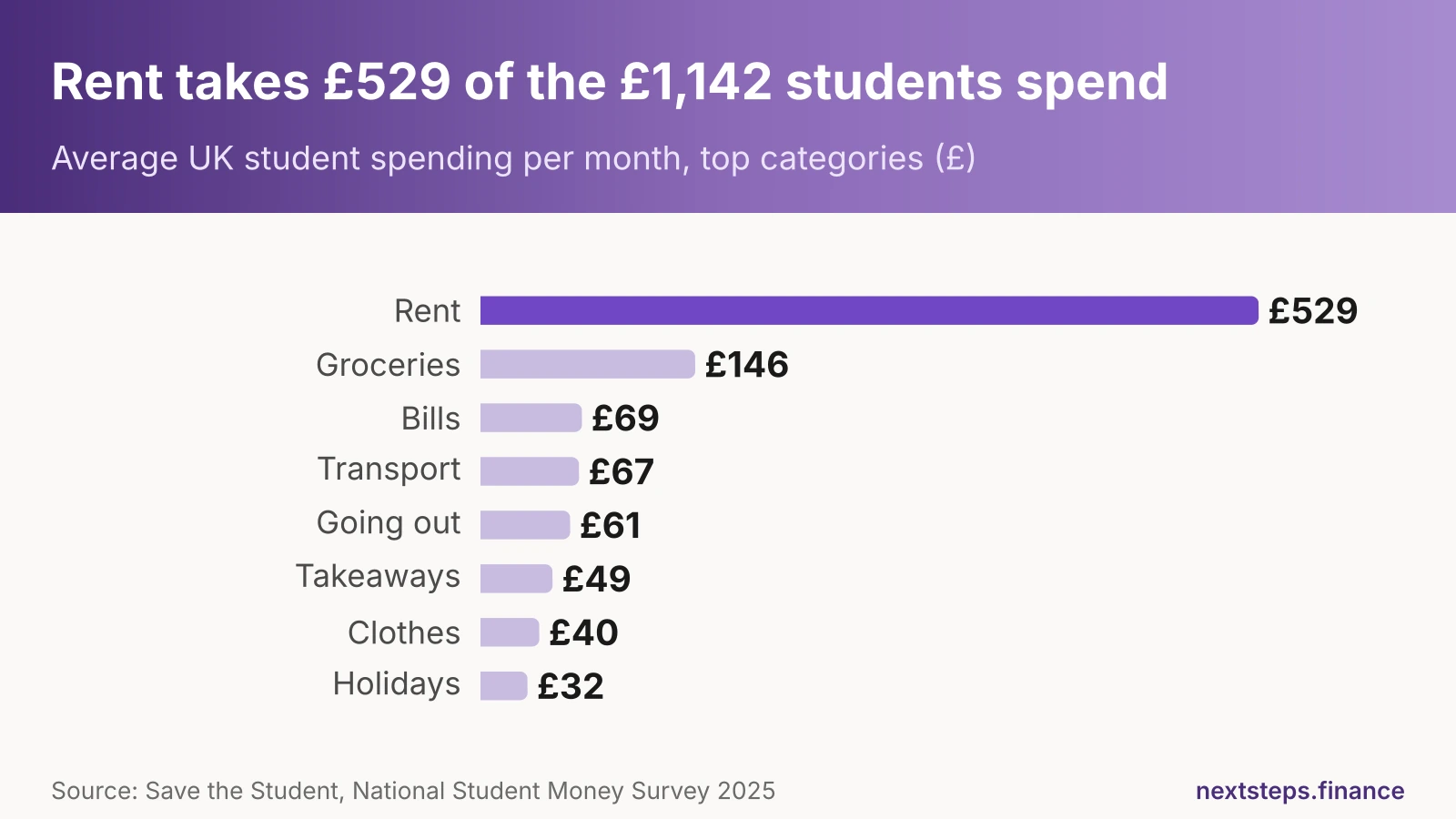
Here are the biggest monthly costs from the survey:
| Category | Average per month |
|---|---|
| Rent | £529 |
| Groceries | £146 |
| Bills | £69 |
| Transport | £67 |
| Going out | £61 |
| Takeaways and eating out | £49 |
| Clothes and shopping | £40 |
| Holidays and events | £32 |
| Health and wellbeing | £24 |
| Course materials | £20 |
| Mobile phone | £15 |
| Subscriptions | £13 |
Two things stand out. First, rent alone (£529) eats more than four-fifths of the average loan (£640). Second, the flexible categories (going out, takeaways, clothes, holidays) add up to £182 a month. That's where most students find room to cut, and it's where a budget makes the biggest difference. Our guide to the average food shop cost has ideas for bringing the £146 grocery bill down too.
Is the Maintenance Loan enough to live on?
For most students, no. The survey puts the average shortfall between loans and living costs at £502 a month, and GOV.UK accepts that "for some students even the maximum amount of Maintenance Loan may not be enough to cover all their living costs."
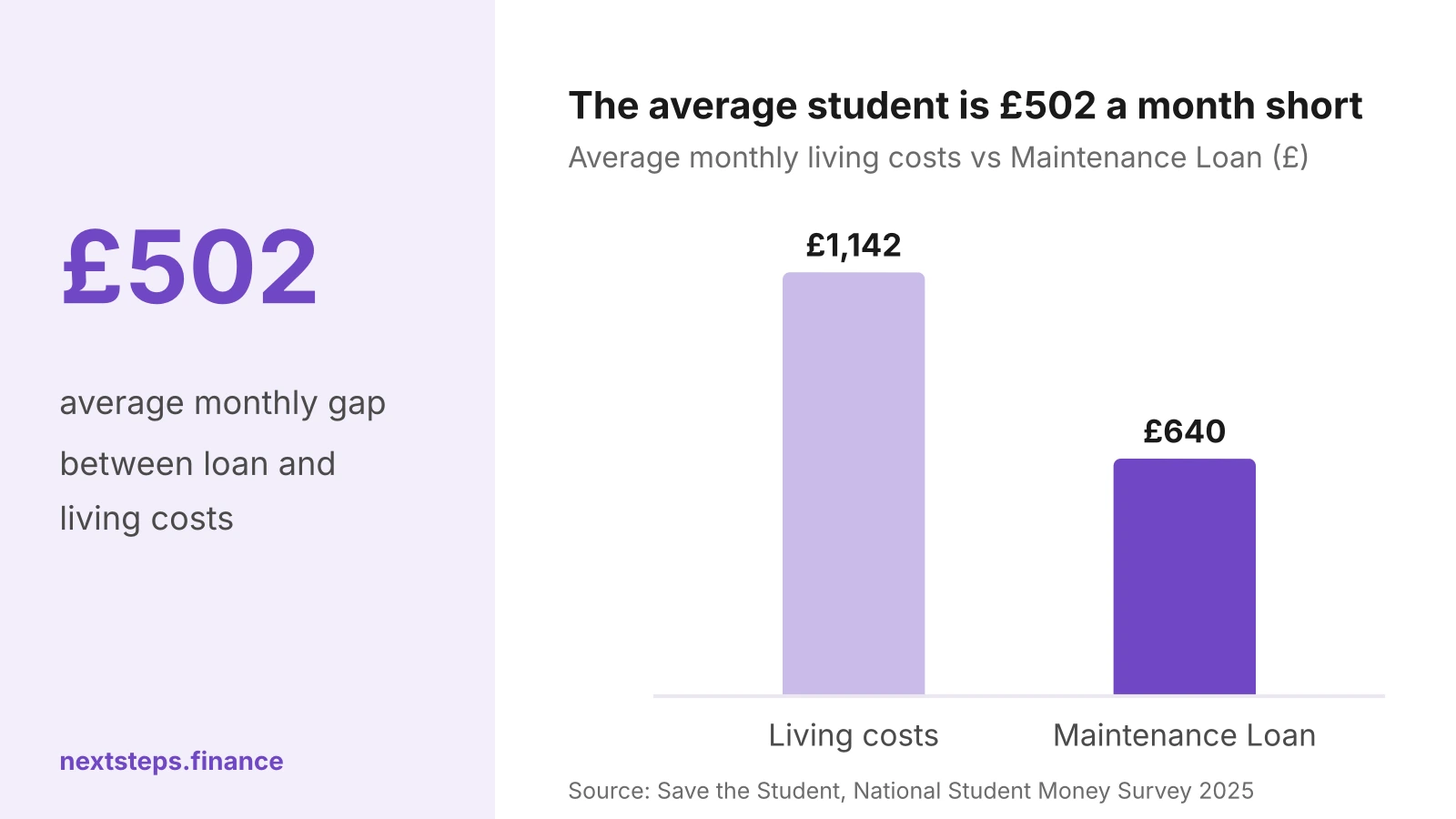
Even on the full £10,830, spread over 12 months you get £902.50 a month, which is £239.50 short of the average £1,142. Students close the gap in three main ways, according to the survey:
- Part-time work: 58% have a job, earning £547 a month on average for about 36 hours a month.
- Family help: 52% get money from parents or guardians, averaging £146 a month, the lowest figure the survey has recorded since 2021.
- Spending less: cutting flexible costs, cooking in bulk and using student discounts.
The gap is personal, so work out your own. Add up your loan, any bursary, family help and earnings, then subtract your rent and fixed bills. What's left is what you have for everything else.
How do I make a student budget? (step by step)
Budget by term. Your loan arrives in a lump at the start of each term, but your rent, food and phone bill come out every week or month. The trick is turning a lump into a steady weekly allowance.
- Write down every pound coming in this term: Maintenance Loan instalment, bursary or scholarship, family help and expected earnings.
- Take off fixed costs for the whole term first: rent (check whether your contract runs 44 or 51 weeks), bills if they aren't included, phone, travel pass and any course costs.
- Divide what's left by the number of weeks until the next payment. That's your weekly spending money for food, going out and everything else.
- Move the term's rent and bills into a separate pot or account on the day the loan lands, so you can't accidentally spend it.
- Pay yourself a weekly allowance from the rest, and keep a small buffer (even £100) for surprises.
- Check in every Sunday. Five minutes comparing what you spent with your allowance catches problems early.
This is the envelope method applied to a student loan. If you'd rather start from a blank sheet, our free budget template or the UK budget calculator will set out the numbers for you.
If you'd rather not build the spreadsheet yourself:
What does a realistic student budget look like?
Here is a worked monthly example for an 18-year-old living away from home outside London on the full 2026/27 loan, working eight hours a week at the £10.85 minimum wage for 18 to 20 year olds (GOV.UK). Costs use the survey averages.
| Income | Per month |
|---|---|
| Maintenance Loan (£10,830 over 12 months) | £902.50 |
| Part-time job (8 hours a week x £10.85) | £376.13 |
| Total income | £1,278.63 |
| Spending | Per month |
|---|---|
| Rent | £529 |
| Groceries | £146 |
| Bills | £69 |
| Transport | £67 |
| Going out | £61 |
| Takeaways and eating out | £49 |
| Clothes and shopping | £40 |
| Other | £26 |
| Health and wellbeing | £24 |
| Course materials | £20 |
| Mobile phone | £15 |
| Subscriptions | £13 |
| Total spending | £1,059 |
| Left for savings and a buffer | £219.63 |
That surplus only exists because of the job and the full loan. Without the part-time work, the same spending would be £156.50 a month over budget. A student on a lower loan, or in London where rents are higher, would need to cut harder or earn more.
Spreading the loan over 12 months matters. If you divide it over only the nine or so months of term, you'll have about £1,203 a month while you're there and nothing over summer, when rent may still be due. Decide early whether the summer is covered by a job, family or your loan.
How can students save money each month?
The biggest savings come from rent, food and the flexible categories, plus a few student-only perks. Pick the ones that fit your life.
Use the student-only savings
- Council Tax: households where everyone is a full-time student don't pay it. GOV.UK says your course must last at least a year and involve at least 21 hours of study a week. If you get a bill, apply for the exemption.
- Student discounts and railcards: check your union and the big discount schemes before you buy anything over £20.
Cut the big three
- Rent: compare halls with private shared houses, and check whether bills are included before you sign.
- Food: a weekly meal plan and batch cooking with housemates can bring the £146 average down sharply.
- Going out and takeaways: set a weekly "fun" amount in a separate pot. When it's gone, it's gone.
Make your bank do the work
Splitting money into pots is the easiest way to stop the rent money being spent on a night out. Monzo lets you have up to 20 Pots and sort your income into bills, spending and savings. It also pays your student loan or salary from 4pm one business day early when it arrives by Bacs, according to its Payday page. Eligible deposits are protected by the FSCS up to £120,000.
Through our link, new customers aged 18 or over get £10 and a free month of Monzo Extra if, within 30 days, they download the app, open an account, add money and make a card payment of any amount (Monzo referral terms, checked 25 November 2026). Monzo Extra is a paid plan after the free month, so cancel it if you don't want it. If an interest-free overdraft matters to you, compare high-street student accounts too, and you can still run pots through a budgeting app. Our best budgeting apps guide compares the options.
Take Action: set up a rent pot and a weekly spending pot before your next loan instalment lands.
When do I start repaying my student loan?
Not while you're studying. The earliest you start repaying is the April after you leave your course, and only once you earn over your plan's threshold, says GOV.UK's repayment guide.
Undergraduates from England who started on or after 1 August 2023 are on Plan 5 (GOV.UK). You repay 9% of income over £25,000 a year (£2,083 a month), according to GOV.UK. On a £30,000 graduate salary that's 9% of £5,000, or £450 a year (£37.50 a month). Because repayments depend on what you earn rather than what you owe, the loan works differently from normal debt. Our guide to managing your student loans explains repayment and interest in more detail, and the take-home pay calculator shows how repayments affect your pay.
The practical point for your budget now: borrowing the full Maintenance Loan doesn't change what you repay each month after graduating. It changes how long you repay for. Overdrafts, credit cards and buy now pay later are different: they're repaid in full, often with interest, so keep them for genuine emergencies.
Bottom line: making your loan last
A student budget isn't about living on nothing. It's about knowing what's coming in each term, paying rent and bills first, and spending the rest at a steady weekly pace. With the average student £502 a month short, a plan matters more than it did a few years ago. Start with your exact loan, use the worked example above as a template, and review it every week. The UK Budget Planner can track it all for you, and our complete guide to budgeting covers the wider methods.
FAQ
How much should a student budget per month in the UK?
The average UK student spends £1,142 a month, according to the National Student Money Survey 2025, with £529 of that on rent. A realistic student budget depends on your rent and loan: on the full 2026/27 loan outside London, you get £902.50 a month spread over 12 months, so most students need extra income or lower spending.
Is the Maintenance Loan enough to live on?
For most students it isn't. The National Student Money Survey 2025 found an average gap of £502 a month between loans and living costs. Even the full £10,830 for 2026/27 (outside London) gives £902.50 a month over a year, below the £1,142 average. Students fill the gap with part-time work, family help and careful spending.
When is the Maintenance Loan paid?
The Maintenance Loan is paid into your bank account in instalments at the start of each term, according to GOV.UK. The Tuition Fee Loan goes straight to your university. Applications take about four weeks to process, so apply early to make sure your first payment arrives on time.
Do full-time students pay Council Tax?
Households where everyone is a full-time student don't pay Council Tax, according to GOV.UK. To count as full-time, your course must last at least one year and involve at least 21 hours of study a week. If one housemate isn't a student, the household gets a bill but may qualify for a discount.
Can I work part-time while getting student finance?
Yes, and most students do. The National Student Money Survey 2025 found 58% of students work, earning £547 a month on average. From April 2026, the minimum wage is £10.85 an hour for 18 to 20 year olds and £12.71 at 21 and over.
Found this useful? Add Next Steps Finance as a preferred source and Google will show you more of our guides in search and AI answers.
Put this into practice
Build your budget in one sitting
The UK Budget Planner works out your take-home pay, splits it with the 50/30/20 rule, tracks spending through the year and forecasts five years ahead. Made for UK pay, tax and bills.