
This family budget UK guide starts from a simple point: a family budget works like any other, with two extra pressures: childcare, which can cost more than a mortgage before school age, and a long list of irregular costs that never fall in the same month. The good news is that most families now get more help than a few years ago. Working parents in England can get 30 funded hours from 9 months old, and the two-child limit in Universal Credit ended in April 2026. This guide shows what children really cost, what help you can claim, and two worked monthly budgets using 2026/27 figures.
Foundations
Family Budget UK: Real Monthly Costs
Family budget UK guide for 2026/27: what a child really costs, childcare after funded hours, Child Benefit, and two worked monthly family budgets.
In this article
- 01Key takeaways
- 02How much does it cost to raise a child in the UK?
- 03How much does childcare cost after the funded hours?
- 04What help can families get with costs?
- 05What does a family budget look like in the UK?
- 06How do you make a family budget that works?
- 07How can you save for your children's future?
- 08FAQ
- 09The bottom line
Key takeaways
- A child costs £251,018 to age 18 for a couple and £287,219 for a lone parent at a minimum acceptable standard of living, according to CPAG's Cost of a Child in 2025.
- Child Benefit is £27.05 a week for the eldest child and £17.90 for each other child, about £117 a month for one child and £195 for two.
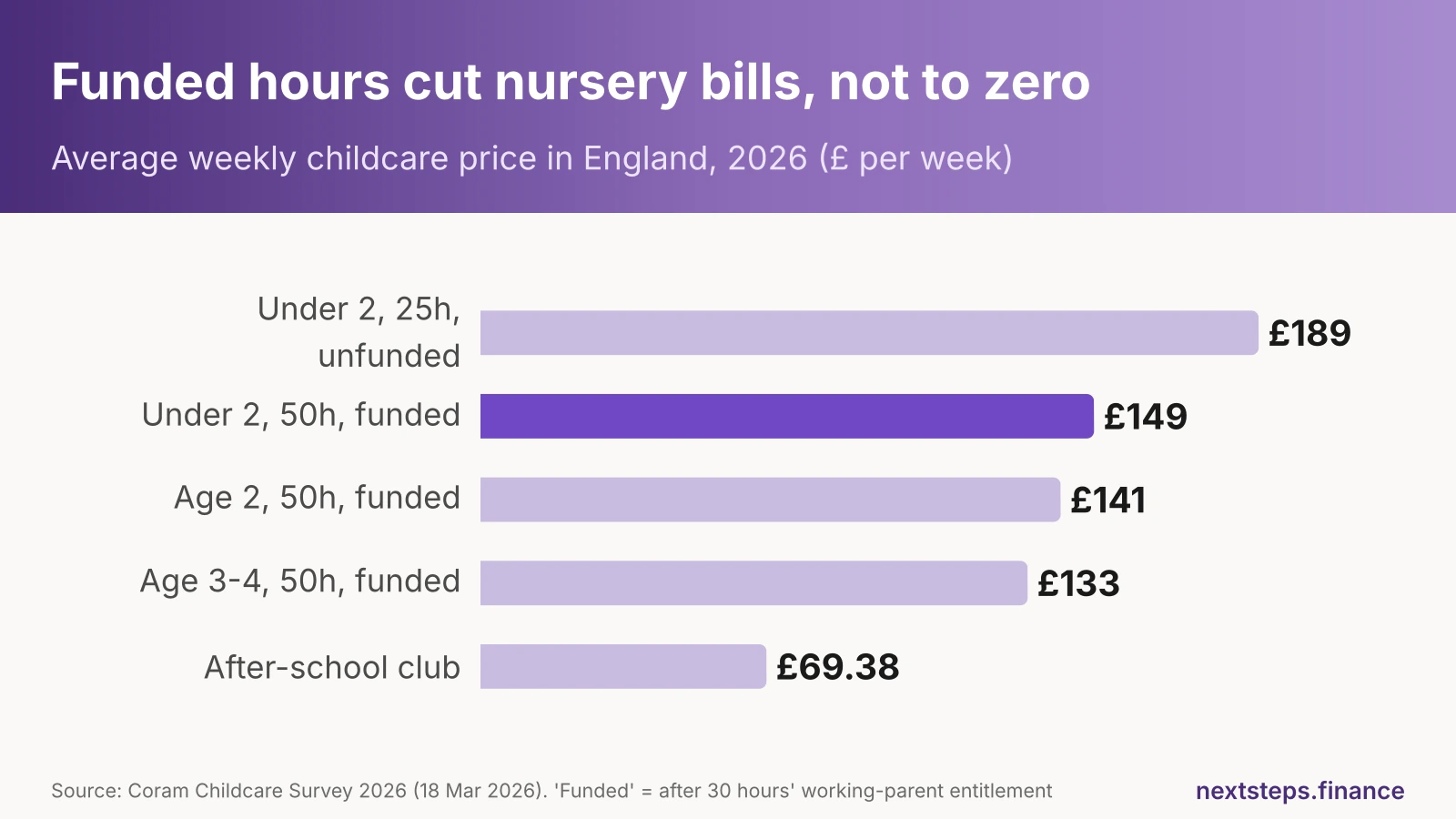
- Funded hours cut nursery bills, not to zero: a full-time 50-hour place for an under-2 in England averages £148.82 a week even after the 30 funded hours (Coram, 2026).
- Tax-Free Childcare adds £2 for every £8 you pay, up to £2,000 a year per child (£4,000 if disabled), for children aged 11 or under.
- Our two example families have about £4,712 and £4,223 a month coming in, and can still put £250 to £665 a month into savings.
The UK Budget Planner is built for this: it starts from both partners' take-home pay and tracks childcare, bills and sinking funds across all 12 months.
How much does it cost to raise a child in the UK?
At a minimum, raising one child to 18 costs about £250,000 for a couple and £290,000 for a lone parent, according to the Child Poverty Action Group's Cost of a Child in 2025, published on 23 October 2025 and written with Loughborough University.
That "full cost" includes rent, childcare and council tax. Strip those out and the basic cost of food, clothing, travel, activities and household goods is £167,679 for a couple and £189,053 for a lone parent. Spread over 18 years, the couple's basic figure is about £776 a month, before a single nursery or rent bill.
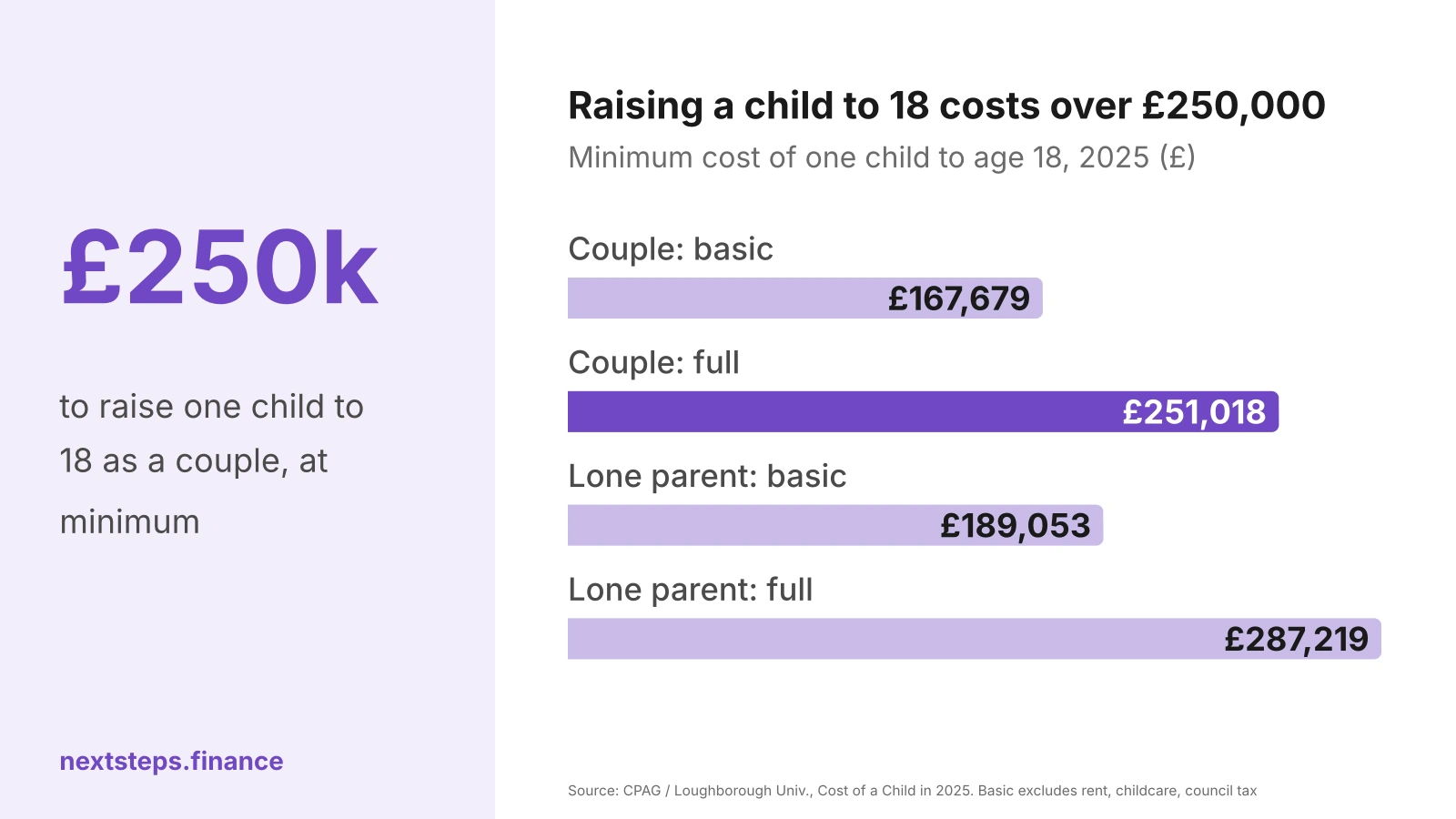
These are minimum figures based on the Minimum Income Standard, which is what the public agrees a family needs, not a comfortable lifestyle. The full CPAG report also notes that its family is modelled in social housing in the East Midlands, so private renters and families in London and the South East will pay more.
For scale, the ONS Family Spending survey put average UK household spending at £676.60 a week in the year to March 2025, with housing, fuel and power taking 18% and transport 14%.
Take Action: Don't try to budget for £250,000. Budget for the next 12 months, and use sinking funds for the costs that arrive once a year.
How much does childcare cost after the funded hours?
Childcare is still the largest single cost for most families with pre-school children. Working parents in England can get 30 hours of free childcare a week for 38 weeks a year from the age of 9 months to 4 years, GOV.UK confirms. But nurseries charge for the hours, meals and weeks outside that.
The Coram Childcare Survey 2026, published 18 March 2026, found:
| Childcare in England (weekly average, 2026) | Price |
|---|---|
| Under 2, 25 hours, family not eligible for funded hours | £188.75 |
| Under 2, 50 hours, after the 30-hour entitlement | £148.82 |
| Age 2, 50 hours, after the 30-hour entitlement | £140.72 |
| Age 3-4, 50 hours, after the 30-hour entitlement | £132.72 |
| After-school club, per week | £69.38 |
The full-time price for an under-2 has fallen 39% since 2025 thanks to the expanded hours, but £148.82 a week is still roughly £645 a month if you pay it all year. Childcare is cheaper for part-time under-2 places in Scotland (£133.08 a week) and Wales (£166.33), where funded childcare rules differ from England's.
Who qualifies for the 30 funded hours?
Each parent must expect to earn at least the National Minimum or Living Wage for 16 hours a week, which is £2,643.68 over the next three months if you're 21 or over. You lose eligibility if either parent's adjusted net income is over £100,000, the eligibility page says. Pension contributions reduce adjusted net income, so our £100k tax trap calculator is worth a look if you're close.
Check where your income sits:
Calculator
Are you under the £100,000 limit for funded childcare?
- Your adjusted net income for 2026/27 (£)£85,000
Your resultAt or under £100,000: the income limit doesn't stop you claiming funded hours
£100,001 or moreOver £100,000: you lose the funded childcare hours for working parents
England only. Both parents must also earn the minimum amount. Pension contributions reduce adjusted net income. Source: GOV.UK, checked 23 November 2026.
Take Action: Apply for the next term's funded hours before the deadline and reconfirm your eligibility every three months, or the hours stop.
What help can families get with costs?
Most families can claim at least Child Benefit and Tax-Free Childcare. Lower-income families can get far more through Universal Credit.
| Help | What you get (2026/27) | Key condition |
|---|---|---|
| Child Benefit | £27.05 a week (eldest), £17.90 (each other child) | Repaid through tax if one parent's income is high; see our Child Benefit tax charge guide |
| Tax-Free Childcare | £2 top-up for every £8 you pay, up to £2,000 a year per child | Child 11 or under (16 if disabled); usually both parents working |
| 30 funded hours | 30 hours a week, 38 weeks a year | England, child 9 months to 4, working parents under £100,000 |
| Universal Credit childcare | Up to 85% of childcare costs | Capped at £1,071.09 a month for one child, £1,836.16 for two or more |
The two-child limit was scrapped from 6 April 2026, so Universal Credit and Child Tax Credit now include the child element for third and later children. Families already claiming saw it applied automatically.
You can't use Tax-Free Childcare and Universal Credit childcare at the same time, so if you're on a low income, check which pays you more with an independent benefits calculator before you apply.
What does a family budget look like in the UK?
A realistic family budget puts childcare, housing and food first, then funds yearly costs monthly so Christmas and school uniforms don't land on a credit card. The two examples below use 2026/27 take-home pay in England after Income Tax, National Insurance and a 5% workplace pension, based on the GOV.UK rates and thresholds for 2026 to 2027.
Verified figures used in both:
- Energy: £1,723 a year for a typical dual-fuel home under Ofgem's price cap for 1 October to 31 December 2026, about £144 a month.
- Food at home: £33.63 per person per week in DEFRA's Family Food FYE 2025, about £437 a month for three people and £583 for four. Children often eat less, so this is a cautious figure; our guide to the average food shop shows how to cut it.
- Childcare: Coram's 2026 averages above, less the 20% Tax-Free Childcare top-up.
Housing, council tax, transport and insurance vary too much by area to average, so those lines are examples. Swap in your own.
Family budget 1: couple with a toddler in nursery
Parents earning £40,000 and £30,000 take home about £4,595 a month between them, plus £117 of Child Benefit: £4,712 in total.
| Category | Monthly |
|---|---|
| Mortgage or rent (example) | £1,350 |
| Council tax (example) | £170 |
| Energy | £144 |
| Water, broadband and phones (example) | £120 |
| Food at home, 3 people | £437 |
| Nursery: £645 for 50 hours a week, less £129 Tax-Free Childcare | £516 |
| Car and transport (example) | £300 |
| Life and home insurance (example) | £60 |
| Nappies, clothes and toiletries (example) | £100 |
| Essentials | £3,197 |
| Eating out, days out, subscriptions | £600 |
| Sinking funds: Christmas, birthdays, car repairs | £250 |
| Savings: emergency fund | £565 |
| Junior ISA or children's savings | £100 |
| Total | £4,712 |
The tight month is the one before funded hours start. Without them, Coram's £188.75 a week for just 25 hours would be about £818 a month, so building a buffer during parental leave helps.
Family budget 2: two school-age children
Parents earning £35,000 and £25,000 take home about £4,028 a month, plus £195 of Child Benefit: £4,223 in total. Both children go to an after-school club in term time.
| Category | Monthly |
|---|---|
| Mortgage or rent (example) | £1,150 |
| Council tax (example) | £170 |
| Energy | £144 |
| Water, broadband and phones (example) | £140 |
| Food at home, 4 people | £583 |
| After-school club: 2 children, 39 weeks, less Tax-Free Childcare | £361 |
| Car and transport (example) | £320 |
| Life and home insurance (example) | £60 |
| School costs, clothes and activities (example) | £200 |
| Essentials | £3,128 |
| Eating out, days out, subscriptions | £500 |
| Sinking funds: holiday clubs, Christmas, birthdays, uniforms | £300 |
| Savings: emergency fund | £245 |
| Junior ISA or children's savings | £50 |
| Total | £4,223 |
School holidays are the hidden cost here. There are around 13 to 14 weeks a year with no school and no after-school club, which is why this budget puts £300 a month into sinking funds. For a different family of four, see our monthly budget examples.
If you'd rather not build all of this from scratch:
How do you make a family budget that works?
Build it around your real monthly income, then cover the expensive, irregular months in advance. This order works for most families:
- Add up net income: both payslips plus Child Benefit and any Universal Credit. Our UK budget calculator does this for you.
- List fixed costs first: housing, council tax, energy, childcare and debt repayments.
- Set a weekly food budget and stick to one big shop plus top-ups.
- Price the year: Christmas, birthdays, school trips, uniforms, holiday clubs and car costs. Divide by 12 and move that into sinking funds on payday.
- Pay yourselves: an emergency fund of three months' essentials, then longer-term saving for the children.
- Review every term, because childcare costs change at 2, 3 and when school starts.
If you and your partner are deciding how to split costs, our guide to budgeting as a couple covers joint, separate and hybrid accounts. Prefer a free spreadsheet? Start with our free budget template.
How can you save for your children's future?
Once essentials and an emergency fund are covered, a Junior ISA lets you save for each child tax-free, with the money locked until they turn 18. Our Junior ISA guide compares cash and stocks and shares options.
Over 18 years, small amounts add up. Investing may suit you if you won't need the money for a decade or more and can accept ups and downs. Wealthify runs ready-made Stocks & Shares Junior ISAs, and its refer-a-friend terms give a new customer £50 after investing at least £1,000 in a Stocks & Shares ISA or Junior ISA within six months of opening, and keeping it there for six more months. It can't be combined with other introductory offers and can be withdrawn at any time. Capital at risk - the value of investments can go down as well as up.
Alternatives: a cash Junior ISA from your bank has no investment risk and often a lower minimum, and Premium Bonds or a regular saver in your own name keep the money accessible.
Take Action: Start with whatever fits after the emergency fund, even £25 a month, and increase it when childcare costs drop.
FAQ
How much does it cost to raise a child in the UK per month?
CPAG's Cost of a Child in 2025 puts the minimum cost of raising a child to 18 at about £250,000 for a couple, including rent and childcare. The basic cost, excluding rent, childcare and council tax, is £167,679, which works out at about £776 a month on average over 18 years.
How much does a family of four need a month in the UK?
It depends on housing and childcare. In our example, a couple earning £35,000 and £25,000 with two school-age children have about £4,223 a month including Child Benefit. Essentials take about £3,128, leaving room for sinking funds and around £295 a month of savings.
How much is Child Benefit per month in 2026?
Child Benefit is £27.05 a week for the eldest or only child and £17.90 a week for each additional child. Paid every four weeks, that averages about £117 a month for one child and £195 a month for two. If one parent's income is high, some or all of it is repaid through tax.
Can you get 30 hours free childcare from 9 months?
Yes, in England. Working parents of children aged 9 months to 4 years can get 30 hours of free childcare a week for 38 weeks a year. Each parent must earn at least £2,643.68 over three months (aged 21 or over), and neither can have adjusted net income over £100,000.
Can you use Tax-Free Childcare with the 30 free hours?
Yes. You can use Tax-Free Childcare to pay for hours, meals and weeks not covered by the 30 funded hours. The government adds £2 for every £8 you pay, up to £2,000 a year per child. You can't use it at the same time as Universal Credit childcare support.
The bottom line
A family budget in the UK lives or dies on childcare and the costs that only come once a year. Claim every bit of help you're entitled to, from Child Benefit to funded hours and Tax-Free Childcare, budget food weekly, and put a fixed amount into sinking funds each payday. For a ready-made system that does the maths across both incomes, try the UK Budget Planner, or start with our complete guide to budgeting in the UK and the budgeting hub.
Found this useful? Add Next Steps Finance as a preferred source and Google will show you more of our guides in search and AI answers.
Put this into practice
Build your budget in one sitting
The UK Budget Planner works out your take-home pay, splits it with the 50/30/20 rule, tracks spending through the year and forecasts five years ahead. Made for UK pay, tax and bills.