A Christmas budget UK households can actually stick to starts with one number: the most you can spend without borrowing. This guide shows what Christmas 2026 is expected to cost, how that compares with take-home pay on typical salaries, and a simple way to split and track your own Christmas budget so January isn't a shock.
Key takeaways
- Average cost: MoneySuperMarket estimates the average UK family Christmas will cost £1,681.12 in 2026, up from £1,576 two years ago.
- Gifts aren't the only cost: in that estimate, food and drink come to over £360, energy £109.50 and travel £80.58.
- Few plan ahead: in a 2,000-adult survey for savings club Park, only 22% said they put money aside throughout the year.
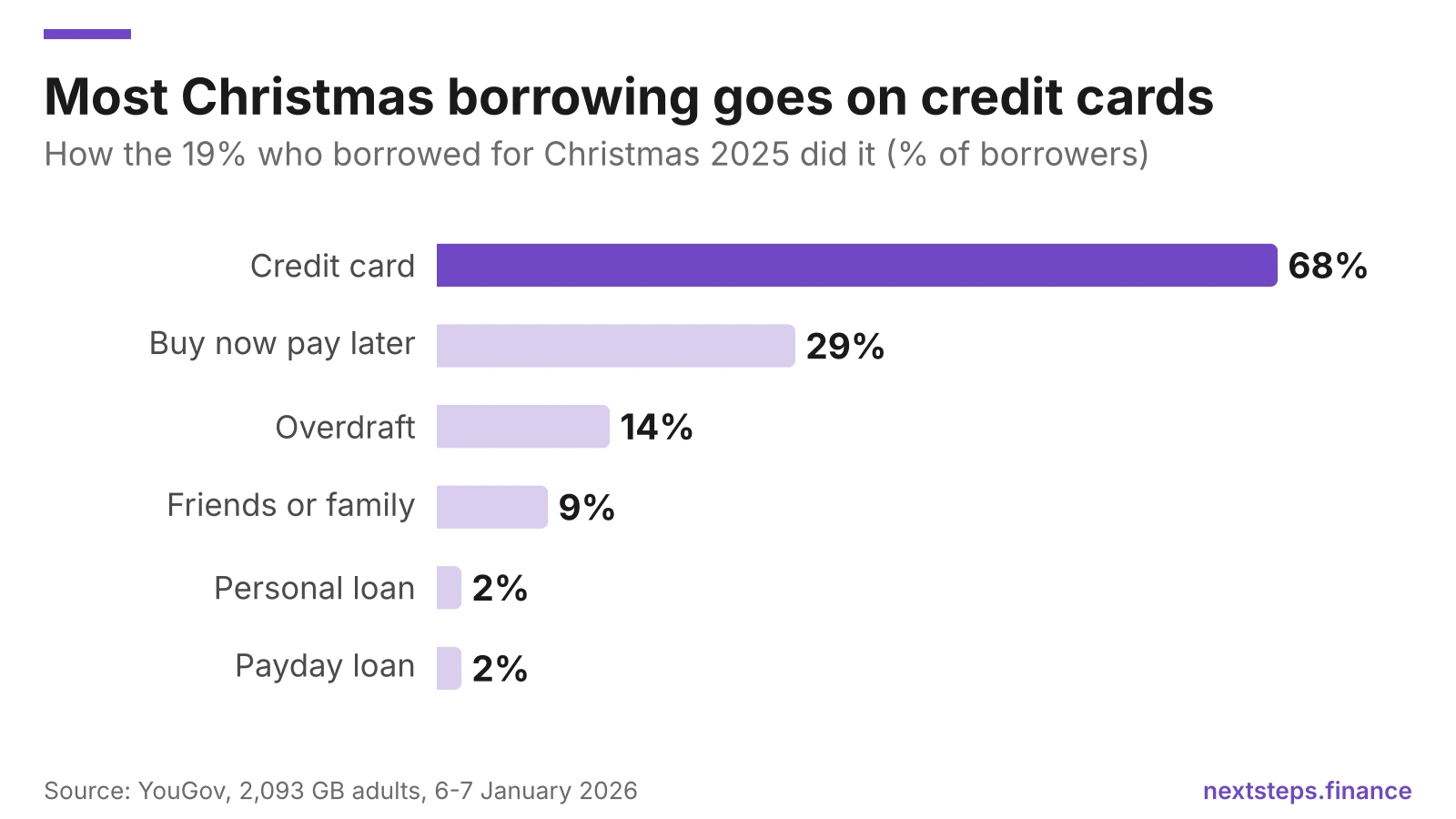
- Borrowing is common: 19% of adults borrowed to pay for Christmas 2025, and 68% of them used a credit card (YouGov, January 2026).
- Time is short: most people paid monthly have two paydays left before 25 December, and Royal Mail's last 2nd Class posting date is Friday 18 December.
Want the whole year planned, not just December? The UK Budget Planner has sinking funds for irregular costs like Christmas built in, so this year's number becomes next year's monthly saving.
How much does the average UK Christmas cost in 2026?
The average UK family is expected to spend about £1,500 to £1,700 on Christmas 2026, depending on which survey you use. Both figures are averages, so treat them as a sense check, not a target.
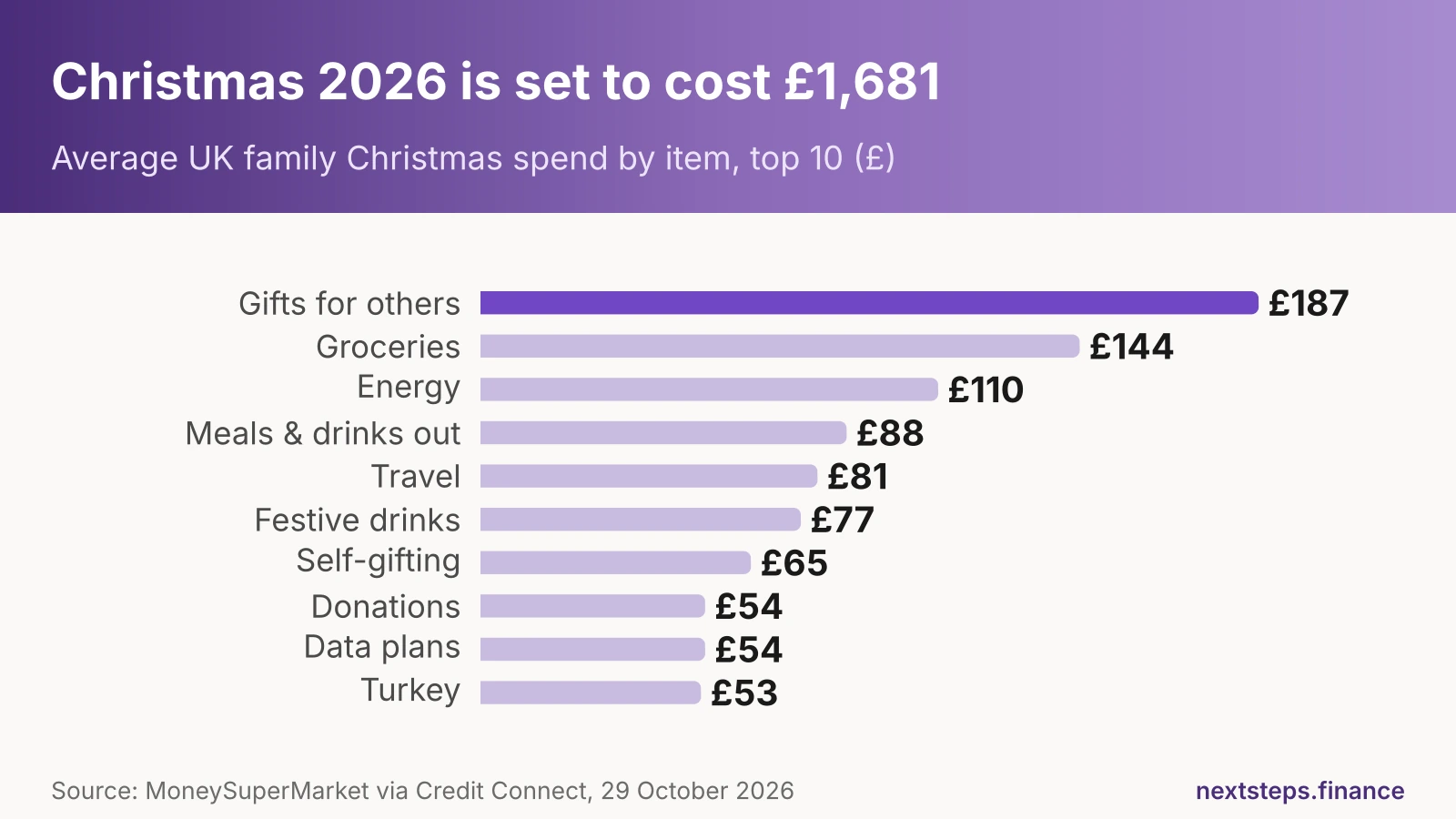
MoneySuperMarket's research, reported on 29 October 2026, puts the total at £1,681.12. It counts more than presents: groceries, the turkey, nights out, extra heating, travel, wrapping paper, batteries and even new phone data plans. The Independent's report of the same research notes the average was £1,576 two years earlier, so inflation has added about £105.
A survey of 2,000 adults for Christmas savings club Park, published 12 October 2026, came in a little lower at £1,502, but it left out alcohol, soft drinks and decorations. It found:
| Item | Park survey average |
|---|---|
| Presents | £693.80 |
| Christmas dinner | £185.80 |
| Sweets and treats | £158.20 |
| Overall average (excludes drinks and decorations) | £1,502 |
The gap between generations is striking. Gen Z adults (18 to 29) expected to spend £2,274, against £870 for Baby Boomers, and 80% of Gen Z said they felt anxious about Christmas costs.
Take Action: Write down what you spent last Christmas. Your bank app's December and January statements are the most honest guide you have.
How much should I spend on Christmas?
You should spend no more on Christmas than you can pay for from money you already have or will earn before it, with nothing left on a credit card in February. For most people that means a total well below the national average.
The average looks very different against a real pay packet. Here's the £1,681 average compared with monthly take-home pay in England, Wales and Northern Ireland in 2026/27, using the £12,570 Personal Allowance, 20% basic rate (GOV.UK) and 8% employee National Insurance (GOV.UK). It ignores pension contributions and student loans.
| Salary | Monthly take-home (approx.) | £1,681 Christmas as % of one month's pay |
|---|---|---|
| £25,000 | £1,793 | 94% |
| £30,000 | £2,093 | 80% |
| £40,000 | £2,693 | 62% |
Spending the average on a £25,000 salary would swallow almost a whole month's pay. That's why a sensible Christmas budget starts from your own numbers, not the headline. Work out your take-home pay and a 50/30/20 split in seconds with our free UK budget calculator.
A simple way to set your number:
- Add up what you have: any Christmas savings, plus what's left from your November and December pay after rent or mortgage, bills, food and debt repayments.
- Take off a buffer: January is a long month, and the energy price cap is forecast to rise in January 2027. Keep at least a few weeks of essentials in reserve.
- What's left is your Christmas budget. If it's less than you'd like, cut the plan, not the buffer.
Take Action: Write your total at the top of a page (or a tab in the free budget template) before you buy anything else.
How do I make a Christmas budget in the UK?
Make a Christmas budget by splitting your total into categories, setting a per-person amount for gifts, and tracking every purchase against it. It takes about 20 minutes.
- List every cost, not just presents. Use the chart above as a checklist: food, drinks, travel, nights out, cards and postage, wrapping, the work party, charity and the extra heating.
- Give each category a cap. Gifts usually take the biggest share, but food and drink can cost as much if you're hosting.
- List everyone you're buying for and give each person an amount. Add them up. If the total is higher than your gifts cap, lower the per-person amounts or agree a Secret Santa.
- Add a buffer of around 5% for the things you forget, such as batteries, a last-minute gift or a taxi home.
- Track it weekly and move money between categories rather than adding to the total.
Here's a worked £800 Christmas budget for someone on £30,000 who has saved £300 and can spare £250 from each of November's and December's pay:
| Category | Budget | Notes |
|---|---|---|
| Gifts (6 people) | £350 | £75 each for 2 adults, £50 each for 4 others |
| Food and drink | £200 | Big shop, the turkey and drinks |
| Travel | £80 | Train or fuel to family |
| Socialising and work do | £80 | Two nights out |
| Cards, wrapping and postage | £40 | Post by 18 December for 2nd Class |
| Buffer | £50 | For the things you forget |
| Total | £800 | Paid from £300 saved + £250 + £250 |
If you'd rather not build this from scratch, the UK Budget Planner keeps Christmas alongside your regular bills, so you can see what the gifts list does to the rest of your month.
How much should I spend on each person for Christmas?
There's no right amount per person. The useful number is your gifts budget divided by the people on your list, weighted towards the people closest to you. Decide it before you shop, not at the till.
Some ways to keep the per-person cost down without anyone feeling short-changed:
- Secret Santa for wider family or friends: one gift each with a fixed limit.
- Kids only: many families agree adults stop exchanging gifts.
- Shared experiences such as a meal or day out instead of separate presents.
- Buy early and online through a cashback site. TopCashBack is free to join on its Classic account, and its Plus account takes £5 a year from your cashback. Our Christmas cashback guide lists current retailer rates and how to earn on the food shop too.
Leave some time for delivery. Royal Mail's last recommended posting dates for Christmas 2026 are Friday 18 December for 2nd Class, Monday 21 December for 1st Class and Wednesday 23 December for Special Delivery Guaranteed. Paying for faster postage is an easy way to blow a budget.
How do I save for Christmas when it's only weeks away?
With about seven weeks to go, the quickest way to save for Christmas is to move your Christmas money out of your main balance on payday, so you can't spend it by accident. Then pay for Christmas only from that separate pot.
- Use a separate pot or account. Monzo Pots, for example, are separate spaces inside your account that you can hide or lock "so you're not tempted to dip in". Money in them still counts as your current account balance, protected by the FSCS up to £120,000 per person. Most banking apps have something similar.
- Pay yourself first. Set a standing order for payday in late November and again in December.
- Check what you can stop. Pause subscriptions you won't use over the holidays and look for bills that have crept up.
- Track as you go. A budgeting app can do the adding up for you. Snoop is free and tracks your spending by category, lets you set a budget, and alerts you when a bill goes up. Snoop Plus adds features such as custom categories and payday-to-payday tracking for £5.99 a month or £47.99 a year, which you don't need for a one-off Christmas budget. See our best budgeting apps for alternatives, including free ones.
For next year, the maths is much easier. Divide this year's total by 12 and save it monthly from January. A £1,681 Christmas works out at £140 a month; an £800 one is £67 a month. Our emergency fund guide explains where to keep money like this so it earns interest.
Take Action: Open a pot called "Christmas" today and set a standing order for your next payday.
Should I borrow to pay for Christmas?
Borrowing for Christmas is best avoided, because the cost lands in January and February, when bills are high and pay feels a long way off. If you do borrow, use the cheapest option and have a written plan to clear it.
Plenty of people do borrow. YouGov found that 19% of adults borrowed to pay for Christmas 2025. Of those, 73% borrowed for gifts and 21% for everyday bills.
Repayment often drags on. Among Christmas BNPL users, 20% expected to take more than four months to repay and 6% more than a year.
If you're weighing up options:
- Credit card: only cheap if you clear it in full by the statement date. Card purchases can also get Section 75 protection. Our guide to what the rate rise means for credit cards and loans covers what carrying a balance now costs.
- Buy now pay later: the FCA has regulated BNPL since 15 July 2026. Lenders must check you can afford it, tell you any late fee up front and contact you if you miss a payment, and you can complain to the Financial Ombudsman. Regulated BNPL purchases also get Section 75 protection. Agreements taken out before 15 July 2026, and BNPL where the shop is also the lender, aren't covered. Interest-free doesn't mean free if you miss a payment, and several BNPL plans at once are easy to lose track of.
- Overdraft: often an expensive way to borrow for more than a few days, so check your bank's rate first.
If you're already struggling with debt, free advice from MoneyHelper or StepChange is a better first step than more borrowing. Our guide on how to get out of debt sets out a plan.
Frequently asked questions
How much does the average person spend on Christmas in the UK?
MoneySuperMarket estimates the average UK family will spend £1,681.12 on Christmas 2026, including gifts, food, drink, energy and travel. A separate survey for savings club Park put it at £1,502, excluding drinks and decorations. Both are averages, so your own total should be based on what you can afford without borrowing.
What is a reasonable Christmas budget?
A reasonable Christmas budget is one you can pay from savings and your November and December pay without borrowing, while keeping a buffer for January bills. On a £30,000 salary, take-home pay is about £2,093 a month in 2026/27, so even a £600 to £800 Christmas is a big share of one month.
How much should I save each month for Christmas?
Divide your total Christmas budget by the number of months until Christmas. Saving from January, a £1,681 Christmas costs £140 a month, an £800 Christmas £67 a month and a £600 Christmas £50 a month. Keep the money in a separate pot or savings account so it isn't spent by mistake.
How do you budget for Christmas presents?
Set a total gifts budget first, list everyone you're buying for and give each person an amount that adds up to that total. Use Secret Santa or a kids-only rule for wider family, buy early to avoid paying for fast delivery, and use a cashback site for online orders.
Is it a good idea to use buy now pay later for Christmas?
Buy now pay later can spread a cost interest-free, but it's still borrowing. The FCA has regulated it since 15 July 2026, so lenders must check affordability and disclose late fees. YouGov found 20% of BNPL users for Christmas 2025 expected to need more than four months to repay.
When is the last posting date for Christmas 2026?
Royal Mail's recommended last posting dates for Christmas 2026 are Friday 18 December for 2nd Class, Saturday 19 December for Tracked 48, Monday 21 December for 1st Class and Tracked 24, and Wednesday 23 December for Special Delivery Guaranteed. Dates can change, so check Royal Mail before sending.
The bottom line
The £1,681 average is a warning, not a target. Pick a Christmas total you can pay for without borrowing, split it across every category, set per-person gift amounts, and keep the money in its own pot until you spend it. Then turn this year's total into a monthly saving from January, so Christmas 2027 is already paid for. The UK Budget Planner builds that into your whole-year plan, and the complete guide to budgeting in the UK and our budgeting hub cover the rest of the year.