
If relatives are asking what to buy your child this Christmas, a Junior ISA is one of the few presents that keeps growing. With Bank Rate now at 4% after the Bank of England's rise on 5 November, the top Junior cash ISAs pay more than most adult easy access accounts, and there's no tax on the interest or investment growth.
This guide covers the Junior ISA rules for 2026/27, today's best rates, cash vs stocks and shares, the £100 rule that catches parents out, and what happens when your child turns 18. Every figure was checked on 6 November 2026.
Key takeaways
- The Junior ISA limit is £9,000 per child for 2026/27, separate from your own £20,000 ISA allowance (GOV.UK).
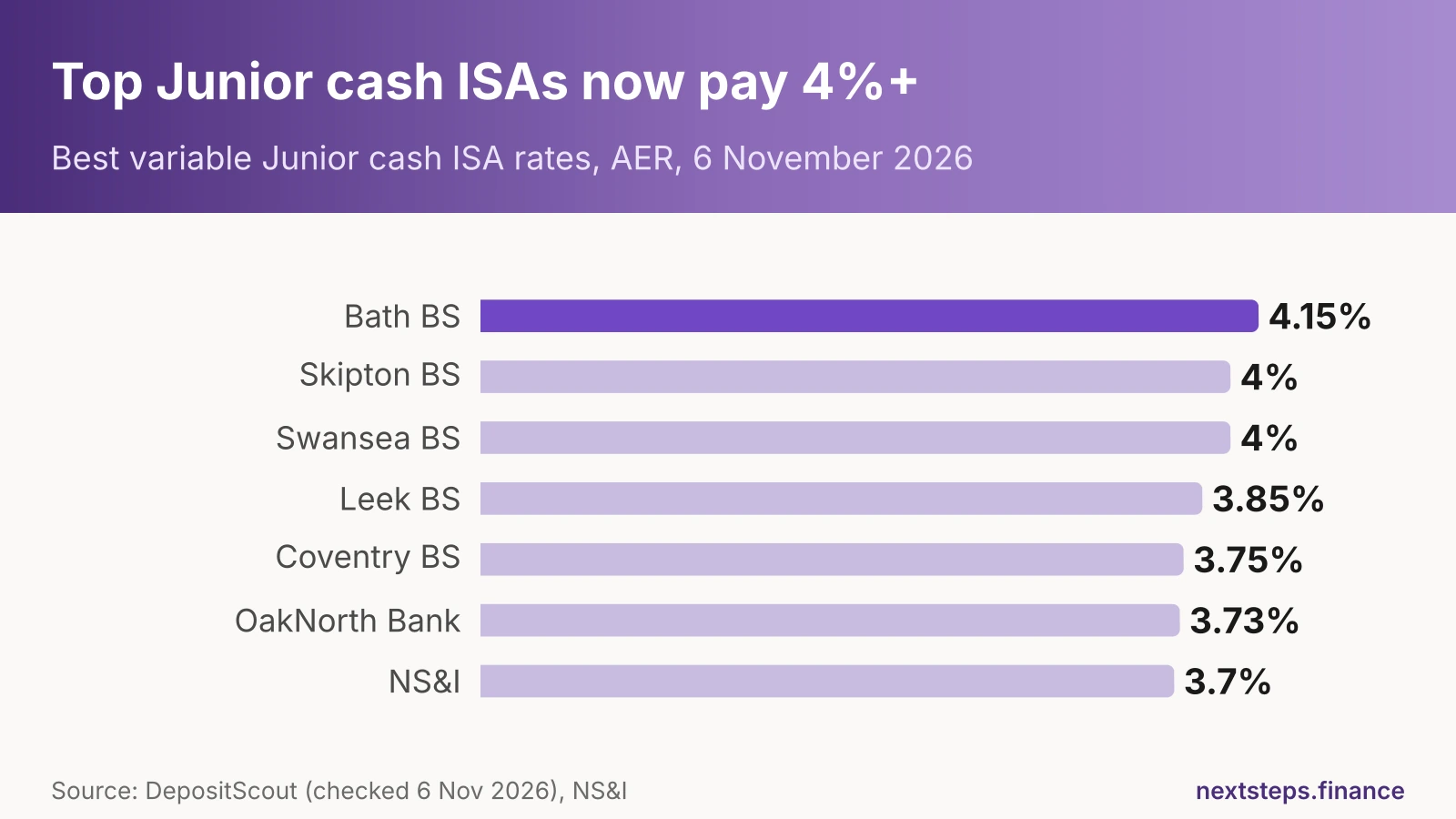
- Top Junior cash ISA rate is 4.15% AER at Bath Building Society (local eligibility applies), with Skipton and Swansea at 4.00% and NS&I at 3.70%.
- Only a parent or guardian can open one for a child under 16, but anyone (grandparents, aunts, friends) can pay in.
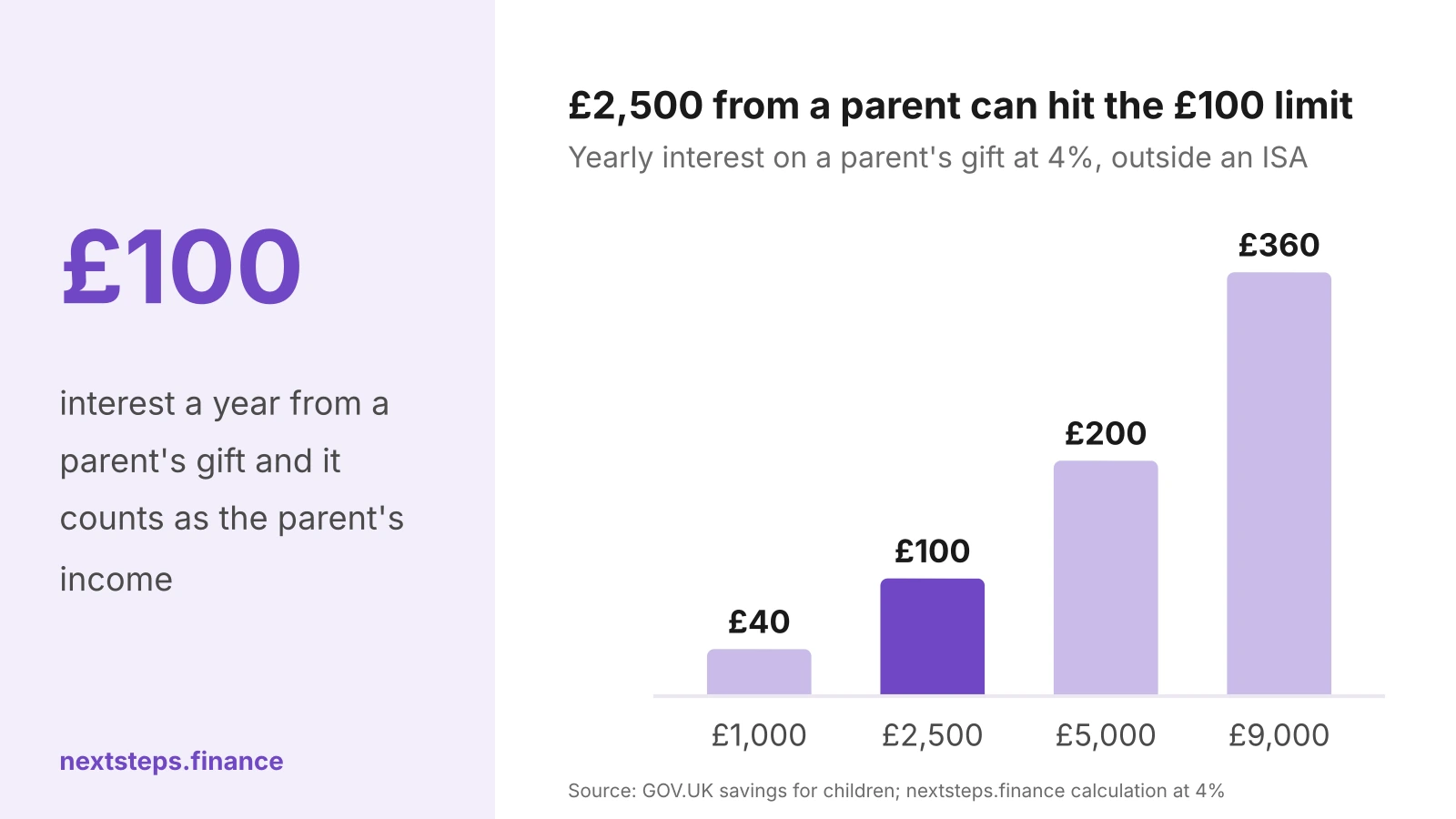
- Interest on a parent's gift over £100 a year is taxed as the parent's, unless it sits in a Junior ISA. At 4%, that limit is reached with about £2,500.
- The money is locked until 18, when the account turns into an adult ISA in the child's name and they can spend it as they like.
What is a Junior ISA and how much can you save in 2026/27?
A Junior ISA is a tax-free savings or investment account for a child under 18 who lives in the UK. GOV.UK confirms that "in the 2026 to 2027 tax year, the savings limit for Junior ISAs is £9,000" (GOV.UK).
The £9,000 is a limit per child, not per person paying in. If grandparents put in £5,000 and parents £4,000, the child has used the full allowance. It runs from 6 April 2026 to 5 April 2027 and doesn't roll over.
It is completely separate from the adult allowance. You can still put £20,000 into your own ISAs this tax year (GOV.UK), and the Budget on 28 October 2026 left both limits unchanged (see our Budget 2026 summary).
There are two types:
| Type | What it holds | Risk | Who it may suit |
|---|---|---|---|
| Junior cash ISA | Savings earning interest | Capital is safe; FSCS covers up to £120,000 per bank (NS&I is backed by HM Treasury) | Shorter time frames, or older children close to 18 |
| Junior stocks and shares ISA | Funds, shares, ETFs | Capital at risk: values go up and down | Babies and young children with 10+ years to go |
Your child can have one of each, but no more than one cash and one stocks and shares Junior ISA at a time. You can switch providers by transfer.
Take Action: Check whether your child already has a Junior ISA or an old Child Trust Fund before opening a new one.
Who can open a Junior ISA, and who can pay in?
Only a parent or guardian with parental responsibility can open a Junior ISA for a child under 16. Children aged 16 and 17 can open their own (GOV.UK).
Once it's open, "anyone can pay money into a Junior ISA" (GOV.UK). That makes it a handy place for Christmas and birthday money from family. Most providers let you share bank details or a gifting link so relatives can pay in directly.
For grandparents thinking about inheritance tax, regular gifts out of spare income, such as a monthly payment into a grandchild's Junior ISA, can be exempt. We explain how in our guide to pensions and inheritance tax from April 2027. Keep a simple record of what you give.
What are the best Junior ISA rates right now?
The best Junior cash ISA pays 4.15% AER variable at Bath Building Society, according to DepositScout's table checked on 6 November 2026 (DepositScout). It's only open to people who live, work or study in Bath, or children and grandchildren of members (Which?).
| Provider | Rate (AER, variable) | Minimum | Catch |
|---|---|---|---|
| Bath Building Society | 4.15% | £1 | Bath connection needed |
| Skipton Building Society | 4.00% | £1 | Branch or post only |
| Swansea Building Society | 4.00% | £1 | Branch or post; Wales residents |
| Leek Building Society | 3.85% | £1 | |
| Coventry Building Society | 3.75% | £1 | Branch or post only |
| OakNorth Bank | 3.73% | Online | |
| NS&I | 3.70% | £1 | Online, Treasury-backed |
Sources: DepositScout, 6 November 2026; NS&I Junior ISA.
Two things to know. These rates are variable, and several were set before the Bank Rate rise, so some may go up in the coming weeks. And because the cash is locked until 18 anyway, there's no reason to accept a big-bank rate: Which? lists Lloyds and Bank of Scotland at just 2.35%.
Try it with your own numbers:
- Starting balance£500
- Monthly saving£50
- Interest rate (AER)4.15%
- Years18 yrs
If you already hold a Junior cash ISA paying under 3%, you can transfer it to a better provider without losing the tax-free status. Ask the new provider to arrange it; don't withdraw the money yourself.
Junior cash ISA or stocks and shares: which is better?
For a child under about 10, a stocks and shares Junior ISA has historically had more chance of beating cash, because there's time to ride out falls. For money needed within five years, cash is safer. Capital at risk: the value of investments can go down as well as up.
The trade-off in numbers: £50 a month for 18 years is £10,800 paid in. In a cash Junior ISA at 4.15% it would grow to about £16,000 if the rate held. Invested, the result could be higher or lower; the calculator below assumes 5% a year growth after fees as an illustration, not a forecast.
- Starting amount£500
- Monthly investment£50
- Yearly growth before fees5%
- Total yearly fees0.74%
- Years18 yrs
Many parents split it: a stocks and shares Junior ISA for the long-term pot, then move to cash in the last few years before 18.
Ready-made investing: Wealthify Junior ISA
If you don't want to pick funds, a managed Junior ISA does it for you. Wealthify offers a Junior stocks and shares ISA with five risk styles, from Cautious to Adventurous, and an Ethical option (Wealthify). Capital at risk - the value of investments can go down as well as up.
- Minimum: £1,000 to open.
- Fees: 0.6% a year, plus fund costs of about 0.14% (Original) or 0.46% (Ethical) (Wealthify fees).
- Referral bonus: new customers who invest at least £1,000 in a Junior ISA (or stocks and shares ISA) within six months of opening, and keep £1,000 invested for six months more, get £50 (Wealthify refer a friend). In a Junior ISA, the £50 counts towards the child's £9,000 limit (terms).
- Seasonal cashback: Wealthify is also advertising cashback for £2,000+ deposited or transferred into a Junior ISA within three months (register by 17 December). It can't be combined with the referral bonus, so check which is worth more on its site before you sign up.
The downsides: the £1,000 minimum rules it out if you're starting small, and a total cost of around 0.74% is higher than a DIY index fund. It only offers a stocks and shares Junior ISA, not cash. Read our full Wealthify review and our robo-adviser comparison before deciding.
Take Action: If you want hands-off investing for a young child, sign up to Wealthify through our link to qualify for the £50 referral bonus. Capital at risk.
What is the £100 rule for parents?
If money you give your own child earns more than £100 of interest in a tax year, you must tell HMRC, and you'll pay tax on all of that interest if it takes you over your own Personal Savings Allowance (GOV.UK). The rule stops parents sheltering their savings in a child's name.
The rule doesn't apply to money from grandparents, relatives or friends, or to money in a Junior ISA or Child Trust Fund.
Higher rates make it far easier to trip. At 4%, a gift of £2,500 from a parent produces £100 of interest a year; anything above that pushes you over.
It will also cost more from next spring. The Budget raised the tax rates on savings interest outside an ISA to 24%, 44% and 49% from 6 April 2027 (our guide). So if you're a parent putting larger sums aside for your child, a Junior ISA is usually the cleaner home for it.
Take Action: Keep parent money for your child in a Junior ISA, and use a children's savings account for gifts from grandparents and others.
What happens to a Junior ISA at 16 and 18?
At 16, your child can take control of the account and become the registered contact, but they still can't withdraw. At 18, the Junior ISA automatically turns into an adult ISA in their name and they can take the money out (GOV.UK).
That's the part some parents worry about: the money legally belongs to the child, and you can't stop an 18-year-old spending it. Talking about the pot early, and showing them what it could do for a house deposit or university costs, tends to help. Our student finance guide and ISA allowance guide are good next reads for them.
Withdrawals before 18 are only allowed if the child is terminally ill or dies.
Can a Child Trust Fund be moved into a Junior ISA?
Yes. Many children born in the 2000s have a Child Trust Fund instead, and you can't hold a Child Trust Fund and a Junior ISA at the same time. To switch, ask the Junior ISA provider to transfer the trust fund into it (GOV.UK).
Older Child Trust Funds often carry higher charges and lower rates, so a transfer can be worth doing even for small balances.
How much are families putting into Junior ISAs?
Junior ISAs are growing fast. Figures obtained from HMRC through Freedom of Information requests show 1.37 million Junior ISAs were subscribed to in 2023/24, up from 1.25 million the year before, with about £1.8 billion paid in (DepositScout, 30 April 2026).
At the top end, 90 children had Junior ISAs worth over £200,000 in 2023/24, up from 50 a year earlier. That takes years of maximum contributions invested well, but it shows how much 18 years of tax-free growth can add up to.
For most families, the realistic goal is smaller and steadier: £25 or £50 a month plus birthday and Christmas money. If you're working out how much your budget can spare, start with the UK Budget Planner. And if you're buying the presents too, our Christmas cashback guide shows how to earn some of it back.
FAQ
Can grandparents open a Junior ISA?
No. Only a parent or guardian with parental responsibility can open a Junior ISA for a child under 16. Grandparents can pay into it once it's open, up to the child's £9,000 annual limit for 2026/27, and their gifts aren't caught by the £100 parental interest rule.
What happens to a Junior ISA when the child turns 18?
At 18, a Junior ISA automatically becomes an adult ISA in the child's name. They can withdraw the money and spend it however they like, or leave it to keep growing tax-free. From 16 they can manage the account but can't take money out until 18.
Can a child have a cash and a stocks and shares Junior ISA?
Yes. A child can have one cash Junior ISA and one stocks and shares Junior ISA at the same time. The total paid into both can't go over £9,000 in the 2026/27 tax year. You can transfer either to another provider without losing the tax-free status.
Is a Junior ISA worth it?
A Junior ISA is worth it if you're saving for a child for the long term, because interest and growth are tax-free and the top cash rates are over 4%. The catch is that the money is locked until 18 and then belongs to the child, so it may not suit money you want to control.
What is the best Junior ISA rate?
On 6 November 2026 the top Junior cash ISA rate is 4.15% AER variable at Bath Building Society, for people with a Bath connection. Skipton and Swansea pay 4.00%, OakNorth 3.73% and NS&I 3.70%. Rates are variable and may rise after the Bank Rate increase to 4%.
Do parents pay tax on children's savings?
Usually no. But if money a parent gives their child earns more than £100 of interest in a tax year, the parent must tell HMRC and pays tax on all of it if it takes them over their Personal Savings Allowance. Junior ISAs and gifts from other relatives are exempt.
The bottom line
A Junior ISA is the simplest tax-free way to build money for a child: £9,000 a year, cash rates above 4% at the top of the table, and investing for the long run. It's a strong option for Christmas money from family and for any money you, as a parent, set aside for your child.
Pick cash if the time frame is short and stocks and shares if it's long, compare rates rather than using your own bank, and check the £100 rule before saving in your child's name outside an ISA. If you'd like a managed option, Wealthify has a Junior ISA from £1,000 with a £50 referral bonus (capital at risk). For help fitting a child's savings into your wider plans, book a personal finance review.