
A 40k salary budget in the UK starts with the roughly £2,581 that actually reaches your account each month once Income Tax, National Insurance and a 5% pension have come off. £40,000 sits just below the typical full-time salary, so it covers a normal life in most of the UK, but rent still decides whether you save £200 or £700 a month. This guide shows where the money goes in 2026/27, three worked monthly budgets and a realistic savings plan.
Foundations
40k Salary Budget UK: How to Budget on £40,000
40k salary budget UK guide: about £2,581 a month after tax, NI and pension in 2026/27, with 3 worked budgets and how much you can save.
In this article
Key takeaways
- Take-home pay on £40,000 is about £2,693 a month in England, Wales and Northern Ireland in 2026/27, or about £2,581 after a 5% auto-enrolment pension.
- Tax and NI cost £7,680 a year: £5,486 Income Tax and £2,194 National Insurance, with the £12,570 Personal Allowance frozen until 2031 after the 28 October Budget.
- A £10,000 rise from £30k adds only about £567 a month after tax, NI and pension, because around 32p of each extra pound goes before you see it.
- Rent is still the swing cost: the UK average of £1,406 a month (ONS, September 2026) is 54% of take-home pay, against 33% for the Wales average of £848.
- Your pension grows by about £225 a month once your employer's 3% is added to your own 5%.
If you want to plan your own £40k budget month by month, the UK Budget Planner starts from your real take-home pay and tracks bills, savings and sinking funds across the year.
How much is £40,000 a year after tax in the UK?
£40,000 a year is about £32,320 after tax and National Insurance, or £2,693 a month, in England, Wales and Northern Ireland in 2026/27. After a standard 5% workplace pension it's about £30,969 a year, or £2,581 a month.
Here's the working, using the GOV.UK rates and thresholds for employers 2026 to 2027: a £12,570 Personal Allowance, 20% basic rate on the next £37,700, and employee National Insurance of 8% between £12,570 and £50,270.
| Per year | Per month | |
|---|---|---|
| Gross salary | £40,000 | £3,333 |
| Income Tax (20% on £27,430 above the Personal Allowance) | -£5,486 | -£457 |
| National Insurance (8% on £27,430) | -£2,194 | -£183 |
| Take-home before pension | £32,320 | £2,693 |
| Pension: 5% of earnings between £6,240 and £50,270, after 20% tax relief | -£1,350 | -£113 |
| Take-home after pension | £30,969 | £2,581 |
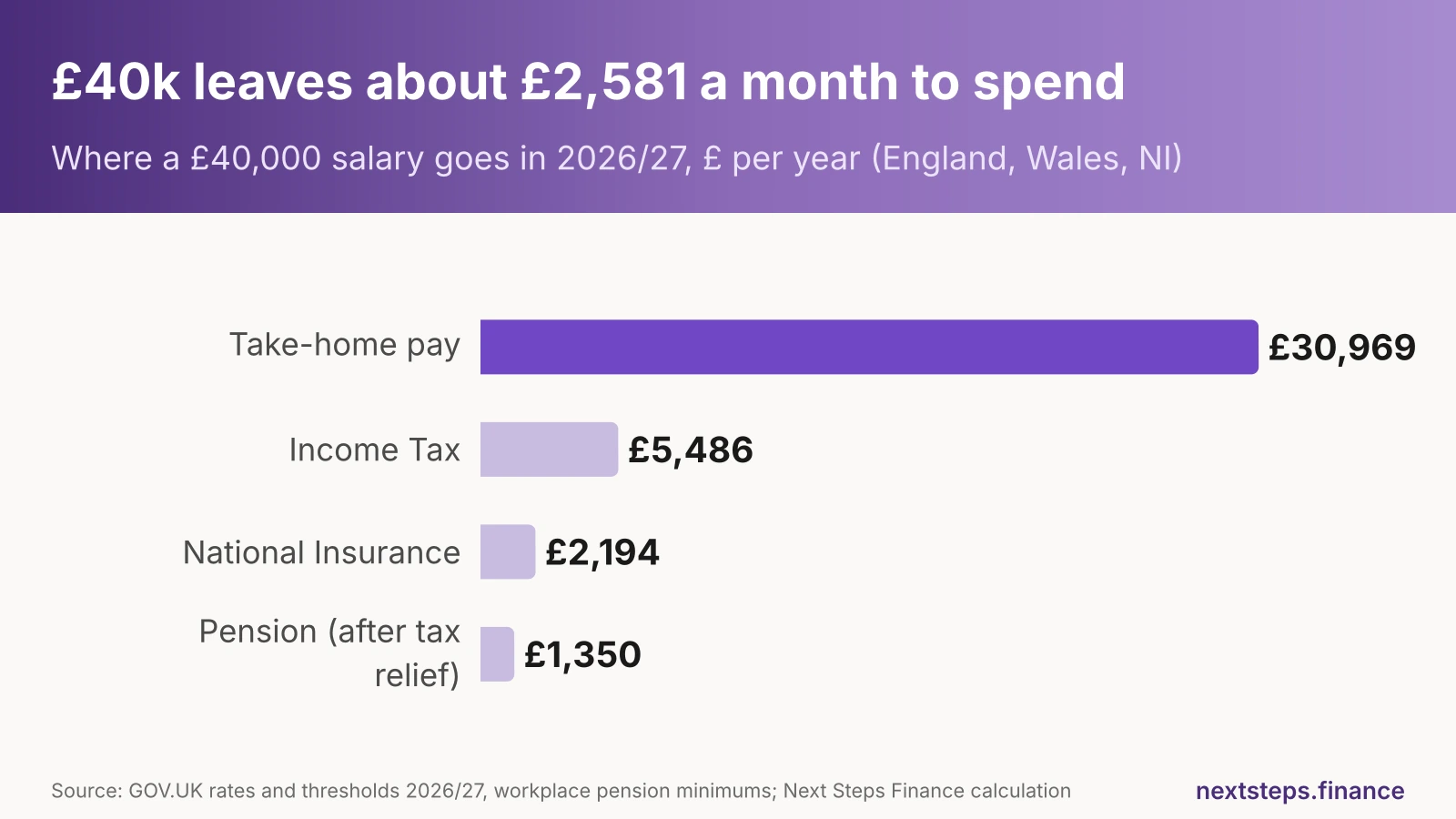
The pension line assumes the auto-enrolment minimum. GOV.UK's workplace pensions guide says that in most schemes you pay 5% and your employer at least 3% of earnings between £6,240 and £50,270. On £40,000 that's £1,688 a year from you (£1,350 after tax relief) and £1,013 from your employer. Your scheme may calculate it on your full salary instead, so check your payslip. Our UK income tax guide explains the bands in more detail.
Student loans and Scotland
Two things can change your number:
- Student loan: you repay 9% of earnings above your plan's threshold. On £40,000 that's about £80 a month on Plan 2 (threshold £29,385), £98 on Plan 1 (£26,900), £47 on Plan 4 (£33,795) and £112.50 on Plan 5 (£25,000). A postgraduate loan adds 6% above £21,000, or £95 a month.
- Scotland: Scottish Income Tax has a 21% intermediate rate, set out on mygov.scot. On £40,000 you pay about £5,551 in Income Tax, roughly £65 a year more than elsewhere, so take-home is about £2,688 a month before pension.
The free UK budget calculator lets you add your own pension rate and student loan plan.
Take Action: Check your last payslip. The net figure, not £40,000, is what every budget below is built on.
Is £40k a good salary in the UK?
£40,000 is close to the middle of the UK pay scale for full-time workers. The ONS reported on 22 October 2026 that median gross annual earnings for full-time employees who'd been in their job for at least a year were £40,911 in April 2026, up 4.5% on a year earlier. So about half of full-time employees earn more than you and half earn less.
A pay rise to £40k feels smaller than it looks. Compared with our £30k salary budget, the extra £10,000 adds about £6,800 a year, or £567 a month, after 20% tax, 8% NI and the extra pension. You're still well short of the £50,270 higher-rate threshold, which Which? reports stays frozen until 2031 after the Chancellor's 28 October Budget.
Where you live matters more than the salary. The ONS's latest rent figures, published 21 October 2026, put average private rent at £1,406 a month across the UK in September, £1,466 in England and £2,338 in London, against £848 in Wales, £1,011 in Scotland and £879 in Northern Ireland (July).
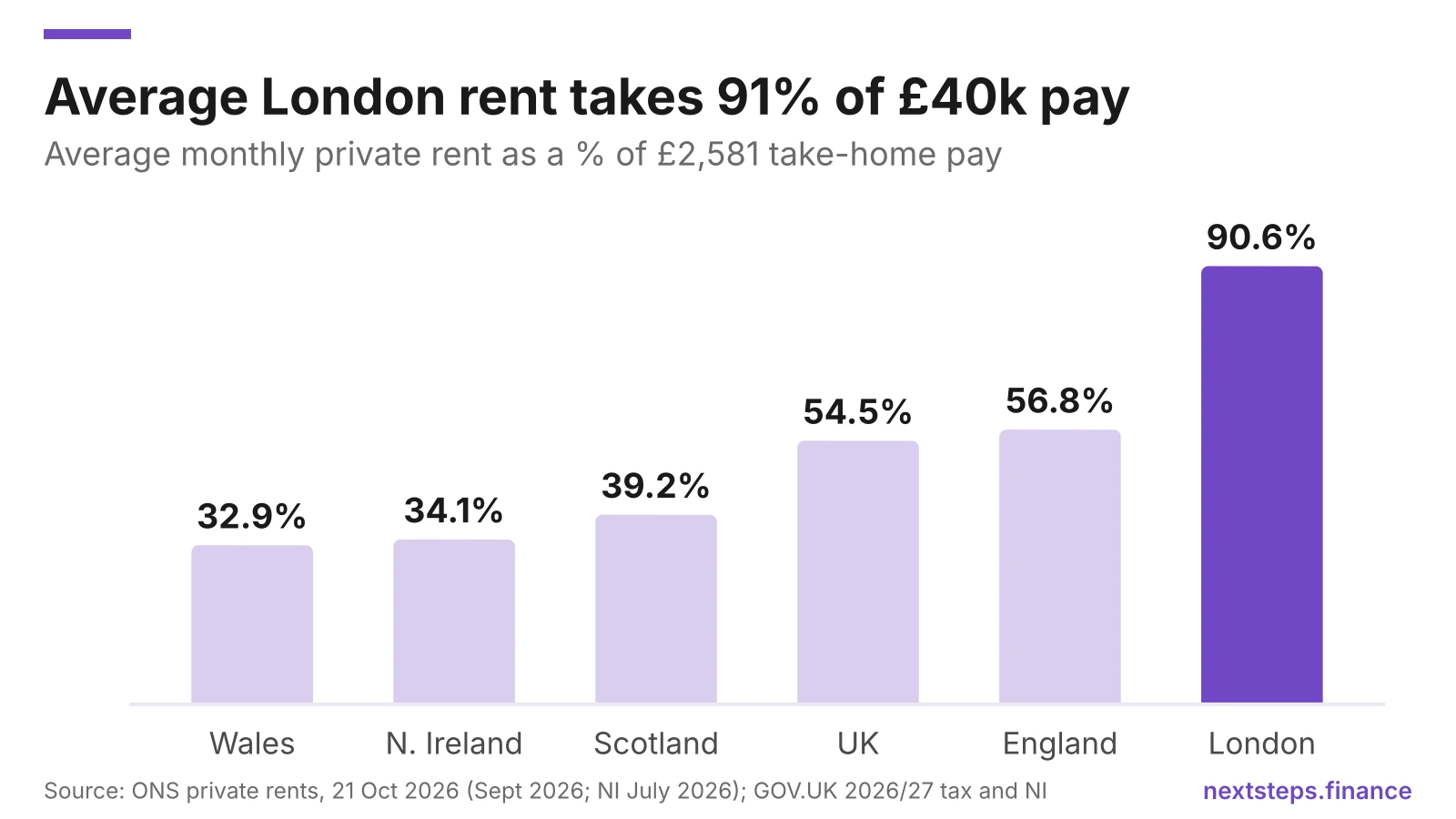
Outside London, £40,000 lets most people rent alone if they choose a smaller place. In London, the average rent would take more than 90% of take-home pay, so sharing or a long commute is still the norm.
What does a monthly budget on £40k look like?
A workable 40k salary budget for a single renter puts around 60-65% of take-home pay on essentials, 15-20% on spending and close to 20% on savings. The examples below use £2,581 a month (after a 5% pension) and official 2026 figures where they exist.
Official figures used:
- Council tax: £1,868 average per dwelling in England for 2026-27 (MHCLG), or £117 a month with the 25% single person discount.
- Energy: £1,723 a year for a typical household under the Ofgem price cap for 1 October to 31 December 2026, up 4%, or about £144 a month. Ofgem announces the January to March 2027 cap on 25 November. Our guide to average household bills in the UK covers every bill.
- Food at home: £33.63 per person per week on food and non-alcoholic drinks in DEFRA's Family Food FYE 2025, about £146 a month.
Travel, phone, broadband, water and insurance vary too much to average, so those lines are examples. Swap in your own.
Budget 1: living alone, rent £1,000
| Category | Monthly | Share of £2,581 |
|---|---|---|
| Rent (one-bed flat) | £1,000 | 39% |
| Council tax (single person discount) | £117 | 5% |
| Energy | £144 | 6% |
| Food shopping | £146 | 6% |
| Travel (example) | £120 | 5% |
| Phone, broadband, water, insurance (example) | £100 | 4% |
| Essentials total | £1,627 | 63% |
| Savings and extra debt payments | £500 | 19% |
| Spending money (eating out, clothes, gifts, subscriptions) | £454 | 18% |
| Total | £2,581 | 100% |
That's close to the 50/30/20 rule, and it saves £6,000 a year on top of your pension.
Budget 2: living alone at the England average rent
At £1,466, the same essentials come to £2,093 (81%). That leaves £488: about £200 to save (8%) and £288 to spend (11%). It works, but one big bill or a rent rise wipes out the month's saving, so an emergency fund matters even more here.
Budget 3: a couple sharing the UK average rent
If you live with a partner and split a £1,406 rent, your half is £703. Add half the full council tax (£78), half the energy (£72), your own £146 food shop, £120 travel and £60 of other bills, and your essentials come to £1,179 (46%). That leaves about £700 to save (27%) and £702 to spend (27%). Our guide to budgeting for couples covers fair ways to split bills if your incomes differ.
Take Action: Copy the budget closest to your life into the free budget template and replace every line with figures from your last three bank statements.
How much should I save on a £40,000 salary?
On £40,000, saving £400 to £700 a month (roughly 15-27% of take-home pay) is realistic for most single people and couples, depending on rent. Build safety first, then save for goals.
- Emergency fund first. Three months of essentials from Budget 1 is about £4,900. At £500 a month that takes around 10 months. Our emergency fund guide covers where to keep it.
- Clear expensive debt next. Paying off a credit card or overdraft usually beats any savings rate.
- Plan for yearly costs. Car insurance, Christmas and holidays go in sinking funds so they don't land on a credit card.
- Then invest for the long term. Once your cash buffer is in place, a stocks and shares ISA lets you invest up to £20,000 a year with no tax on gains. Which? reports the planned cut to the cash ISA limit was scrapped in the 28 October Budget.
- Check your pension match. You and your employer already put about £225 a month into your pension. If your employer matches extra contributions, that's usually the best return available.
Investing with Wealthify
If you'd rather not pick funds yourself, a managed service like Wealthify builds and rebalances a portfolio for you. Under its refer-a-friend terms, a new customer who joins through a referral link gets £50 after investing at least £1,000 in a Stocks and Shares ISA or Junior ISA (or £5,000 in a general investment account or SIPP) within six months of opening, then keeping that amount invested for a further six months. It's paid within 30 days, can't be combined with other introductory offers, and Wealthify can withdraw the offer at any time. Capital at risk - the value of investments can go down as well as up.
The downside is cost: a managed portfolio charges a yearly fee on top of fund costs, so a low-cost DIY platform can be cheaper if you're happy to choose your own funds. Our robo-advisor comparison sets the main options side by side. Keep your emergency fund in cash, not investments.
How can I make £40k go further?
The biggest wins on a £40,000 salary come from rent, energy and transport, plus stopping lifestyle creep when your pay rises. Small daily cuts matter less.
- Housing: if rent is over 45% of take-home pay, a smaller flat, a flatmate or a cheaper area usually saves more than everything else combined.
- Energy: Ofgem's next cap starts on 1 January 2027. Our January 2027 price cap forecast explains what's expected and whether fixing is worth it.
- Council tax: if you live alone, make sure the 25% single person discount is applied. It's worth about £39 a month on an average bill.
- Eating out: DEFRA found the average person spent £12.69 a week on food and drink eaten out on top of their household shop. A meal plan and one fewer takeaway a week can free £40-£60 a month.
- Pay rises: move at least half of every rise into savings or your pension before you get used to spending it.
Take Action: Pick your biggest bill and spend an hour this week checking if there's a cheaper deal.
What's the easiest way to stick to a £40k budget?
The easiest method is to split your pay on payday: one pot or account for bills, one for spending and one for savings. When each has its own balance you can see what's left without tracking every coffee.
| Option | Who it may suit | Key point |
|---|---|---|
| Monzo pots | People who want bills, spending and savings in one app | £10 plus a free month of Monzo Extra for new customers via referral |
| Your existing bank + budget template | People happy with their bank | Free, but you move money yourself |
| A budgeting app (see our best budgeting apps) | People with accounts at several banks | Pulls everything into one view |
| UK Budget Planner | A full-year plan with sinking funds | Built for UK pay, tax and bills |
With Monzo, you can keep bills, spending and savings in separate pots inside one account. Under Monzo's referral terms, a new customer aged 18+ who joins through a referral link and, within 30 days, downloads the app, opens an account, adds money and makes a card payment (any amount) gets £10 and a free month of Monzo Extra, which is a paid plan after that month. There's no end date, but Monzo can change the offer at any time. No account pays you to budget: the value is in keeping bills money out of sight. If you prefer a step-by-step method, try zero-based budgeting.
If you'd rather not build this yourself:
FAQ
How much is £40k a month after tax?
A £40,000 salary is about £2,693 a month after Income Tax and National Insurance in England, Wales and Northern Ireland in 2026/27. After a standard 5% workplace pension it's about £2,581 a month. In Scotland it's about £2,688 before pension. A student loan reduces it further, by about £80 a month on Plan 2 or £112.50 on Plan 5.
Is £40k a good salary in the UK?
£40,000 is close to the UK middle for full-time workers. The ONS put median full-time earnings at £40,911 in April 2026, so roughly half of full-time employees earn more. It's a comfortable single salary in Wales, Scotland, Northern Ireland and much of England, but average London rent of £2,338 would take about 90% of take-home pay.
How much rent can I afford on £40k?
A common rule is to keep rent to about a third of take-home pay, which on £40,000 is roughly £860 a month. Up to about £1,000 still leaves room to save around £500 a month if you live alone. At England's average rent of £1,466, saving falls to about £200 a month once council tax, energy and food are paid.
How much should I save on a £40k salary?
Aim to save 15-25% of take-home pay, or about £400-£650 a month on £40,000, once essentials are covered. Build an emergency fund of three months' essentials first, around £4,900 for a single renter paying £1,000. Your workplace pension adds about £225 a month on top, including your employer's 3% contribution.
Will I pay higher rate tax on £40,000?
No. The higher rate starts at £50,271 in England, Wales and Northern Ireland, so all your taxable income on £40,000 is taxed at 20%. In Scotland, the 42% higher rate starts at £43,663, so £40,000 stays in the 21% intermediate band there too.
The bottom line
A 40k salary budget in the UK works out at about £2,581 a month after tax, NI and a 5% pension. Keep rent to around 40% of that and you can cover essentials, save about £500 a month and still enjoy yourself. If rent takes over half, fixing housing will do more than any budgeting method.
To turn these examples into your own plan, use the UK Budget Planner, or start with the free budget template. For the bigger picture, read our complete guide to budgeting in the UK or browse the budgeting hub.
Found this useful? Add Next Steps Finance as a preferred source and Google will show you more of our guides in search and AI answers.
Put this into practice
Build your budget in one sitting
The UK Budget Planner works out your take-home pay, splits it with the 50/30/20 rule, tracks spending through the year and forecasts five years ahead. Made for UK pay, tax and bills.